

- Directed by Steven Spielberg
- June 20, 1975
- Based on the 1974 novel Jaws by Peter Benchley
A police chief with the help of a marine biologist and a shark hunter seek out a man-eating great white attacking beachgoers at a resort town.
Jaws is the movie that puts Steven Spielberg on the map. And for good reason. It’s probably one of the best done nature revenge films out there. Why? Because everything happens normally. Nothing is excessive or requires a science-fiction element or a bit of fantasy to get the ball rolling. Despite needing to kill a giant shark, it is surprisingly grounded in character, fact, and the rules of the fictional world they create.
In large part it demonstrates how greed and stupidity can make problems worse. The mayor (Murray Hamilton) in order to ensure reelection pushes hard to keep the beaches open even though all evidence says otherwise. How he won reelection after this is beyond me.
Police Chief Martin Brody (Roy Scheider) for his part sees the danger early on and maybe initially overreacts based on what he actually knows but his fear and concerns are quickly proven correct while the mayor is in perpetual denial. And Hooper (Richard Dreyfuss) is as much concerned about things as he is fascinated to be dealing with what he’s dealing with. In short it is all logical with nothing that goes against logic or reality. Something simple and normal that so many people do every summer becomes dangerous and terror filled.
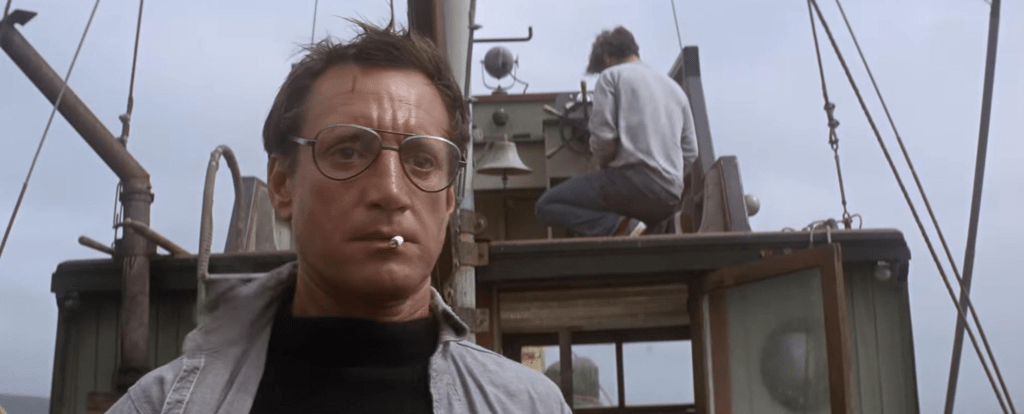
At better than two hours, this does not feel like better than two hours. This character driven story has its moments of shock and surprise but is indeed all about the characters with no dead spots. It’s all about how they handle things and the problems they face. It’s about how these individuals grow and what they do.
So much of Jaws is instantly recognizable these days. The best known element is quite possibly the Jaws theme. It is minimalist and suggests the shark is coming. It’s been parodied and used elsewhere, but everybody knows exactly where it came from and exactly what it means when it’s played. Williams was absolutely brilliant here.
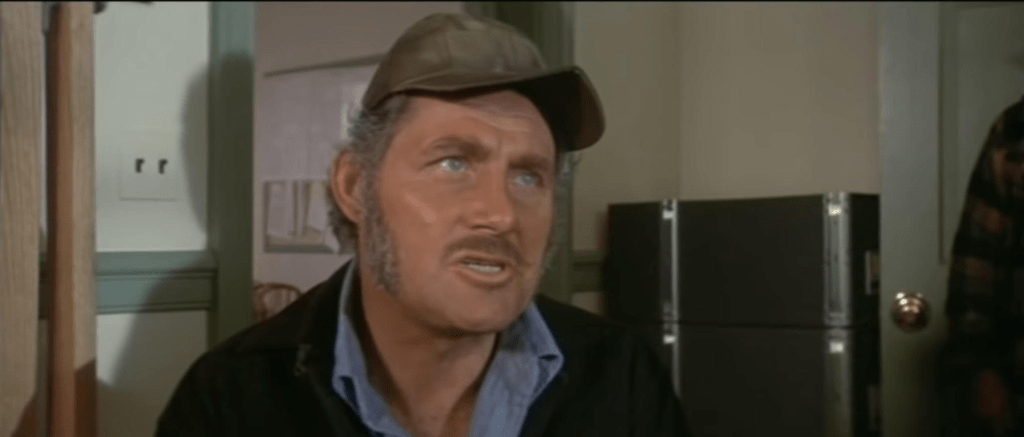
Our professional shark hunter Quint’s (Robert Shaw) speech while on the boat with Brody and Hooper is so dark and an example of how great acting can sell anything. Based on actual events of WWII, Shaw delivers it as if he was really there.
As a character, Quint is that weird and intense neighborhood guy everybody avoids because such a mythology has built up around them that you just wanna stay clear. At least that is my impression. We get our first introduction to him during a town meeting where he drags his nails across a chalkboard and gives the most ominous sales pitch for his shark hunting skills he possibly could. Dial it down from 11 Quint.
Jaws was famously plagued by production problems. The biggest being the star of the show-the shark. The mechanical shark which was absolutely necessary to telling the story had trouble working. Spielberg solved this problem by not showing it that much. And that’s brilliant filmmaking. Not because he developed a work around but because he teased the monster. Your best look at it comes at the end mostly when it first trashes the boat. Your mind provides most of the unease you feel.
While a blockbuster summer film with a high stakes story, it is not fate of the world high stakes. Rather it is fate of the world of the characters. The events here matter to them and affect them. That is something that resonates with viewers much more than Earth being threatened. It is much more personal. We all take family vacations or go on outings or just hang out where we live and this brings the terror to everyday life. As a director this has all the things Spielberg is known for. Panning shots. Zooms. And just generally quality work with the material he is given.
Jaws is an absolutely fantastic bit of filmmaking and quite possibly early Spielberg at his best. It hits all the right notes and is still as great today as when it came out so many decades ago.
 Warren Watched A Movie
4 thoughts on “Jaws”