
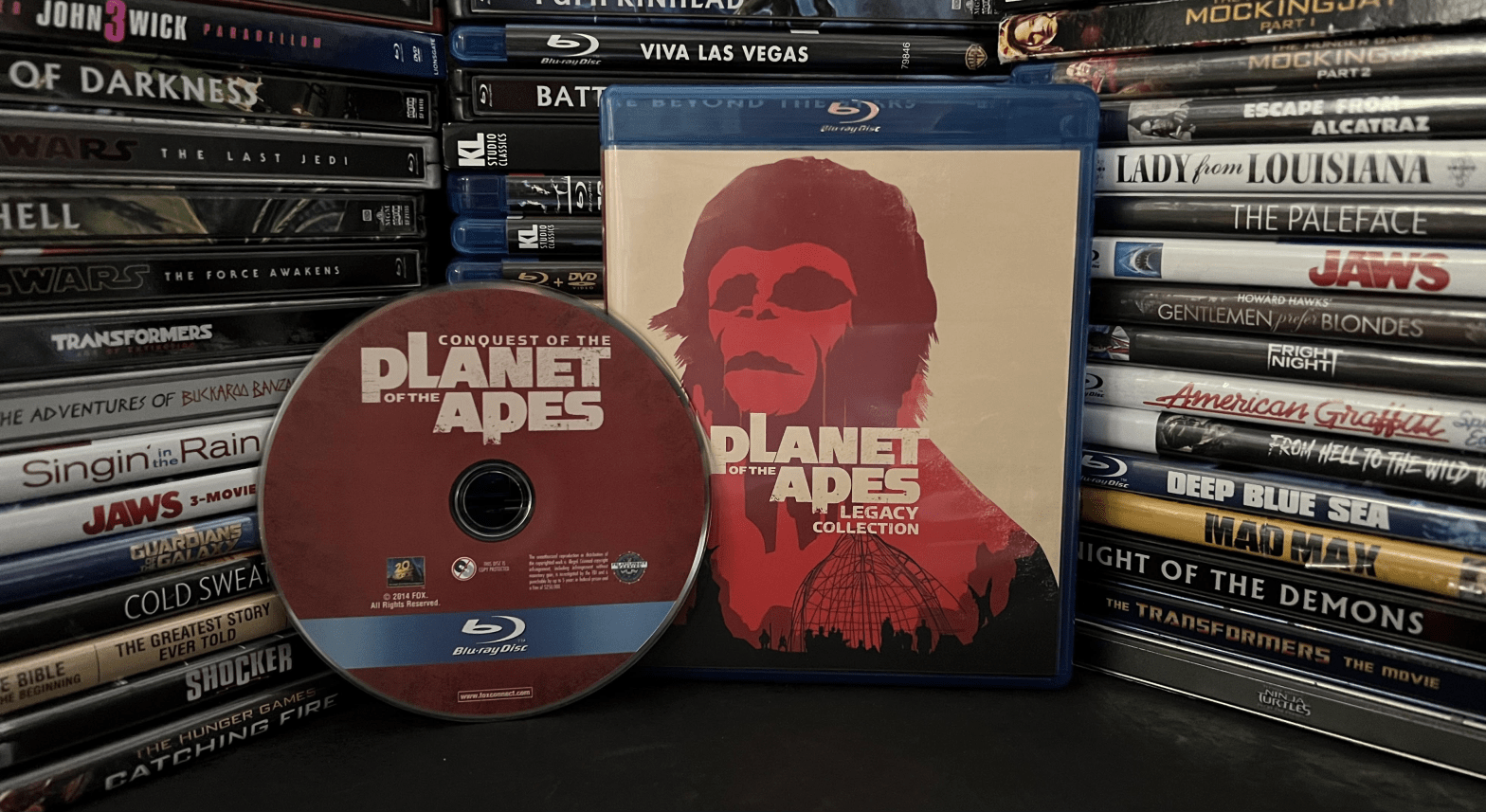
- Directed by J. Lee Thompson
- June 14, 1972
- Based on characters created by Pierre Boulle
The son of Cornelius and Zira comes out of hiding and begins a rebellion against humanity.
Every now and then I am reminded I have lived long enough that movies I viewed in my youth that were set in the future are now occurring in the past. Conquest of the Planet of the Apes takes place in the far-off year and area of North America in 1991. Doesn’t mean you can’t enjoy the movie, but rather gives you an insight into the minds of those behind it of how the world of their tomorrow might look.
First thing I noticed were many of the events Cornelius described previously in Escape as happening over centuries happened over the relatively brief period shown in this movie. The death of dogs and cats and subjugation of humanity by apes which occurred over centuries according to Cornelius takes just weeks/months.
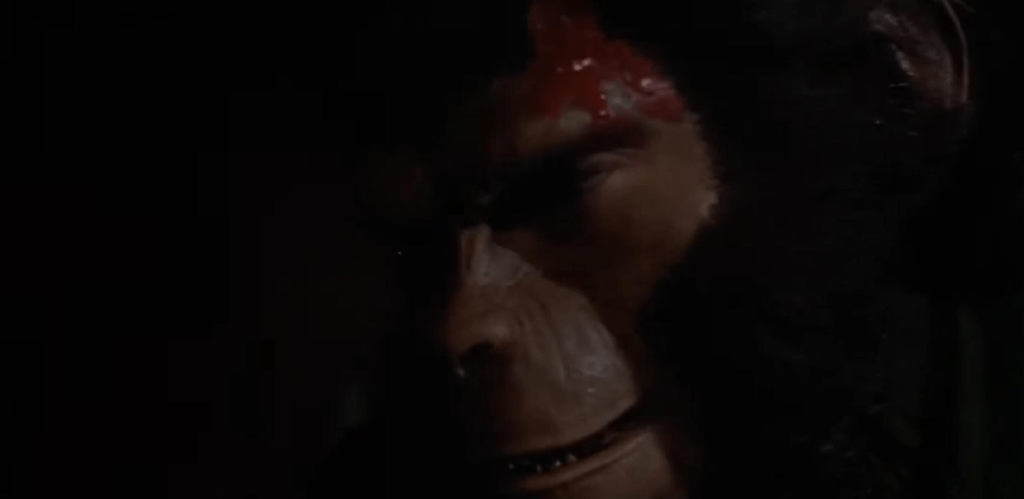
This story also makes the apes firmly the victimized rather the victimizers. That does not prevent the story from taking a look at humanity but in my view has made humans portrayed in later Ape stories often just evil to do evil. The dress of the humans in Conquest often takes a cold appearance with the apes getting little more than color coded uniforms. The human law enforcement officials get a distinctly SS look to their uniforms. Visually this movie does not hold back its assorted points and themes.
The allusions to racism and police brutality are quite overt in this. Here the apes could be viewed as stand ins for African Americans and other minorities. Considering certain racial slurs I am not sure how I feel about that. The concerns of the past appear no different than those of today. I applaud them for being subtly socially conscious rather than shoving the viewers face in it like a dog that just messed the carpet.
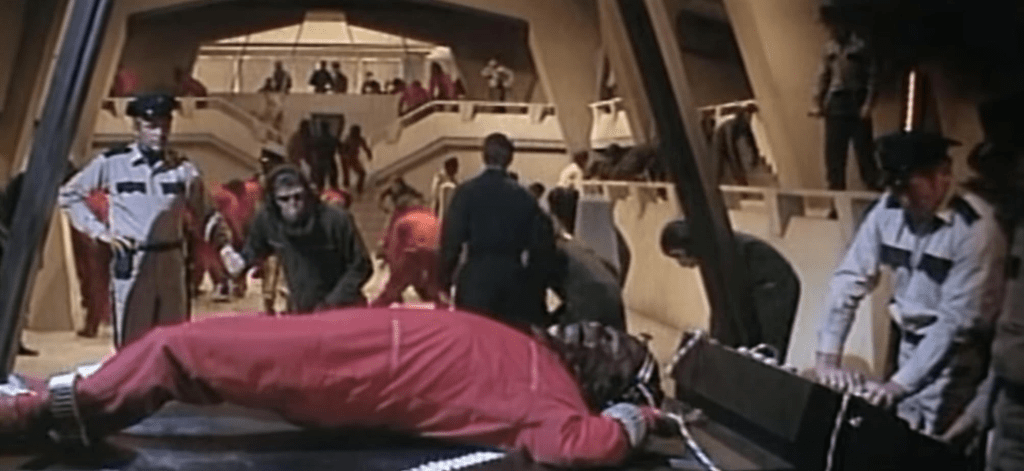
I understand the scenes with the ape conditioning were there to drive home the brutal conditions the apes were experiencing. You need to see how tormented they were. None of it had the veneer of plausibility though. It looked like straight up torture and not training. Director J. Lee Thompson did not even try to make it look they were (poorly) training them. It is just a heavy-handed way to make a point.
If anything this is meant to focus on the racial tension of the time. And sometimes it gets that right. Heck it even had some dialogue that was removed for years because it was too on the nose. Personally those words should have been kept in. The character of MacDonald (Hari Rhodes) is certainly there for that element. He sympathizes with the apes often and sees the clear parallels between what is done to the apes and slavery.
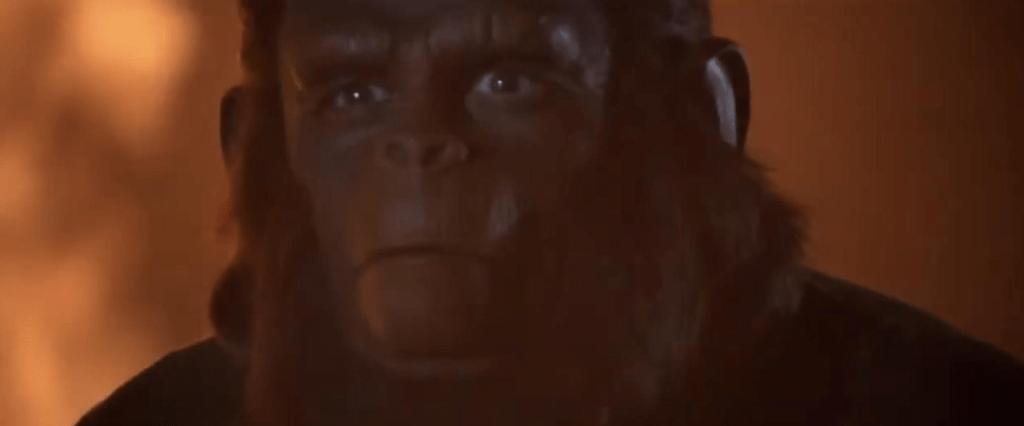
Caesar’s speech at the end (in the unedited version) is rather disturbing and quite powerful. Then again Roddy McDowall was a great actor and could do such magic in even the trashiest of movies. It perfectly sums up the racial feelings of the time and the character’s feelings about everything. He’s not a nice and kind savior, but the leader of a military campaign. An unusual framing for the character meant to be a hero.
The character of Armando (Ricardo Montalbán) is present for mostly heavy exposition as well as to serve as a minor bridge to the last movie. He informs the viewer of a great deal of the events of the intervening years between Escape and Conquest. Necessary but it is done in huge heaps which feel like a history lecture from a marginally informed person. Your drunk uncle at Thanksgiving would do the same.
As a character Armando is supposed to have a close relationship with Caesar (Roddy McDowall) but I never felt it. They were pals but it was not paternal as the story wanted you to believe. This is due to him being Exposition Armando and not Armando, the mildly flamboyant owner of a circus. Then again Armando and Caesar were not really together on the screen very long. More time needed to be allocated to that relationship. Extra time building the relationship would have also allowed the history lesson to occur in much smaller doses.
Some of the acting is not that good. Governor Breck (Don “Bus Stop” Murray) is supposed to be the chief villain, but he is more ham than menace. It’s like he’s performing as a villain in a children’s movie. This guy is pushing things towards revolution and a massive inversion of the social order. What we got in performance here belonged to a Roger Corman production and not something more serious.
As acting goes, McDowall is the bright spot in all this. Even Ricardo Montalbán who could make the ingredients in a box of generic cornflakes sound really interesting does little in the way of trying. Rhodes takes it seriously but cannot elevate things since he usually is working with Murray or Severn Darden who plays Kolp. Kolp brings his Second City skills to this and not those of a dramatic performer.
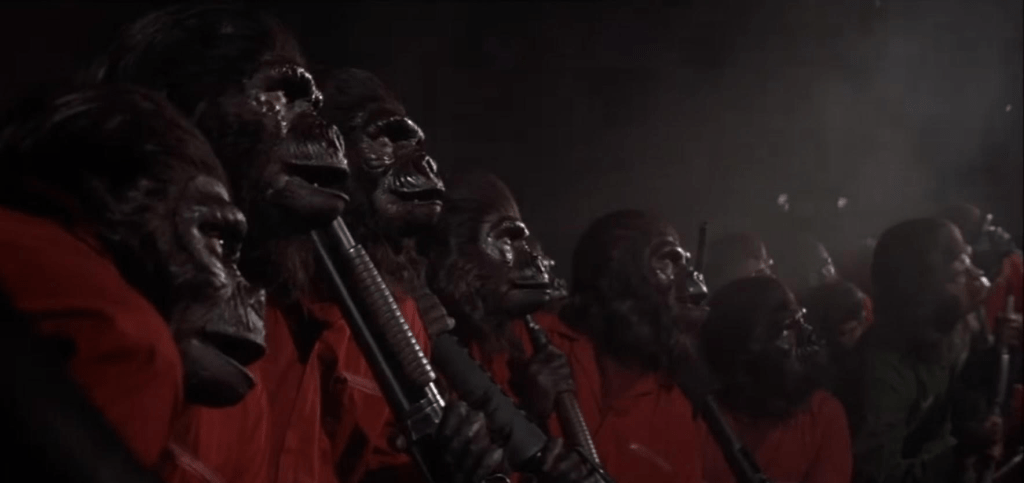
Conquest is more of a science fiction film with hints of something deeper than it is a film about something using science fiction to convey what it wishes to convey. I think what harms it most is not the cuts in production value from the previous films but rather the acting by the performers. Not nearly enough of them are taking it seriously and that is a MUST in these movies.
There is also the rushed narrative. As noted before those behind the camera rushed things to get to the next leg of Ape history rather than take advantage of the long timeline provided by Escape. Clearly 20th Century Fox was looking to make multiple movies in order to milk the Ape cow as much as possible. They neglected though to take advantage of the possibilities inherent in centuries of time.
Conquest of the Planet of the Apes is not a bad movie, but it’s certainly not a great one. It’s just missing that special something to help it towards high-quality. Not a terrible disappointment but not as good as it could’ve been. Still worth a watch.
 Warren Watched A Movie
One thought on “Conquest of the Planet of the Apes”