
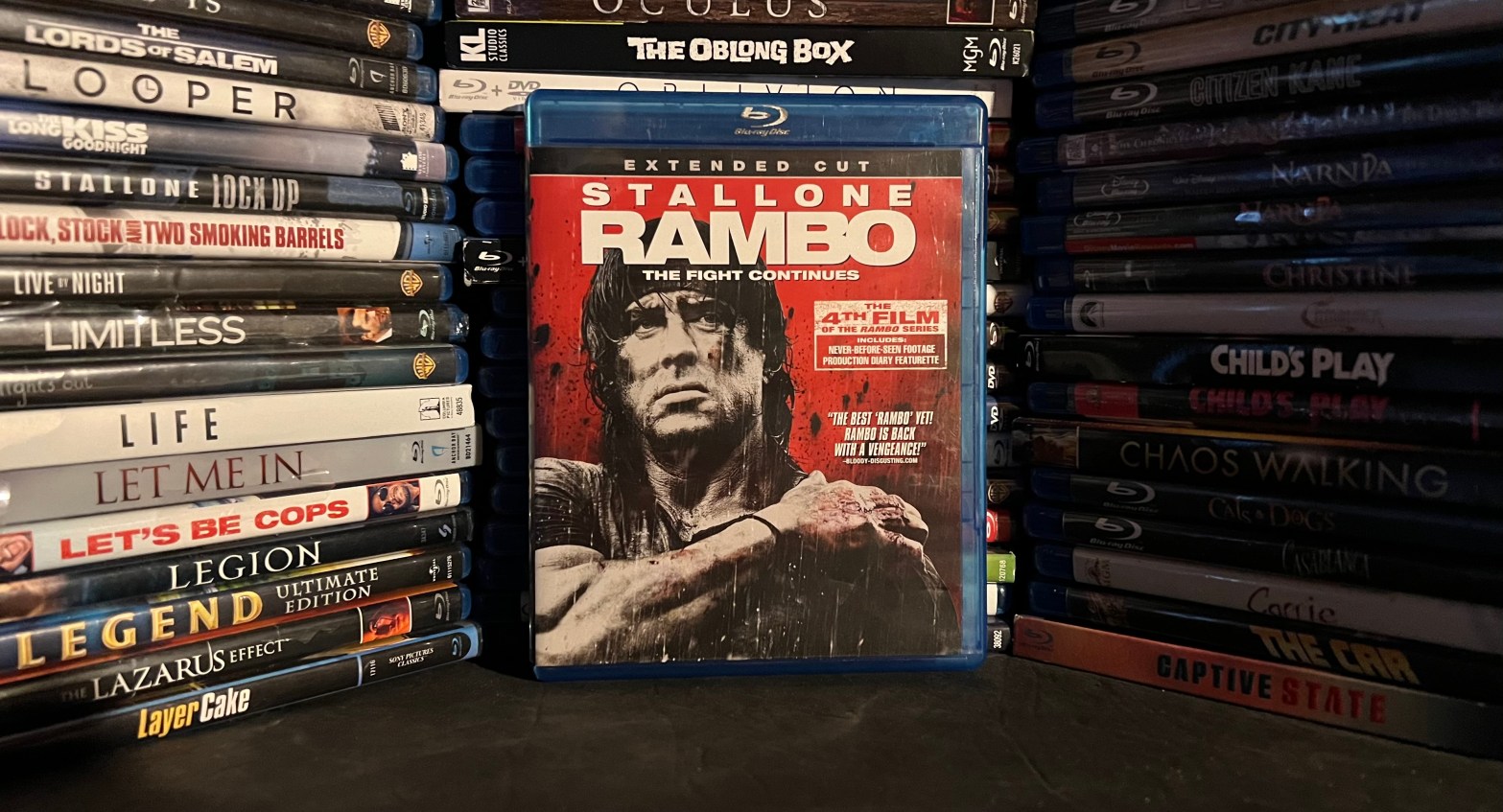
- Directed and Co-Written by Sylvester Stallone
- January 25, 2008 (US) / February 14, 2008 (Germany)
- Based on John Rambo created by David Morrell
Rambo leads a group of mercenaries into Burma to rescue a group of Christian missionaries.
Legacy sequels are generally a tricky lot. Can they re-capture whatever magic made the originals memorable? Will they cater to the near mythical modern audience who would never have seen them to begin with and lose the elements that made the preceding film(s) special? Will they come close to if not entirely recapture the magic of what came before.
As legacy sequels go this is a very different animal than Rambo II or III but certainly more in line with First Blood. It’s more about the lasting scars of war with John Rambo (Sylvester Stallone) dealing with them and not an action film where the hero singlehandedly wins a war or rewrites history.
In the film, Rambo has given up on life. He is simply going through the motions and I guess the point of the story is him eventually finding something to live for. He’s cut himself off from his humanity and it isn’t until he’s confronted with that reality does he begin to rethink things. And then we get into the old-school Rambo killing just about anybody with an obscene level of ease.

What it does differently from the preceding two is that it does not create one character on the opposing side for Rambo to face off against. There’s no personification of the enemy to go up against Rambo. They are simply nameless soldiers sent after him with the commanding officer (Maung Maung Khin) given enough stuff that he is a character but a character you never learn the name of. An unusual move for this type of film.
If there is something close to a definable villain in all this it is the former SAS soldier Lewis (Graham McTavish) but he’s just a real dick and not even necessarily a bad guy. But that goes along with the different way they’re painting the characters here than before. They are given a level of depth and nuance that was previously lacking in Rambo films. What I liked was that Rambo as well as the other characters use their brains. They may be jerks and occasionally panic but there are no needlessly stupid decisions that occur here. There is no single character that makes a bad decision just to extend out the problems and the film.

This is far from sanitized violence or scenes done to look cool like in the last two movies. There is plenty of blood and guts and sometimes people just simply pop when they get hit with a powerful bullet. The weaponry is even capable of severing the limbs of people. That’s something you don’t often hear about in real life but it can happen.
And in another nod to realism Rambo doesn’t take on the whole Burmese army on his own. He gets help from some mercenaries hired by a church to recover their group members. Not that he did this of his own accord. Apparently he is the only river guide in all of Burma and he also took the churchies up the river. Rambo is the chief killer and the best of the best but he’s not able to do it on his own. An acknowledgment of the changing likes and tastes of current movies but not something that necessarily changes the character of Rambo. He is the alpha and not the beta.
And that’s important. Whenever bringing an old character into the modern era you need to be careful. You need to understand what made them special and why people still gravitate towards them. You might need to tweak this or that in order to make the movie work, but completely changing things is just slapping the character’s name on an unrelated property even if you get the original actor back. Here they keep Rambo as Rambo, but they don’t change Rambo.
While action heavy Rambo is also drama heavy. But these are not characters who wallow in their emotions and pain for the sake of creating drama. The emotions and the pain are things they need to work through. Rambo must find a reason to engage with society and live. The church group must come to realize that while they have high ideals the reality of the world makes those high ideals difficult to achieve.

There’s a sense of hope that this movie ends on despite its generally downbeat tone. Rambo going home seems to symbolize that he has finally come to terms with his trauma and is ready to reconnect. It’s a sweet and well-done moment that also serves as the beginning of the end credits-and then goes on for too long. All you need is him walking to his mailbox and starting down the driveway. Unfortunately we get the entire walk. Every. Single. Step.
With an eye towards realism that doesn’t take away from the Rambo character, Rambo is a good legacy sequel. Stallone is in fine form and the action is good. Plus there’s plenty of drama. While more in line with First Blood, this should be good enough to satisfy fans of First Blood as well as those who like the excesses of its two sequels. I definitely recommend this one!
 Warren Watched A Movie
One thought on “Rambo-A Return to Form”