

- Directed by Frank Capra
- October 17, 1939 (Washington, DC)
- Based on Lewis R. Foster’s unpublished story The Gentleman from Montana/Loosely based on the life of Montana US Senator Burton Wheeler
A newly appointed US senator fights against government corruption.
I love collecting movies. I buy more discs quite regularly. It is because of that Mr. Smith Goes to Washington kept getting pushed further back until now. It is an amazing film that is as topical today as it was when released in 1939. This is a mixture of ‘feel good’ and ‘reality.’ Mr. Smith Goes to Washington is an incredible balancing act of what we wish and what really is. The politics of Washington and how we as a society want it to be handled or will turn out. That integrity wins the day.
This is a David and Goliath story. A good versus evil narrative about the ideals we have in this country and the unfortunate corruption of the human spirit when they get to power. It’s just an amazing movie. It’s uplifting and heartfelt yet downbeat. You feel Smith’s joy and how his character is impressed just by being in Washington and in the halls of power, and his disappointment that these people he looked towards do not measure up to his ideals. And you feel his sense of despair when he is at his lowest. Capra pulls all the right emotional strings at all the right moments.
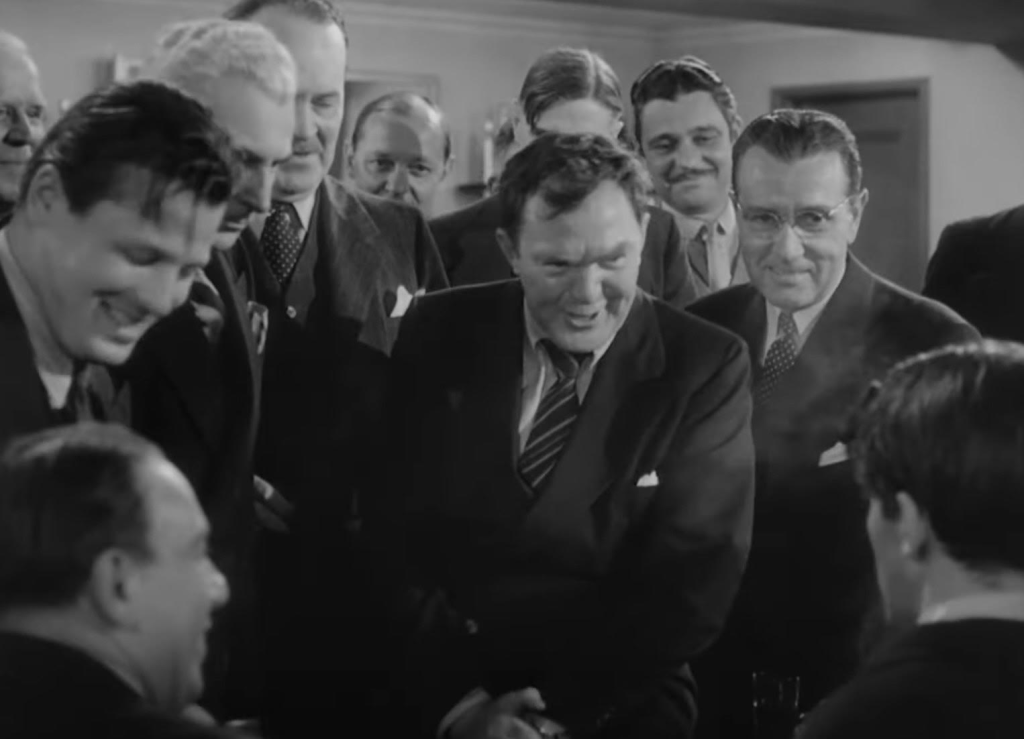
Jimmy Stewart was and still is an unrivaled talent. He was exceptionally gifted at playing the humble everyman. An individual capable of crafting someone you could meet on the street or would like to. In later years he effectively transitioned into a tough guy. Jefferson Smith (Jimmy Stewart) unexpectedly finds himself in the seat of a deceased senator. In a very Capra way Smith ends up in the seat because the governor (Guy Kibbee) of Smith’s unnamed home state thinks he will not only satisfy his bosses but the public via what his kids say. Never naming the state allows your brain to think it’s happening where you live but that connection is not so strong you might become upset.
Smith is the everyman that gets trampled by the system. He’s the one struggling to do the right thing only to get steamroller by the cynics and the bad actors. Smith is what we wish we could be. He is the ideal we look up to for guidance to do better. He stands up in the face of insurmountable odds and fights because giving up is just as wrong as what’s being done to him.

Smith coincidentally has a connection to the corrupt Senator Joseph Paine (Claude Rains) who is the other senator from his state. Paine is corrupt but thinks there is nothing wrong with what he is doing. Rains makes him seem like an okay guy at times while he casually uses his horny daughter Susan (Astrid Allwyn) to distract Jeff while Paine tries to sneak through his bill and not the one Smith has supported.
Intentional or not with the character of Saunders (Jean Arthur) Capra hit on something that is not often spoken about in political discussions. Smith’s secretary Saunders is a holdover from the previous senator. That’s not uncommon. Staff often outlives the elected officials in office and by nature of connections and experience have their own level of power in the right moments. She is portrayed as more of a power in some scenarios than Senator Smith because she has been there longer.
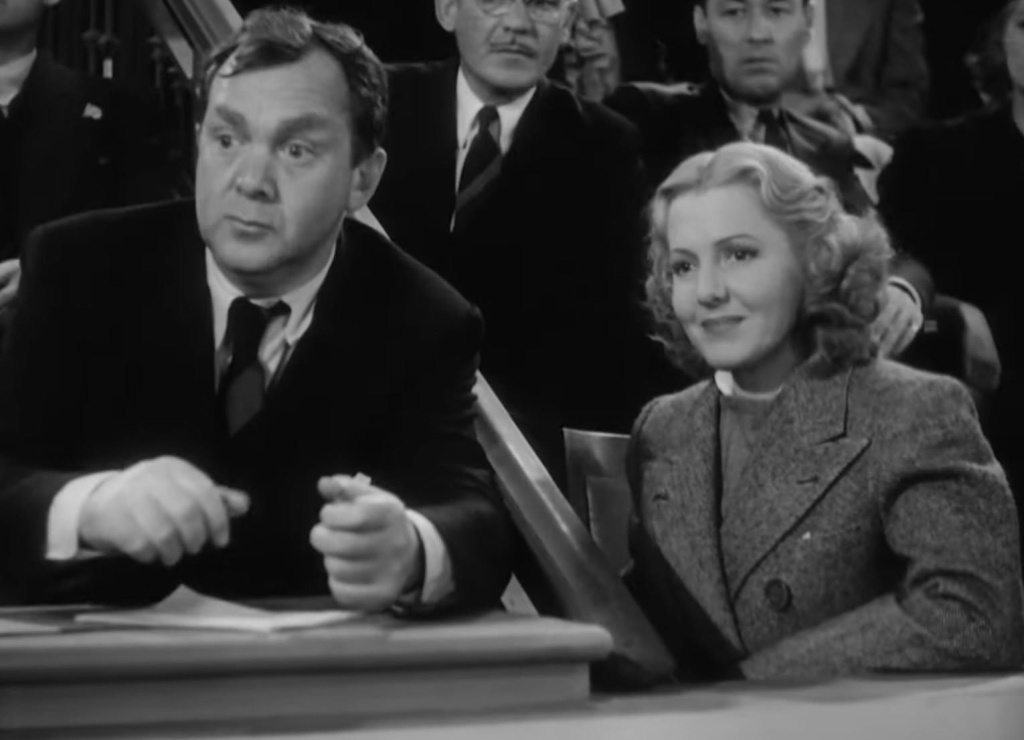
Surprise! Saunders is attracted to Smith. At least when she sees the passion he embraces his ideals with. She falls in love with this honest and true man. He was unlike anything else she had encountered in the seedy world of Washington. Smith for his part does not see it at first. There we have the heart in the film and the occasional power boost that Smith needs.
Saunders is perhaps the second most significant character in this whole movie. As the Obi-Wan to Smith’s Luke Skywalker, she shows him the ways of the Force, er, Senate. She helps him a lot on how to get the system to work for him and against the senators. She is the wise teacher and knowing guide.
I’m guessing they either didn’t ask or the Boy Scouts said ‘No’ to their inclusion in this film. Why? Jefferson Smith heads up the local chapter of the Boy Rangers and runs a newspaper called Boy Stuff. I’m not a fan of stand ins for real things, but sometimes you have to do it though I do think any number of other things could’ve worked to show just how good a guy he was.

Some concerns are eternal. Manipulation of public opinion via the media. Corruption. Graft. Corporate control of politics. The public wanting one honest person in there to break that system. These are all things we’re looking at today. These are worries people have had for generations. This is about ideals clashing with reality and as topical today as it was when originally made. The story culminates in a scandal over a deficiency bill “that must be passed” “The countries future is at stake.” Language heard today with any bit of legislation when opposition to it arises.
Some perceptions never change. In Mr. Smith Goes to Washington, Washington DC is run more by the companies and the rich and powerful and special interests. There is graft and corruption. Unless held to account by themselves and perhaps even by others those in office won’t do the right thing.
There’s a theme that one good man can inspire other good deeds or goodness in others. Saunders cynicism is damaged by Smith’s ideals. She develops a conscience because of him and she was just as much of a viper as any of them. Paine has difficulty following through because of his personal connection to Smith’s father, and the kind of man Smith is though he isn’t so moved by Smith that he’s not above screwing his friend’s son over. And the frame job is a rather devastating moment in 1939. Though true or not it was more than enough then to end a person’s career.

Smith has a dream of a boys camp set on a 200 acre track on either side of an area known as Willet Creek. The problem is Senator Paine has been buying up the area through dummy companies and plans on forcing a damn bill through and selling land to the state and making a very pretty profit. That leads to perhaps one of the most famous scenes in all of film-Jeffrey Smith’s filibuster on the Senate floor.
The man pulling all the string-the face of corporate evil-is newspaper and industrial mogul James Taylor (Edward Arnold) who controls a vast empire but has the free time to work rotary phones or make personal trips to hand out orders to those he commands such as Paine or the state’s governor. He is the cigar chomping greedy type who will crush any and all to get rich or gather power like a kid collecting Pokémon cards. The antithesis of Smith’s wholesome viewpoint and a major reason this works.
Taylor tries to create an insincere astroturf campaign against Smith which works only as long as he has all the avenues for information under control. But once Smith’s supporters reach out to an independent media source (Boy’s Stuff) things turn in his favor a smidge. Ultimately though it’s the goodness of Smith that wins out. His purity of purpose and untarnished naïveté is what wins the day. He achieved victory by stepping up and fighting for the lost yet good cause but not by achieving victory.
Mr. Smith Goes to Washington is about stuff we are as concerned about today as we were in 1939. It just doesn’t complain about them but leaves us feeling that there is some hope. Stewart turns in an amazing performance buoyed by an eternally topical story.
 Warren Watched A Movie