
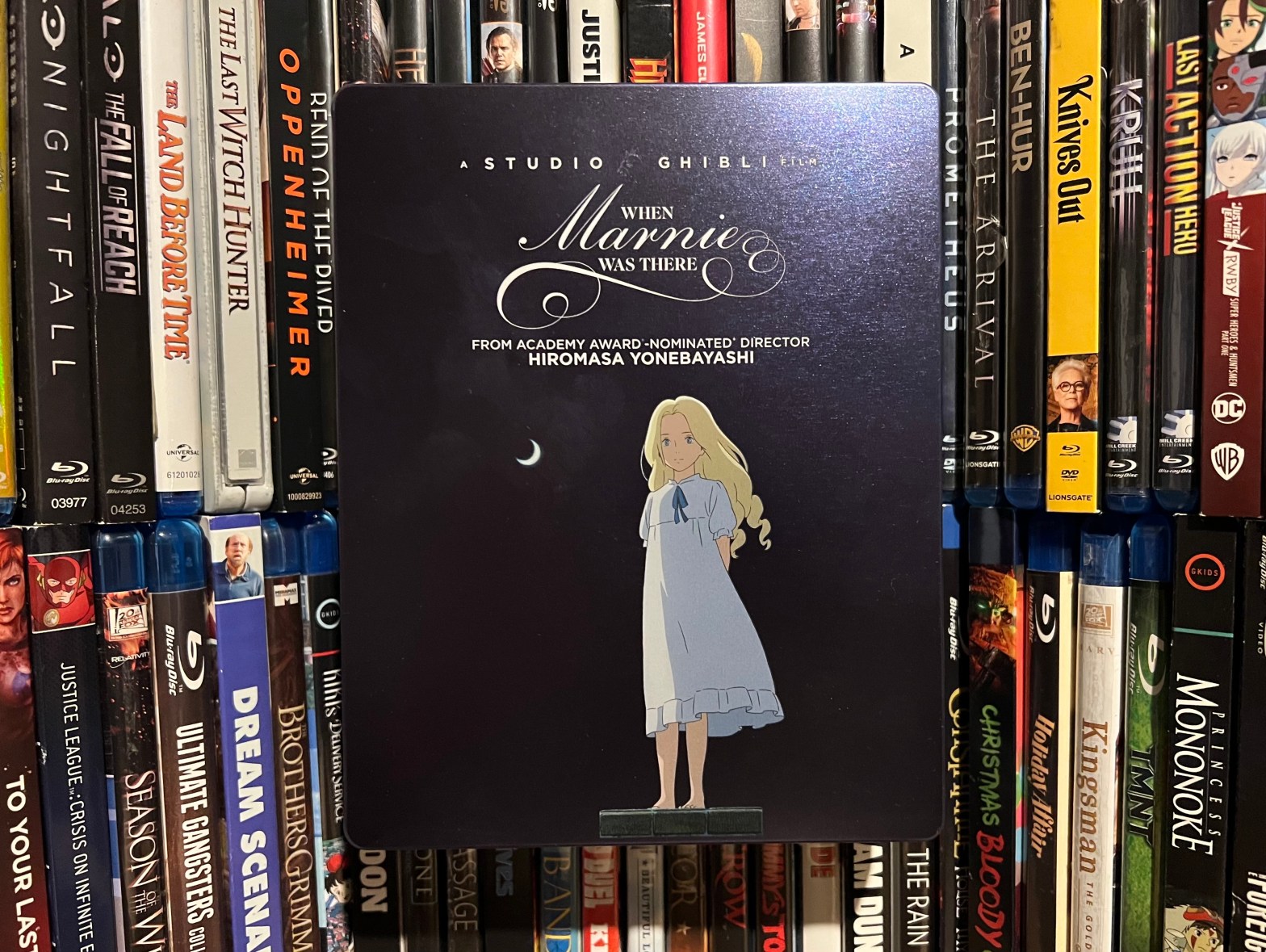
- Japanese: 思い出のマーニー, Hepburn: Omoide no Mānī, lit. ‘Marnie of [My] Memories’
- Co-Written and Directed by Hiromasa Yonebayashi
- July 19, 2014
- Based on Joan G. Robinson’s 1967 novel When Marnie Was There
Voice Cast
- Anna-Hailee Steinfeld
- Marnie-Kiernan Shipka
- Setsu Oiwa-Grey Griffin
- Kiyomasa Oiwa-John C. Reilly
- Hisako-Vanessa Williams
- Yoriko Sasaki-Geena Davis
- Sayaka-Ava Acres
- Nobuko-Raini Rodriguez
- Mrs. Kadoya-Kathy Bates
- Nan-Ellen Burstyn
- Elderly Lady-Catherine O’Hara
- Nobuko’s Friend-Laura Bailey
- Marnie’s Dad-Eric Bauza
- Dr. Yamashita-Bob Bergen
- Young Marnie-Taylor Autumn Bertman
- Young Hisako-Mila Brener
- Nobuko’s Friend-Jessica DiCicco
- Boy At Party-Alex Abbott
- Emily, Miyoko-Ashley Johnson
- Takeshi-Mikey Kelley
- Kazuhiko-James Sie
- Old Party Guest-Bari Suzuki
- Tochi, Old Party Guest-Fred Tatasciore
- Marnie’s Mom-Kari Wahlgren
- Party Guest-Kyle Arem, Vincent Oswald, Elisa Gabrielli, and Hope Levy
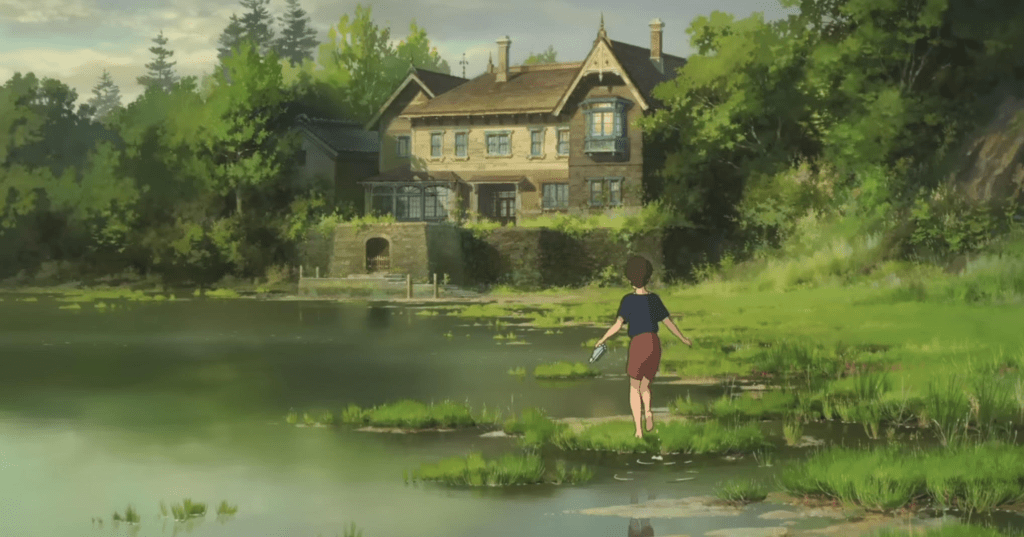
A shy girl is sent to the countryside to spend time with her aunt and uncle who live there and she makes a mysterious friend.
When Marnie Was There is a slow burn drama about a girl with asthma who goes to the countryside. The story is one more coming of age tail from Japan with the hint of weirdness yet also a weird sense of authenticity. I don’t know why but I’m somewhat reminded of The Woman in Black starring Daniel Radcliffe by some of the elements used in this. I knew from the start it was not going to be any type of horror but something about it just reminded me of that movie.
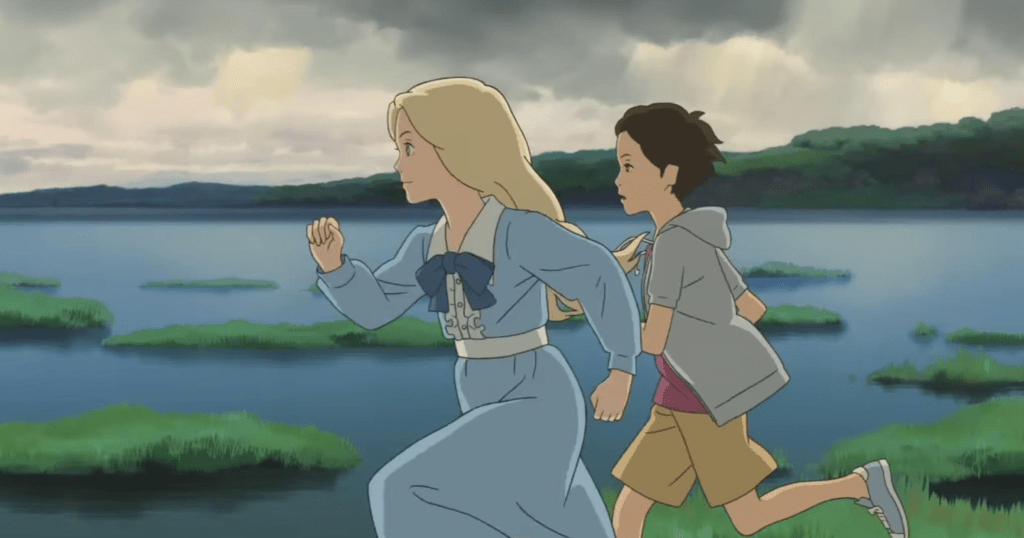
Obviously there is something going on because the visiting Anna starts experiencing some memory issues during and after her time with her new friend Marnie. At least that’s what you’re left with because that’s always the way it is in these movies. If you also cannot discern that there is a connection between Anna and Marnie then you are quite unfamiliar with the template these movies follow.
In When Marnie Was There Anna must leave behind the baggage of the past and learn to accept love. She hates herself and hates her life and thinks no one genuinely cares when in reality plenty of people do. She just has trouble believing it. By the end Anna has come to terms with her feelings of abandonment and understands that her foster family cares about if not actually loves her despite getting a government stipend.
I can’t say I was particularly surprised about anything that happened. Given that Anna was an orphan and felt ostracized by her foster family and that she was having memory issues. The reality of Marnie was no big surprise either. It was expected. This must’ve been the third or fourth movie with this type of scenario and this type of twist that I’ve seen from anything made it in Japan. It has become a bit of a cliché.
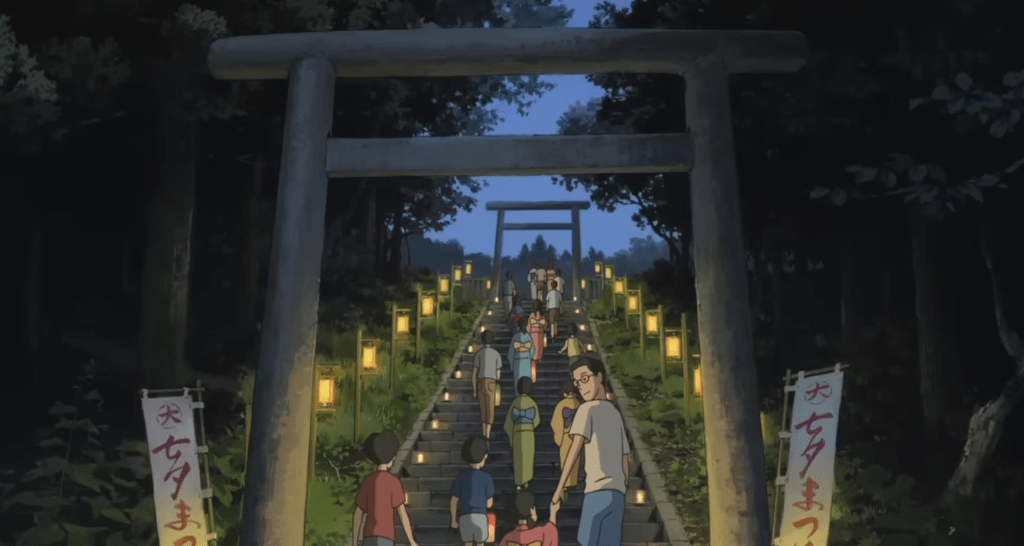
I would’ve liked some in-story explanation that at least logically put Anna in a position to go back to where she was originally from. It’s not implied that some kind of magic or supernatural force guided her back. It’s just a heavy series of coincidences that put her back where she came from. Anna doesn’t recognize the place even though it said that as a baby she had a picture of her old home that she wouldn’t let go of. Huh? Not even tickling a memory of hers despite an attachment to a picture?
I felt they should have streamlined the number of relatives or the general timeline between Marnie and Anna. A lot happened to get to her being born and a lot more happened to get to her coming back to the house. It was just a little bit too much to maintain plausibility.
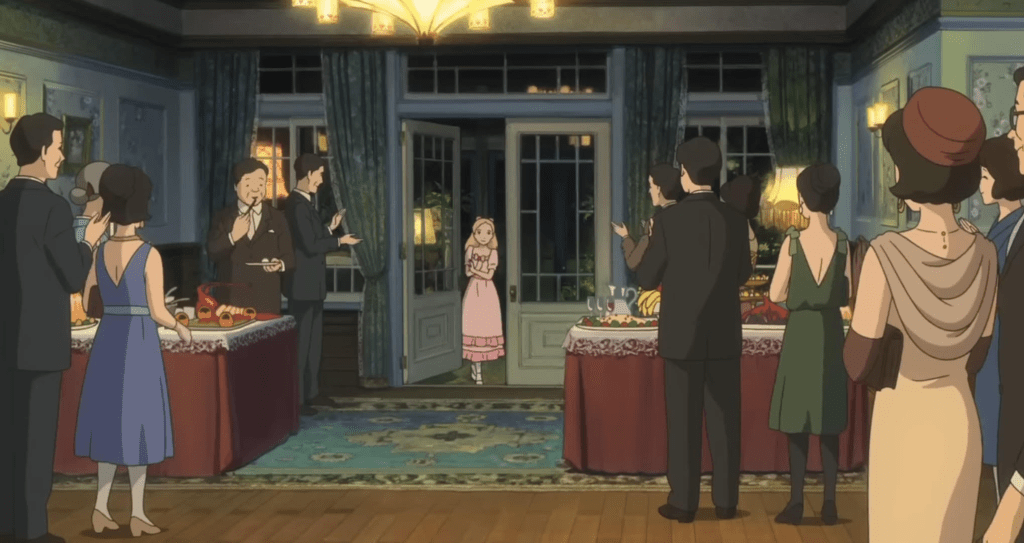
You could excuse her visions as being memories, but she clearly didn’t have any memory of anything that could help her create the visions until the little girl Sayaka who currently lives in the house showed her a book. At the end of it all I don’t know if Anna was helping Marnie work through some things or she was experiencing visions to remind her of who she was. Or maybe she was experiencing an alternate version of what happened.
The level of believability and authenticity in the animation is something that was strived for in early rotoscoping but only fully realized when a more standard approach was taken. There are nuances to the movement and the environment. So much so that you’re almost convinced you’re looking at real people.
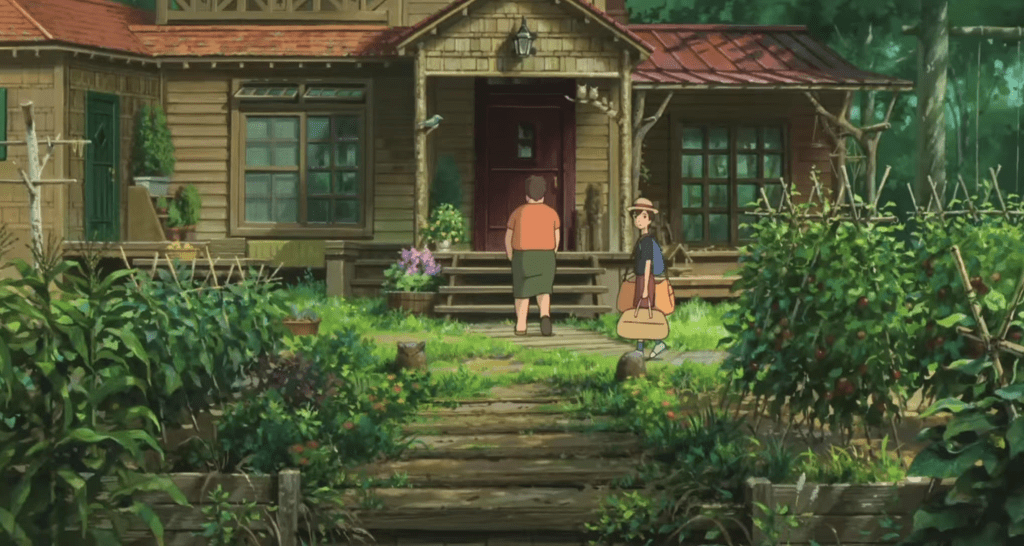
The human element is what makes this very predictable film enjoyable. It’s a part of the story but not a part that they have to shine a spotlight on each and every chance they get. It’s seen in reactions and expressed at the appropriate time. Despite the predictability I found the actual presentation well done. The dialogue was natural and the characters distinct. This kept a steady space making it a heartfelt drama and not some kinetic overstimulated narrative.
While predictable, When Marnie Was There is good. Not great and not particularly original but good. The animation is beautiful and I think everyone can find enough to like.
 Warren Watched A Movie