

- Directed by Richard C. Sarafian
- March 13, 1971
A disaffected ex-policeman and race car driver delivers a muscle car cross-country to California while high on drugs and being chased by the local police.
Vanishing Point came to my attention many years ago when Best Buy still sold a great many DVDs and Blu-rays along with their assorted electronics. I recall picking it out of a ‘Movies for Dad’ display around Father’s Day.
This is a very 70s movie. No insult intended there. It captures the time and feel of the decade as the late 60s gave way to the early 70s. The ‘hero’ Kowalski (Barry Newman) is a former cop with a love of speed. I’m not talking the kind of speed that you get from a quickly moving vehicle. His mission in the movie is to get a car to San Francisco. A car that because he comes to the attention of the police is really put through the ringer. He is the dejected and broken antihero with only the thinnest of background given to get you from the opening to the end.
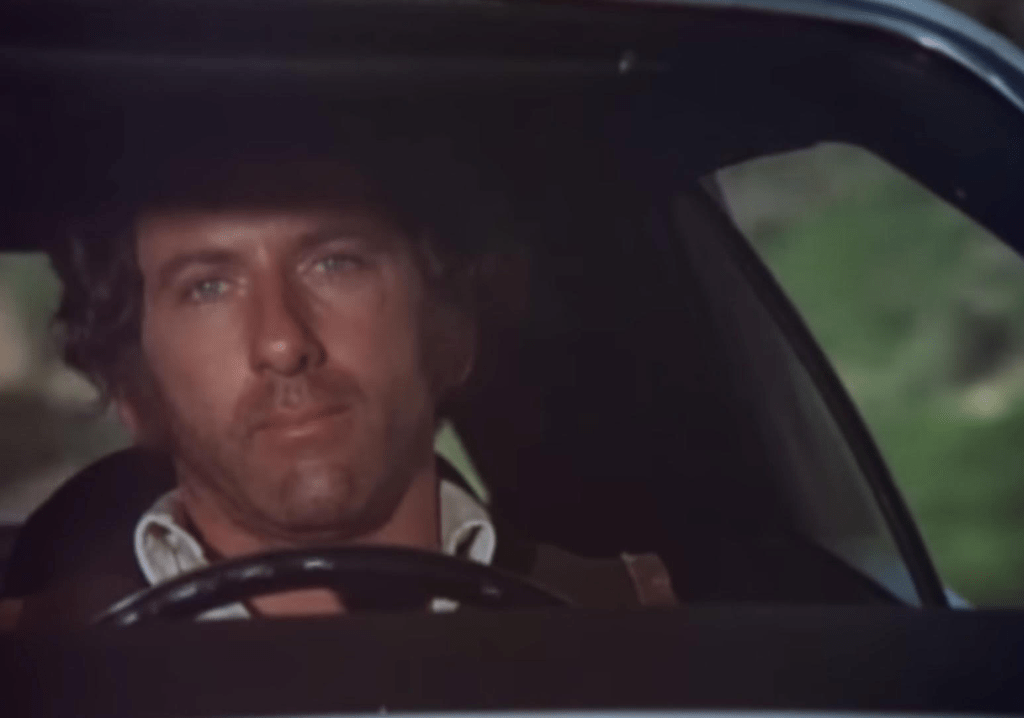
Along the way Kowalski listens over the radio to a DJ called Super Soul (Cleavon Little) with the interactions between the two bordering on the supernatural. They talk to one another but only ever speak directly once by telephone. It gives this film a nearly fantasy aspect with Kowalski receiving advice or direction.
Cleavon Little, probably best known for his part in Blazing Saddles, is great as the nearly otherworldly DJ who walked a fine line between informing the criminals of what the police are doing and being a nearly stereotypical black man seen in movies of the era. I think the narrative divergence to show the racist locals trying to destroy the radio station was an unnecessary moment. It was cool to see John Amos act tough though.
There are a few visual techniques done by Richard C. Sarafian to hint at the title. Blurring of the image or the fisheye lens technique which distorts what comes on the screen or letting the car pass by the camera yet still moving as if it is just behind.

There is a lot of potential symbolism here though I cannot say what they are always hinting at. Kowalski can be viewed as fatalistic and maybe that is something that was perceived as a mood among the general public though with the passage of so much time a definitive answer is lost to me.
I don’t need the main character to get away or drive off into the sunset. But it does feel a tad like everything he went through was pointless with his disposition. Such endings were pretty common in the 70s to subvert audience expectations and it’s a technique still used today though it’s one difficult to make work. What was the point of crashing at full throttle into the roadblock?
If anything, Vanishing Point makes a comment about free spirits and how the government/society can crush that. Kowalski becomes a bit of a folk hero perpetually eluding the police at their every attempt. He does meet a tragic end though he meets one on what appears to be his own terms. Flashbacks show the things that brought him to the point of the film with the hint he maybe blames himself for not doing better.
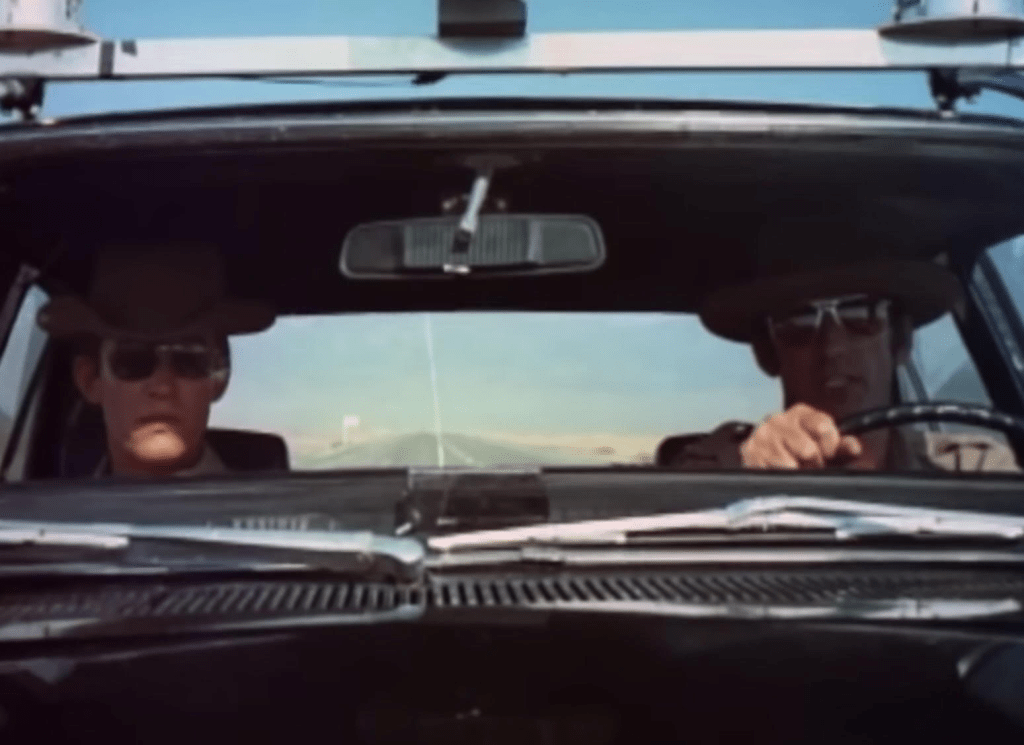
The people Kowalski meets along the way feel just tossed in there. From the nude woman on the bike to the prospector (Dean Jagger) to Rev. J. ‘Jessie’ Hovah (Severn Darden), it’s kind of random. Admittedly he wasn’t planning on interacting with them but there’s also no through line that makes it feel like he would meet them in the situation. They just happen to be there. Their presence feels like there was a need to break things up so here’s Dean Jagger!
This is a good movie, but it may not be for everybody. It straddles the line between action and wanting to be a deeper piece. If anything is terribly wrong, it’s when drugs become involved. Their use and the acquisition thereof is so forced or unnatural that you are taken out of the movie. They had something they could do to look edgy and used it.
Despite any flaws, Vanishing Point is a good movie. There’s enough excitement and enough depth to keep you engaged and make you want to watch again.
 Warren Watched A Movie