

- Directed by László Benedek
- December 30, 1953 (NYC)
- Based on1951 story in Harper’s Cyclists’ Raid by Frank Rooney
Two rival motorcycle gangs terrorize a small town after one of their leaders is arrested.
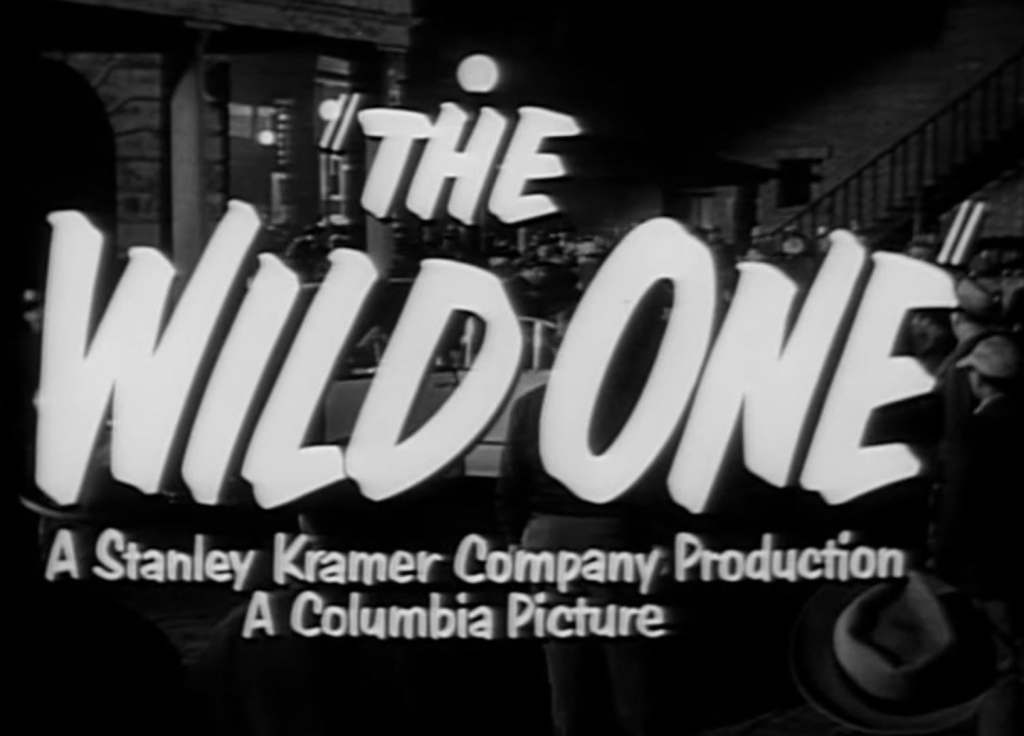
The story of The Wild One is built around the idea of bikers taking over a town. It was inspired by the sensationalistic coverage of an American Motorcyclist Association rally on the Fourth of July weekend in 1947 in Hollister, California. That in turn was used in umpteen movies and TV shows without hesitation until the 80s
Brando’s character became a template as has the movie itself. Maybe it’s because this movie’s been parodied or homaged (is that a word?) in one way or another for decades but I kind of chuckled at portions of Brando’s performance. Given the time and his then recent success with A Streetcar Named Desire it was groundbreaking, but it’s a bit of a parody of itself now. Marlon Brando’s Johnny Strabler is a blindly rebellious man whose rebellion comes off as being contrarian. When speaking with local girl Mildred (Peggy Maley) where she asks him, “Hey Johnny, what are you rebelling against?” and he responds with “Whaddaya got?” that pretty much sums up his whole stance in life.
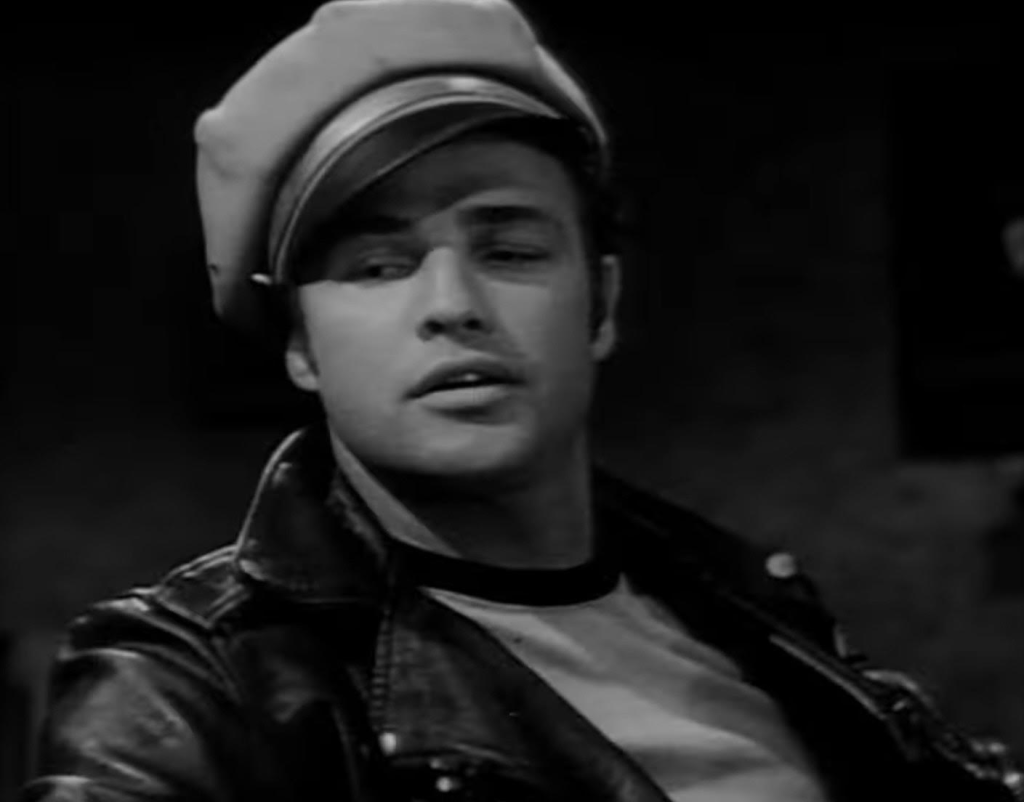
The cast of ‘young’ bikers are supposed to be in their late 20s to mid 30s with the actors playing the adults being significantly older or made to look so. László Benedek and friends wentout of their way to create an age gap to hide how close the ages really were. Not unusual but always annoying.
Johnny falls for local girl Kathie Bleeker (Mary Murphy) though she rebukes him despite being intrigued. What a tease. There is a sense that Johnny offers some kind of escape or just excitement in contrast to this very stereotypical mid 50s world. She is drawn to him but pushes him away. Holy Bipolar Express! Kathie is the daughter of the local police chief and only cop Harry Bleeker (Robert Keith).
Being the only officer on the conciliatory police force, Harry is more figurehead than actual authority figure with the townsfolk bossing him around as they make the rules up on the fly. Ultimately the locals are far more dangerous than the bikers causing chaos (notable difference for other stories of this type) are with their paranoia and bigotry and just general preconceptions about Johnny feeding into their imaginations convincing them that what they believe are how things really are.

Brando gives Johnny a nuanced conflict as he struggles with feelings for the type of girl he would not normally go for. If the one girl from Chino’s (Lee Marvin) gang is any indication Johnny likes the psychotically obsessed type that could land you on an episode of a true crime show. She is really all bothered by the fact he has no interest in her but the character just vanishes after her one significant interaction.
With the number of older films I watch Jay C. Flippen is a familiar face to me. He got his start as a comedienne though he had some serious dramatic chops. As Sheriff Singer his time on screen was small but helps drive home that Johnny should temper himself. It is the stern lecture that in a lesser film would cause the character to be a new person by the credits but here is food for thought.
The heavy use of era slang makes The Wild One a bit comical. Mix that with very enthusiastic hoodlums and it has all the superficial elements to become a Cult Classic. Brando and Marvin’s more authentic performances are in sharp contrast to the older style embodied by the actors playing the mature characters. Marvin as the leader of the rival club was underused. This was a touch early in his career so it was understandable but his talent was obvious.
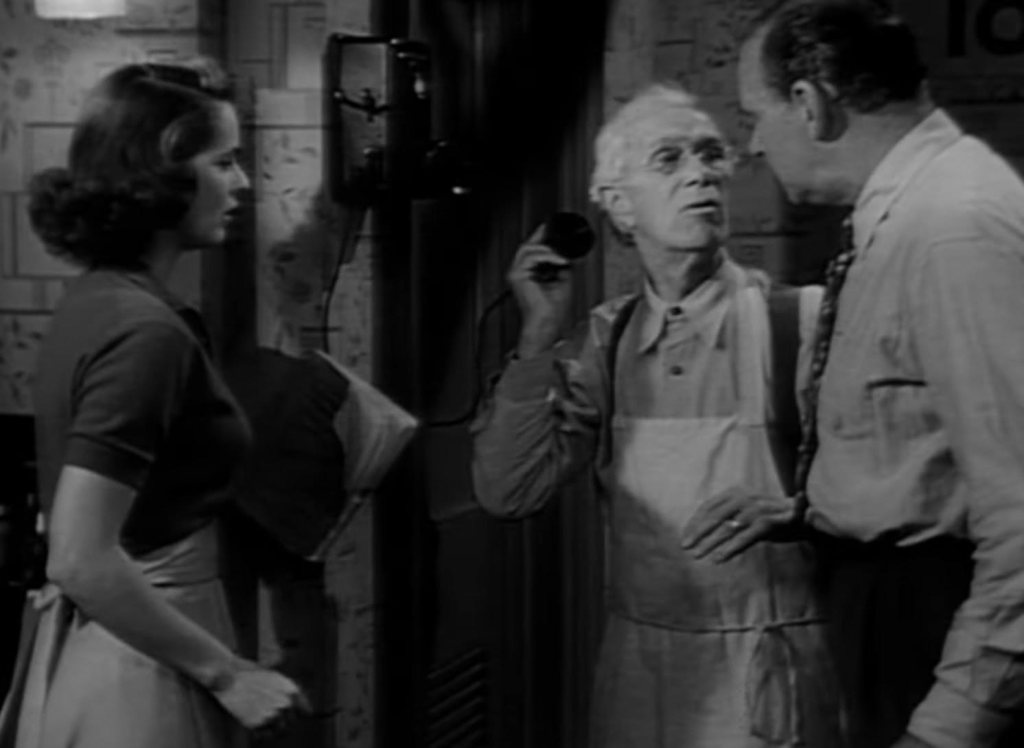
For me the ending has some realism. Johnny does not pick the straight and narrow and settle down with the good girl having chosen a future in suburbia over two wheels on the open road. After tensions in the town come to a head with Johnny barely avoiding local justice, Johnny leaves on his own hinting that he is thinking that his life and self-destructive nature is not the way to go.
I think it needed less era slang and maybe a little bit more time to develop any number for things really. It’s around 79 minutes so it’s pretty short, but it doesn’t feel short. It packs in a lot and if it had done what it did for a little bit more time I think we could’ve had some genuine complexity and depth. I just wanted more of everything!
Though silly because it has been mimicked or mocked over the decades, The Wild One has more good than bad and worth viewing.
 Warren Watched A Movie