
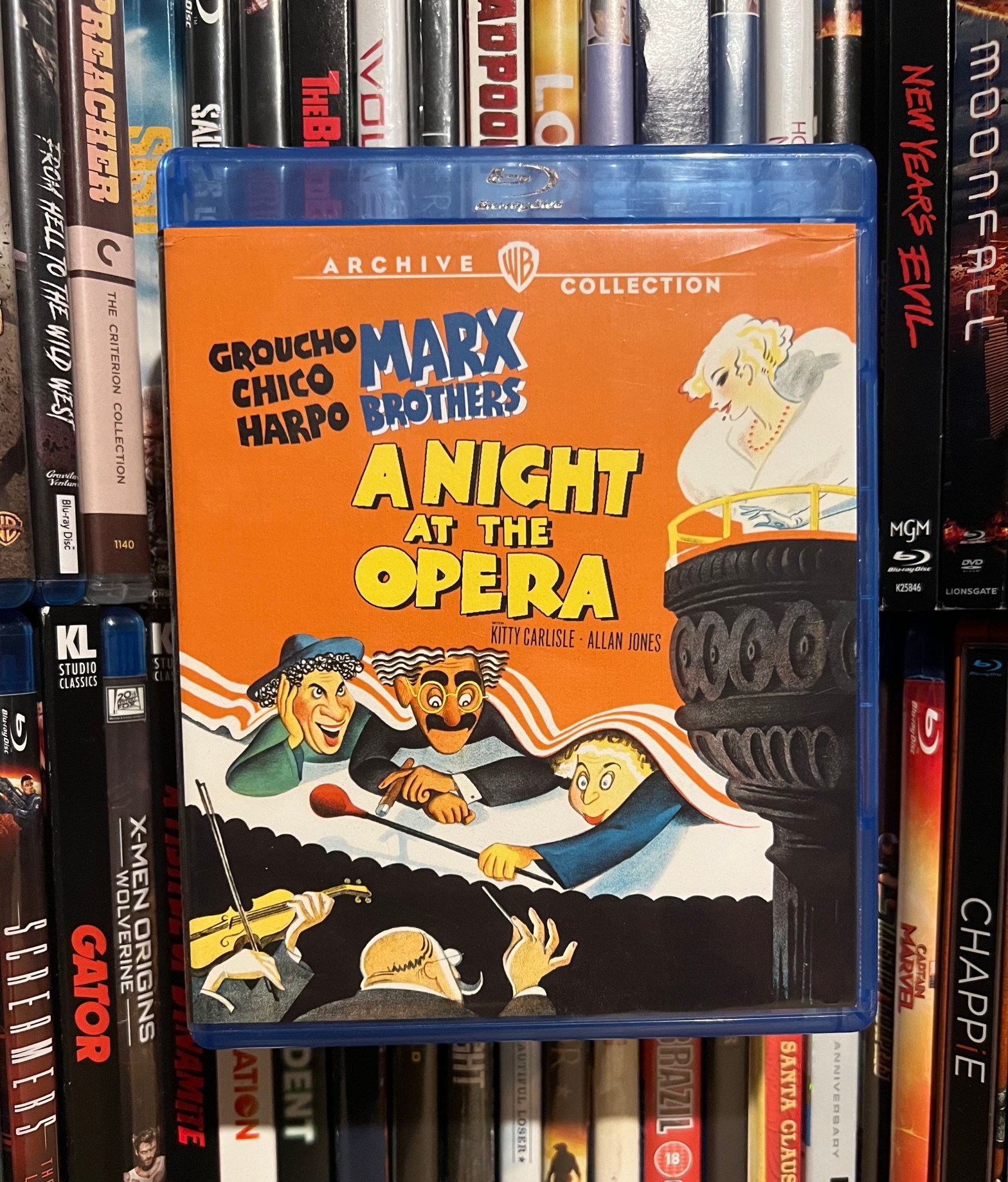
- Directed by Sam Wood
- November 15, 1935
A business manager and the friends of two opera singers in Italy plot to help them achieve success in America while besting their stuffy and snobbish enemies.
Before watching A Night at the Opera my encounters with the comedy of the still famous Marx Brothers was limited to the occasional reference in an old Bugs Bunny cartoon and slightly less old interviews featuring Groucho. Then there is the song Hello, I Must Be Going which for me is one of my favorite novelty songs because it’s just so silly and is basically saying I came but I do not want to be here so I’m leaving.
I knew the Marx Brothers were a legendary team and behind more than a few film classic comedies. How they worked together I can’t say I really was familiar with. After viewing this I like what I have seen but for me was not the strongest introduction. I’ve heard Mel Brooks refer to this as one of his favorite comedies and I can see aspects of this film having influenced the likes of Blazing Saddles and its chaotic climax.
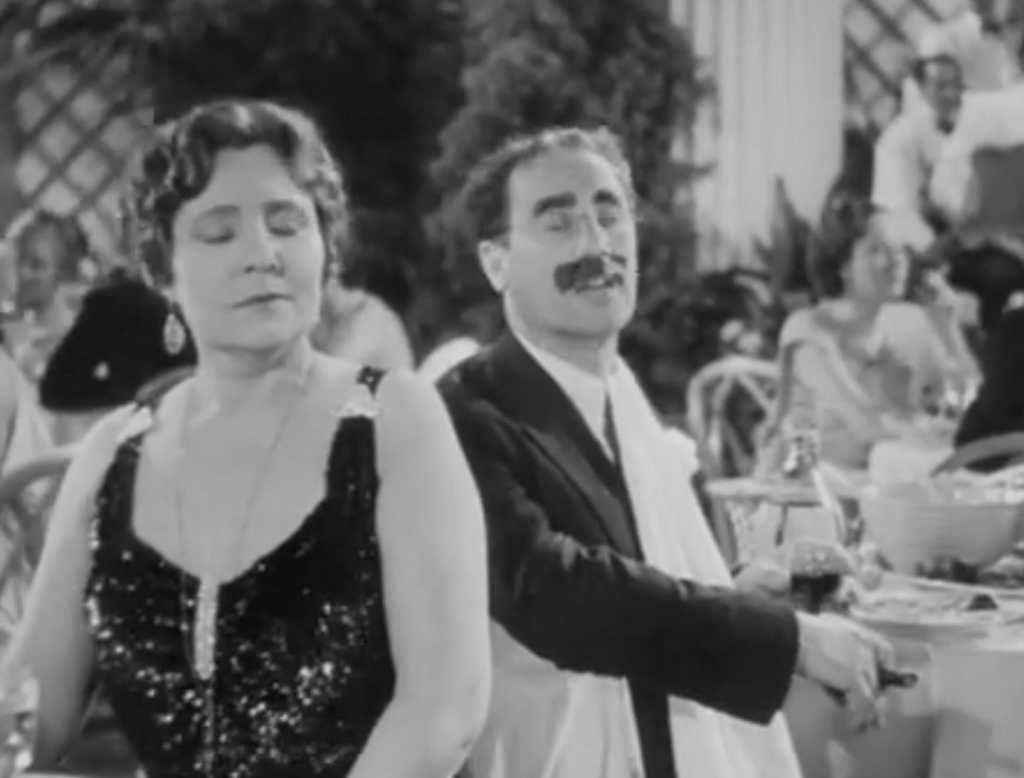
The movie goes in on absurdity. For me some of this appeared to be scripted for the general actors but the Marx Brothers appeared to be ad-libbing. Or it was a demonstration of their very practiced comedy banter. Either way their performance contrasted sharply with much of what we get elsewhere. I needed there to be a little more smoothness between their randomness and the more focused work of the larger cast. I don’t think though you could really script the humor of Groucho-as-Otis-B.-Driftwood and his harmless double entendres or comedic insults.
Generally the hearts of the cast of characters are in the right place of this snobs-versus-snobs comedies. They may be trying to make a buck but they’re also trying to get Ricardo Baroni (Allan Jones) into stardom (though Driftwood gets involved by accident) allowing him to be with Rosa Castaldi (Kitty Carlisle) over Driftwood’s actual target and general jerk Rodolfo Lassparri (Walter Woolf King).
There are a few big production numbers which MGM was known for at the time. Some are part of the story though a few were clearly added because of the then association the public had with MGM and the aforementioned big numbers. The non-musical stateroom scene (written by Al Boasberg) is perhaps among the more famous bits from the film. I think the story behind the gag is more interesting. He wrote the scene then tore it up. After which he pinned the pieces to the ceiling!
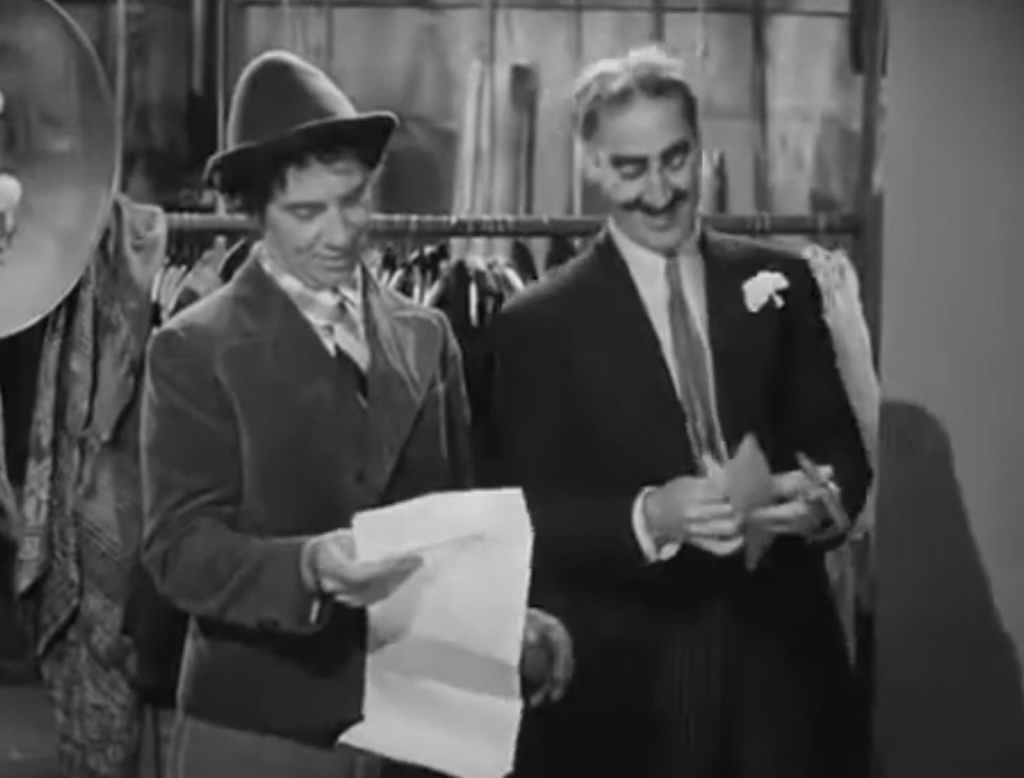
This is not the slappiest of slapstick that I’ve ever seen. Maybe it’s because of the time it came out. It feels a little bit controlled. It needed more chaos. That’s not to say I didn’t find it funny. There’s plenty of humor that waffles between a smile to an out-and-out laugh. Late in the film Driftwood and pals are trying to hide the number of people actually in a room by moving out/around the cots.
I didn’t hate it and I can certainly understand how it gets its classic status. I just felt like I’d seen it before. And that’s the problem. It clearly was such an impactful film in comedy that scenes have been referenced or directly homaged since this came out. Gags have been borrowed or stolen. Everything from live action slapstick to the best animated comedy has taken from this. That kind of upsets me. I know this was great but because of its influence I had seen so much of it elsewhere.
Yet I still enjoyed A Night at the Opera. You may not find it a rip-roaring comedy, but you will be entertained and can even see where so much came from. Well worth your time.
 Warren Watched A Movie