
- Directed by Doug Aarniokoski
- Written by Gaia Violo and Eric Anthony Glover
- Based on Star Trek created by Gene Roddenberry. Star Trek: Starfleet Academy created by Gaia Violo
- January 29, 2026
- Paramount+
Episode Cast
- Chancellor Nahla Ake-Holly Hunter
- Caleb Mir-Sandro Rosta
- The Doctor-Robert Picardo
- Jay-Den Kraag-Karim Diané
- Sam (Series Acclimation Mil)-Kerrice Brooks
- Darem Reymi-George Hawkins
- Lura Thok-Gina Yashere
- Digital Dean of Students-Stephen Colbert voice
- Obel-David Keeley
- Admiral Charles Vance-Oded Fehr
Due to devastation caused by The Burn, the Klingons are facing extinction over their refusal to move to a Federation world while Jay-Den confronts his fear of public speaking. That seems like two extremes.
Given the vague plot descriptions before this was released, I expected the episode to revolve around Tribbles along with Klingons and based on social media responses I was not the only one who thought. No Tribbles but it does connect to the show’s regular Klingon character.
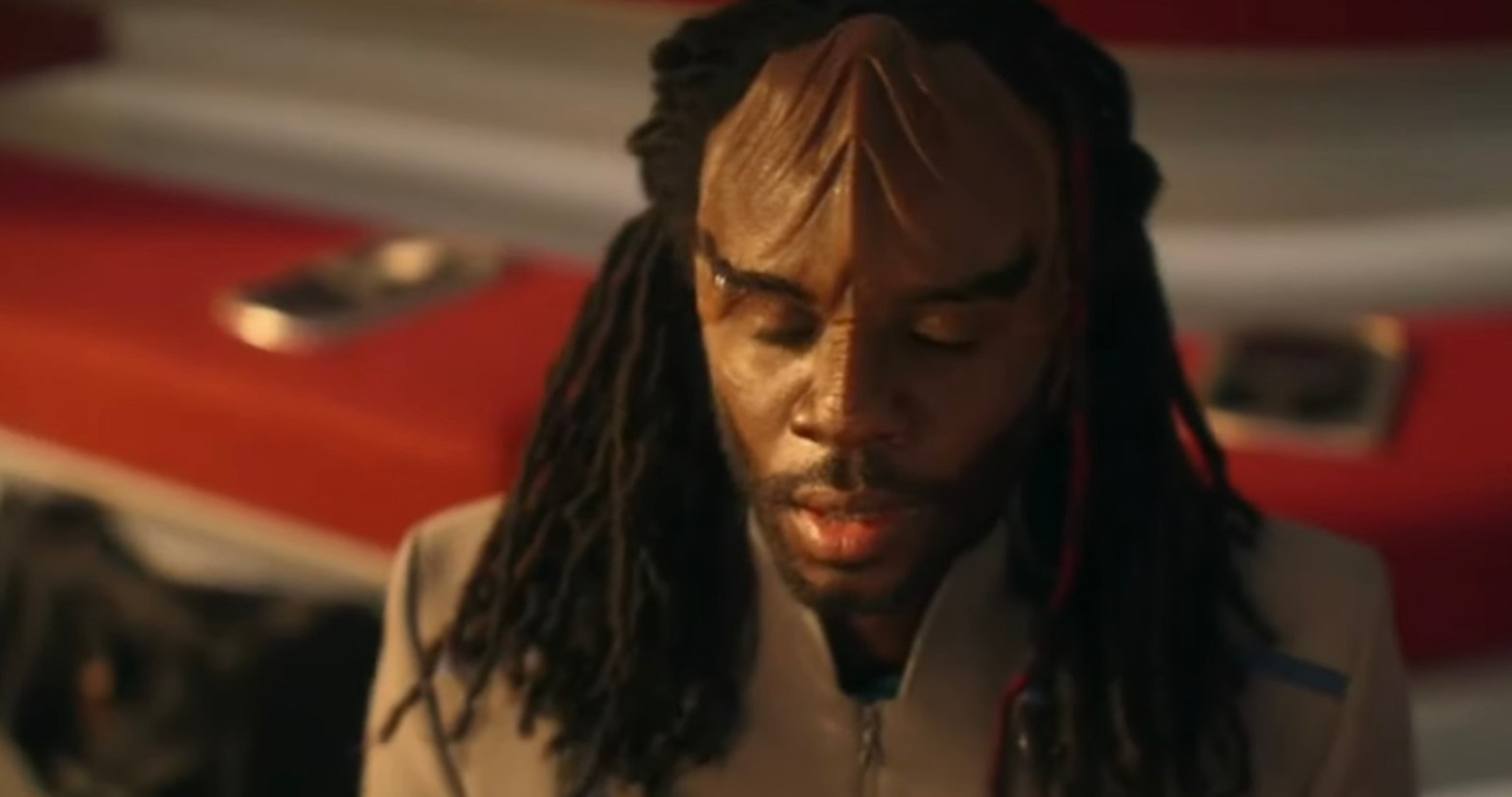
The first significant scene of Vox in Excelso involves The Doctor (Robert Picardo) teaching a debate class and using the phrase “Chicken sh!t” towards a student with the excuse he can because he is several centuries old. That seems like flimsy reason. Or a very modern one in a fictional world that was once aspirational. We also get the first inklings of Jay-Den (Karim Diané) with his very perfect Klingon teeth having panic attacks over public speaking.
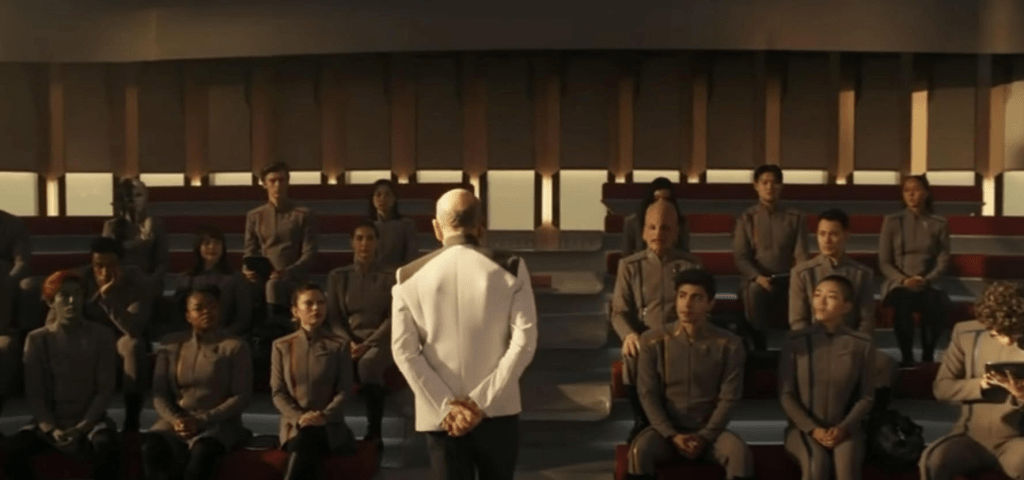
I cannot get past a medical professional with centuries of experience teaching a debate class. He is an irritable man and handling first year cadets (the whole Academy BTW) in a debate class strikes me as poor decision making. A chunk of the episode is in one form or another debating the current topic of the Klingon situation and conspiracy theories surrounding it. It is often done in an almost surperficial way to force a direct connection to the end. In other words in an episode involving debate there is very little debate.
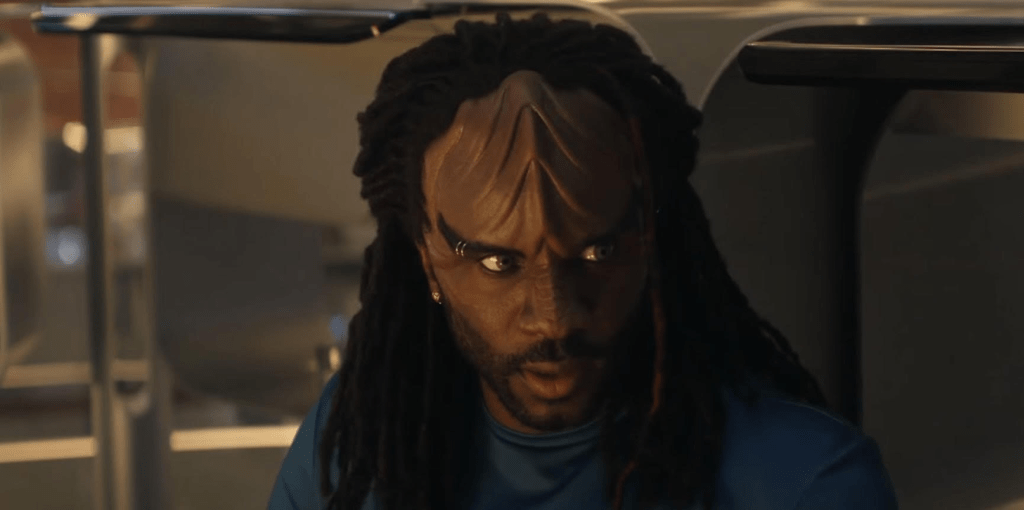
Caleb (Sandro Rosta) offers up some replicated Klingon stew to Jay-Den who reveals he cannot eat it because he is not a warrior. Vox in Excelso tries to be a very Klingon-centric episode but focuses as much on Jay-Den and his past emotional trauma as it does on Chancellor Ake’s (Holly Hunter) past connection (they boinked) to the leader of the Klingon diaspora Obel (David Keeley). Oh, and Jay-Den’s panic attacks over public speaking while he is also uncertain if his family that left him on a planet alone is still alive. I would think that level of abandonment might make him not care about them.
Qo’nos has been devastated by exploding dilithium reactors due to the Big Sad of The Burn. Sure sounds like these people think dilithium crystals are a power source and not a means of channeling the extreme energy from an antimatter reactor. This devastation has pushed the once mighty Klingon Empire and its people to the brink of extinction. Anyone feel like this ripped off Star Trek VI: The Undiscovered Country a bit?
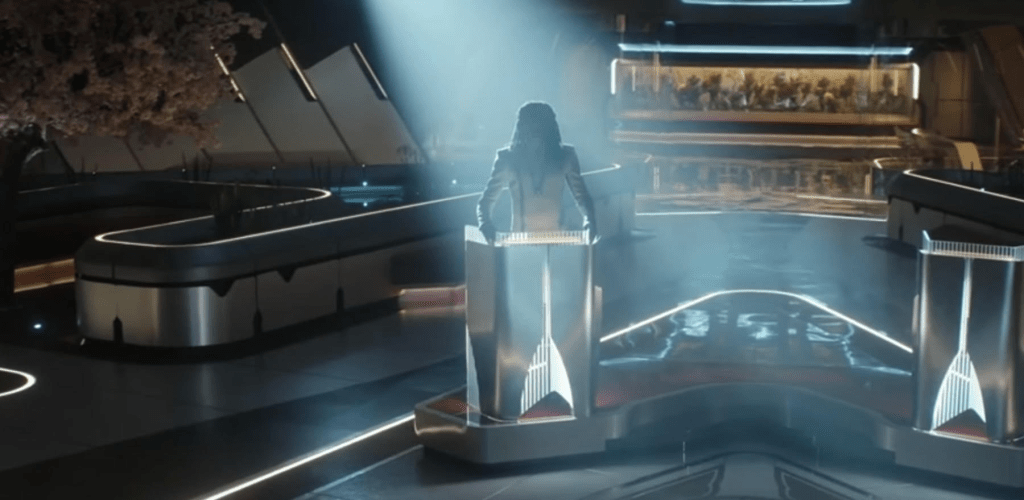
The Klingons are offered a planet identical to Qo’Nos in Federation space. It is very near where many of their people have already settled. They will not take Federation charity though it sounds like they already did. If those worlds are not Federation, then why not go there? What makes them so unattractive for mass relocation? This new planet is unhabited so it has no basis of infrastructure to begin colonization but those others do even if it minimal.
In a moment that is done like something right out of a Steven Seagal movie, Admiral Charles Vance (Oded Fehr) talks up the past service record of Chancellor Ake while offering few actual details but still driving home how amazing she is. He also reveals he thinks her previous relationship with Obel is the key to getting the Klingons to taking Federation charity. It just shortcuts some scenes that might otherwise add depth or stretch the episode.
A prominent feature of this episode are the frequent flashbacks to Jay-Den’s life on a nameless planet. I laughed for the first time in a Klingon episode. Vox in Excelso was a great deal of overacting and shouting turning much of what was done into a parody of Klingons. This also introduces that Jay-Den was more or less rejected by his family due to an aversion to hunting and a desire to become a healer. Starfleet Academy once again gets some stuff a bit wrong. Let me try to say why.
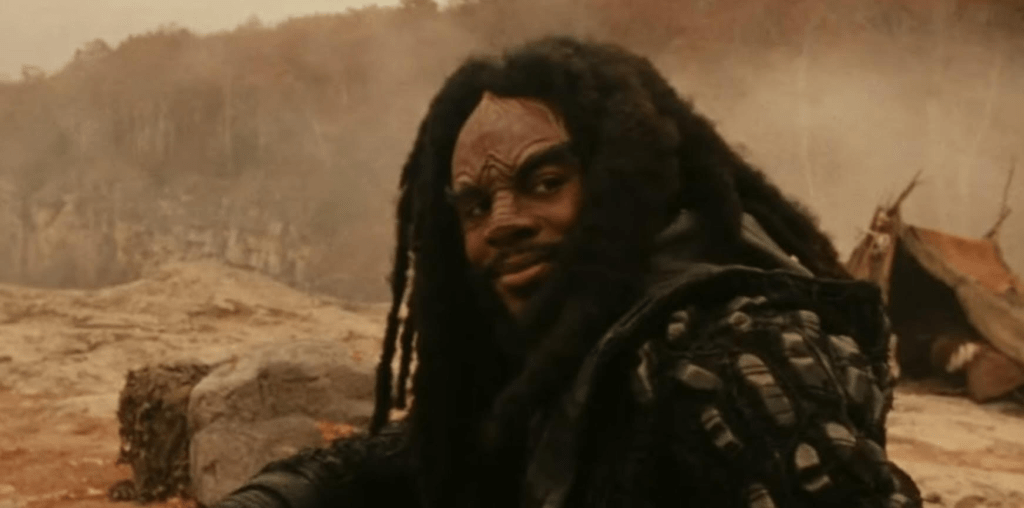
Daddy looks down on Jay-Den because he won’t hunt and wants to be a doctor. What exactly does the kid contribute to a family living on the edge besides stress? Jay-Den does nothing to aid in their survival. He just whines about Daddy not accepting him and him not being a warrior. Those are two things he could fix with one action. But the episode’s issues are deeper than that.
Klingons may not have praised their intellectuals, but being an intellectual was not necessarily dishonorable or the path of a weak individual as implied here. They may have been preferable to become a warrior, but it wasn’t dishonorable to fight medical battles or intellectual ones. Ferengi did look down on scientists and scholars even though they had them because there was little if any profit in those endeavors generally with perhaps even the implication that the good ones could charge more than the bad ones meaning that greedy species needed to spend more money. But not necessarily the Klingons. Physical battle was preferred but honor was found in many ways.
There’s also Jay-Den occasionally referring to his family as a ‘house.’ Several centuries may have passed since the major time of Trek stories but using that to explain away an incorrect use of a terminology is just lazy. ‘House’ generally referred to a family with some authority or prosperity. Some houses were greater than others. However, all Klingons had a lineage regardless of their social status. Jay-Den’s family was clearly poor so it seems incongruous with previously established lore that he would refer to his family as a house instead of a son of.
The big trauma (besides complete abandonment in the woods on a planet) is the death of some one-off character Jay-Den could have saved with a piece of Federation technology seen at the nearby outpost that Daddy shouts “No” over using it. So Jay-Den never got a vague idea of what to do over a wound even if it was totally wrong? It implies he chose medicine because it was easier than becoming a warrior or it was just cool.
Lura Thok (Gina Yashere) makes her best appearance of the series so far though it still fails to explain how a mass produced all-male species with a limited lifespan produced any children. Lura wasn’t a parity of R Lee Ermey or a warrior. It though did little to help in the character growth of Jay-Den since she just handed the character an explanation that spoke of love on why he was left in the woods alone with no supplies. He did not learn.
Darem (George Hawkins) steps in to help with Jay-Den’s fear of public speaking. It is a vague peptalk with their interaction indicating this will be the gay couple of the show. Darem of the first two episodes would have been a match for a traditional Klingon but Darem of episode three and four is a better match for this superficially Klingon character. Not sure what linked these two besides some handholding. Their mutual touch excited each other? Whatever happened to building a relationship?
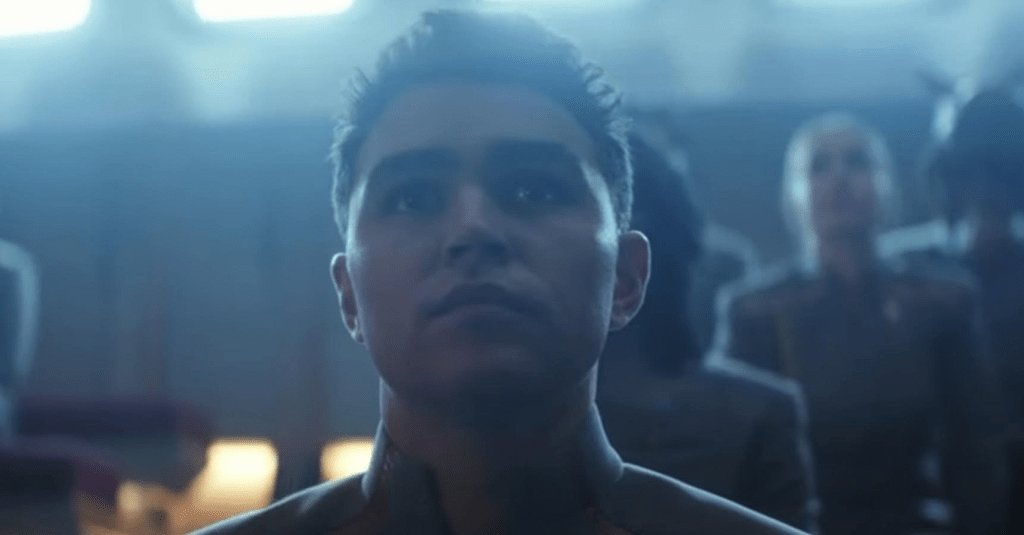
All throughout this episode the trained adults are at a loss on how to solve the issue of the Klingons not wanting an exact copy of their homeworld situated near planets they have been willingly colonizing. Jay-Den steps in and offers up a solution. Not Ake with centuries more experience with the species to the point she was viewed as a worthy lover by Obel. So a kid taking a debate class is smarter than everybody else. Brings into question Starfleet training.
The solution? Klingons need to conquer this planet in battle as opposed to all the places that they have not done so as mentioned in the episode. Why? It is because they won’t go there unless it is part of the spoils of war. In reality it is to give this episode an exciting climax over an engaging intellectual one.
It’s explicitly obvious the battle is a fake. I don’t think even the Klingons could pretend that there was any reality to it. Previously honor was a very real and tangible thing to Klingons. Amongst Klingons you could not fake your way into genuine honor. Even Quark on DS9 understood that and used it to his advantage on one episode centered around his character. In other episodes in the Star Trek realm the reveal of false honor completely wrecked the plans of a character.
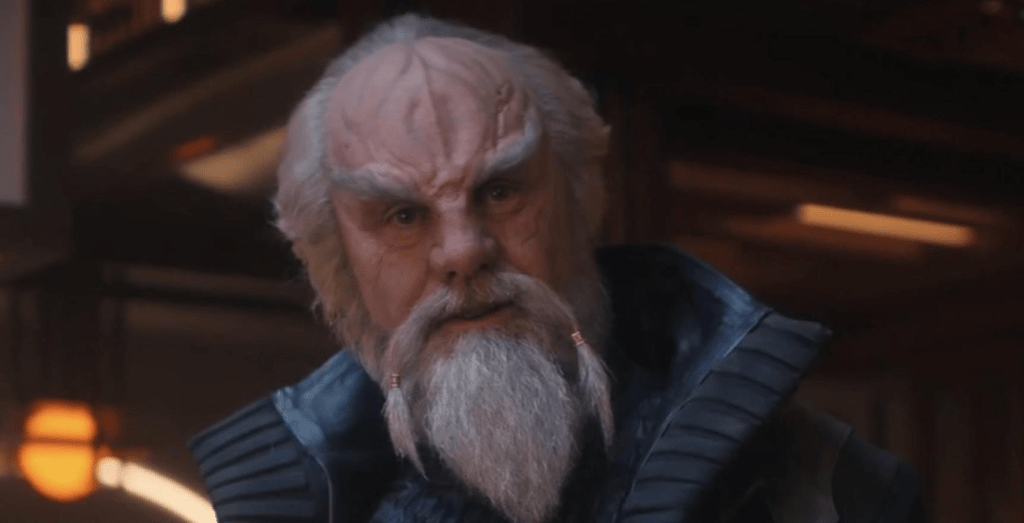
When in comes to Vox in Excelso the idea is good but the execution is bad. Star Trek is the rare fictional universe with very few elements are open for debate. Much has been explicitly stated well before. Honor amongst Klingons and it needing to be genuine. These were once portrayed as a prideful species bound by tradition and a complex culture though not without some but not infinite wiggleroom.
Even though the battle is all fake why hang a lantern on that to the galaxy by taking the Athena to participate. Not only is it a clear signal there is to be no danger in this tense situation but if something goes wrong these first-year students given access to an advanced starship are being put in real danger and lack the experience of trained officers.
Kahless, a Klingon name spoken consistently since TOS, gets a random ‘sh’ sound on the end. Why? Then there are references to the ‘Mythology of Kahless.’ Kahless The Unforgettable and his deeds were very real to the Klingons until this very episode. He was the ideal Klingon on and off the battlefield. When Worf or Martok spoke of what their messianic figure did, they were relating history and not myth.
Calling Vox in Excelso good would be a bit of a stretch. It would be more accurate to say it’s the least bad of the first four episodes of Star Trek: Starfleet Academy. It’s not a massive upswing in quality nor is it a new low point. It attempts to use lore but does sell very poorly. It also attempts to expand upon lore and a character but doesn’t do that well either. I cannot say I was pleased.
 Warren Watched A Movie