
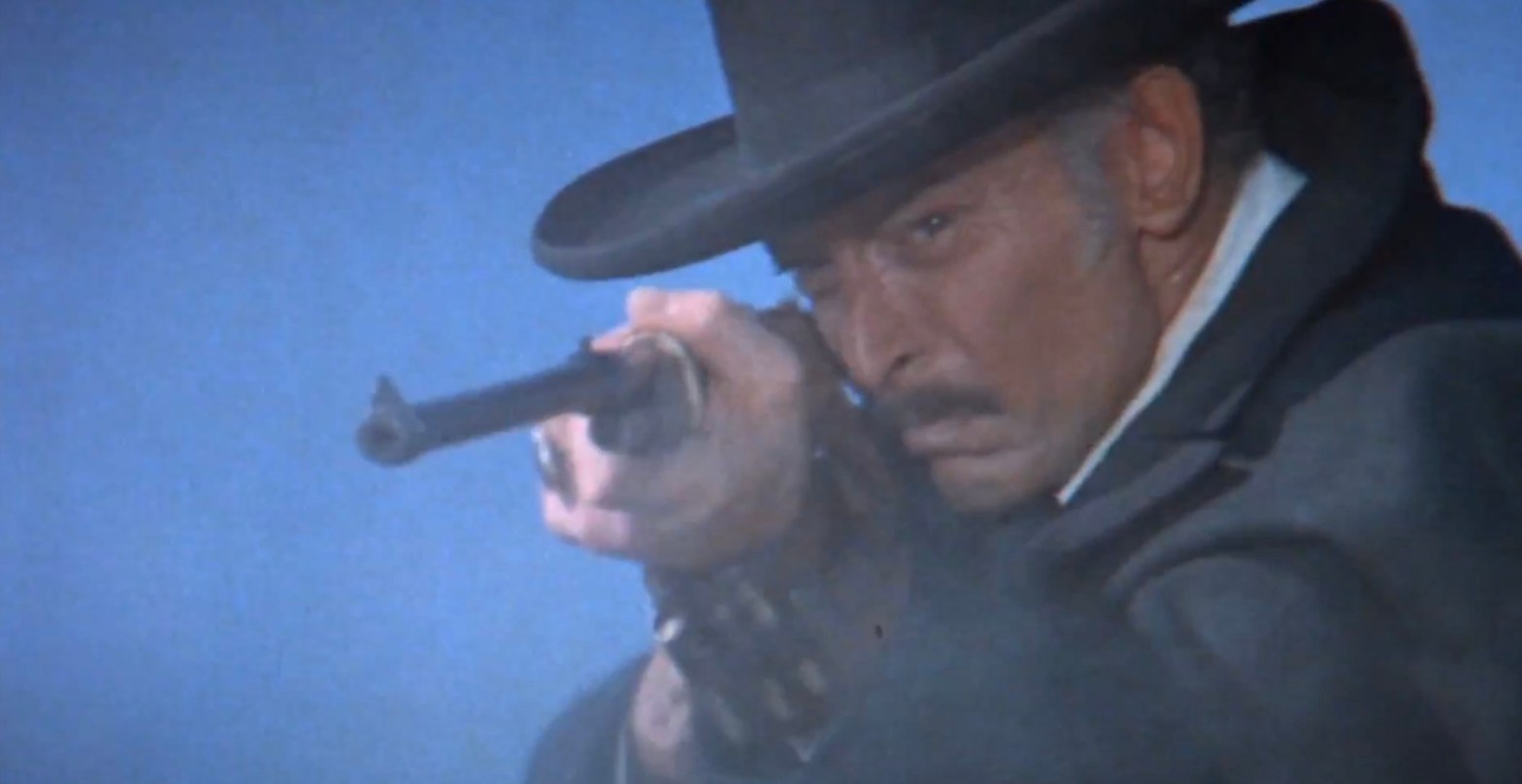
- Italian: Ehi amico… c’è Sabata. Hai chiuso!, lit. Hey man … that’s Sabata. You’re finished!
- Directed by Gianfranco Parolini
- September 17, 1969 (Italy)
A gunman hired by a rancher, a judge and a saloon keeper proves uncontrollable with his own agenda.
Say what you will about Lee Van Cleef but he could bring the tough when on camera. A look or a line spoken the right way told you his character meant business. He was no physically imposing figure but knew how to create a presence. As Sabata he does that in a movie that can be a bit…rough at times.
Being a Spaghetti Western, Sabata has its share of ADR. It is often treated like voicing a cartoon character rather than dubbing. You can sound like an old timey prospector in animation but even Gabby Hayes knew when to tone it down.
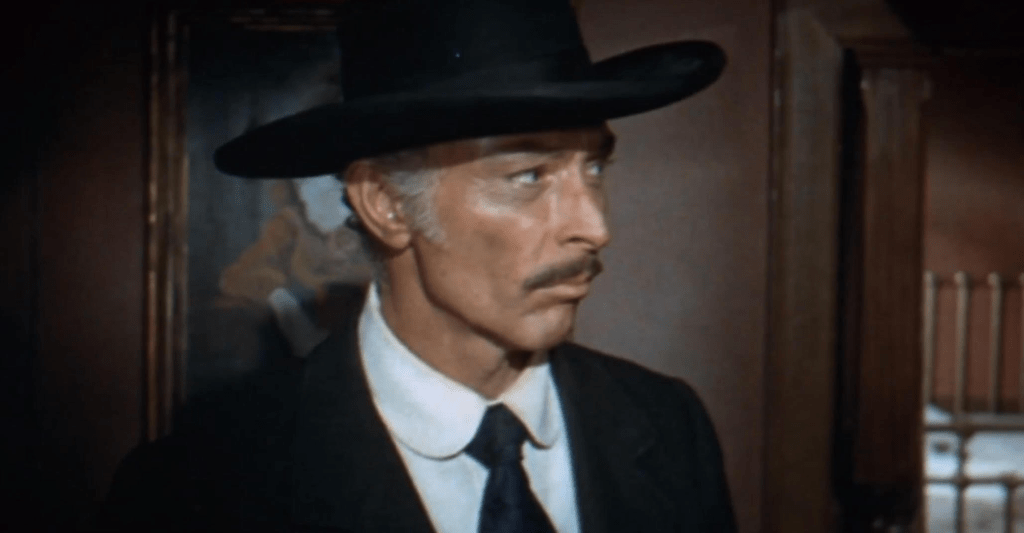
This mixes a heist story with a landgrab narrative with Sabata trying to screw over some locals planning to execute a scheme to steal money to get some land that the railroad will soon be after while dealing with a mysterious bard named Banjo (William Berger). We get some comic relief in the hanger-on of Carrincha (Ignazio Spalla as Pedro Sanchez) who is the fat slob present for humor and idol worship. Somehow Carrincha served in the Civil War. Eventual pal Indio/Alley Cat (Aldo Canti as Nick Jordan) is more a themed character than an individual.
There is a level of style to Sabata but that unique feel does not smooth out the rough edges. Intentionally or not it moves into camp or even can be seen as a bit cartoonish. Sabata may dress in a black outfit with tassels but Banjo wears one that makes noise though not so dark.
The antihero Sabata does his best to blackmail the baddies while getting their stolen money. Banjo, though a themed character, is his equal with designs of his own. Cleef is excellently paired against Berger, but the characters of Judge O’Hara (Gianni Rizzo), Stengel (Franco Ressel), and Oswald (Claudio Undari as Robert Hundar) are bland though Ressel has a face that looks like a space alien.
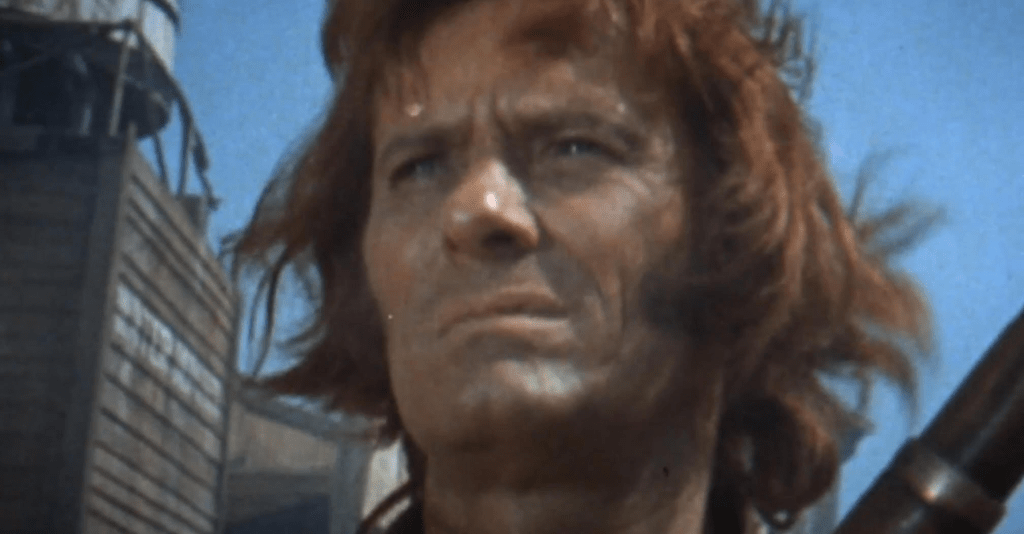
When it comes to the execution of the plot things get messy. Director Gianfranco Parolini packs the movie with the stylized gunfights that Spaghetti Westerns are nearly synonymous with in an attempt to inundate the senses to get you through the issues. Outside of the action it gets very talkative making what should be brief moments far too long.
Sabata has excellent music by Marcello Giombini and opens with a tune that gets you kinda pumped but is unable to continue consistently the momentum from the start. The plot becomes convoluted in part because of a few characters that added nothing but distraction.
Sabata is almost good. It has quality ingredients but too much extra was thrown in to spice up the recipe.
 Warren Watched A Movie