

- Directed by Nia DaCosta
- January 13, 2026 (UK) / January 16, 2026 (US)
Spike is adopted in the Satanic Fingers while Kelson makes a connection with the alpha known as Samson. That sounds like the summary for a TV episode and not a movie!
I enjoyed 28 Years Later largely because it used an extraordinary set of circumstances to tell a very identifiable story. 28 Years Later: The Bone Temple under the guidance of Nia DaCosta tries to be more commentary than a human story while also setting up a cure storyline from the looks of it.
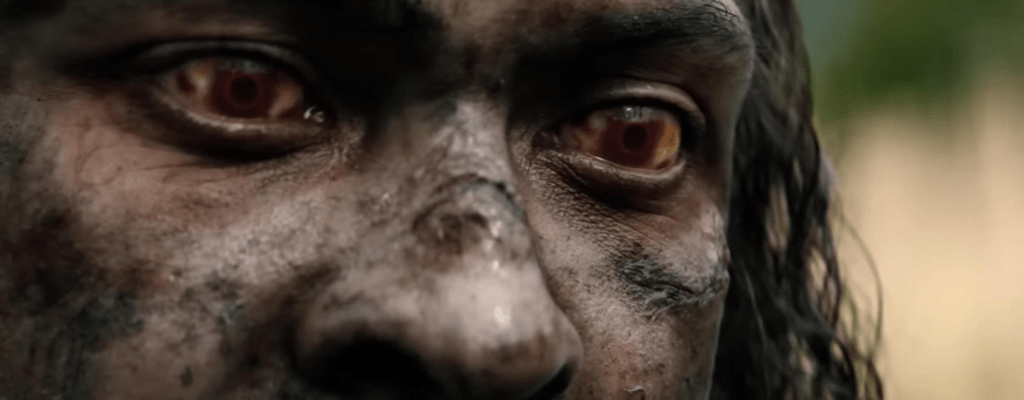
Towards the beginning there is a scene involving Samson (Chi Lewis-Parry) and what he sees. It connects to Dr. Kelson’s (Ralph Fiennes) big push in this film to treat the Rage Infection. It was interesting though unnecessary. An assumption of that visual by Kelson is more than enough since it puts the viewer more in the shoes of Kelson and his thinking. Like so many other zombie inspired movies, we learn that their humanity lay just beneath the savagery when Samson is tripping balls on morphine with Kelson and while looking at the sky says ‘moon.’
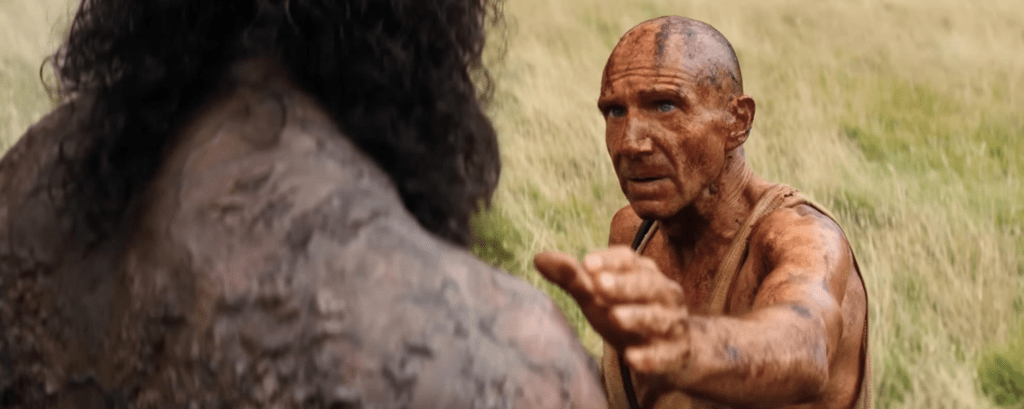
Ralph Fiennes is a great actor that always brings something engaging to his work, so I liked that he came back in a bigger way. If the focus had been strictly on Kelson and his work that would have made a stronger, though shorter, film. The cuts to the Jimmys and thus Spike (Alfie Williams) break the flow established in the story and conversely breaks the flow with the Jimmys when switching back.
Spike’s returns in 28 Years Later: The Bone Temple is in a narratively reduced capacity since this is much more Kelson’s story of discovery and Sir Lord Jimmy Crystal’s (Jack O’Connell) fall from power. The kid who trekked the wilderness to save his mom and fought great odds while leaving childhood behind looks a bit too stupid to have learned anything now that he is paired with the Jimmys. He does not look to feel an obligation to them for what they did in the closing minutes of the last movie. So this kid that made hard choices and put his mother’s skull in Kelson’s Bone Temple is held in check by fear. A significant nerf of the character.
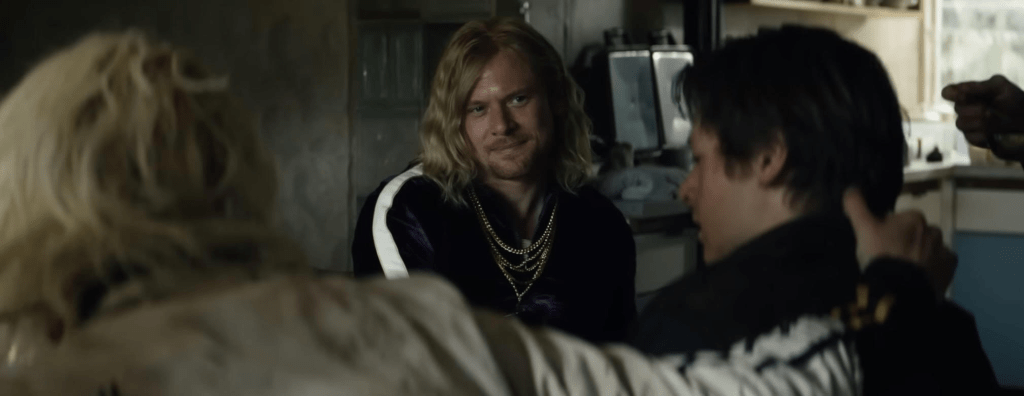
Jack O’Connell as Sir Lord Jimmy Crystal is great to watch. Much like with Kelson, if 28 Years Later: The Bone Temple had been the story of the Jimmys (and Spike) it would have been a stronger yet shorter presentation. Both stories and their significant characters suffer from the split attention. Watching as the Jimmys go around and kill survivors as offerings to Old Nick with Spike growing more would have been more entertaining than watching them do a few things until they were obliged to connect with Kelson.
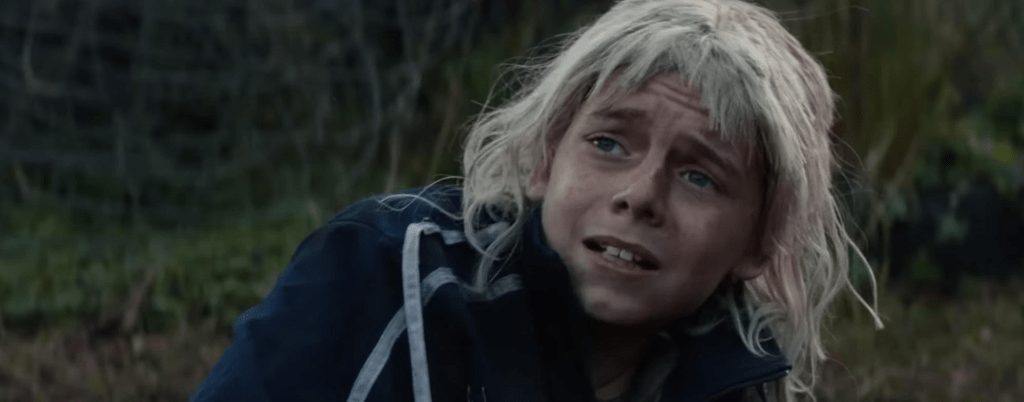
Bone Temple felt slower than 28 Years Later. The latter was no crazy action film, but more was happening. Splitting the story makes it feel so much slower and, well, emptier like DaCosta is trying to stretch out meager servings into a grandiose feast.
If there is anything deeper in this movie it is commentary on cults and false prophets. Jimmy Ink/Kellie (Erin Kellyman) realizes Jimmy Crystal may not be the prophet he claims but more of a con artist acting on his own agenda. Crystal confirms that in his dialogue with Kelson. It gets close to making some commentary but not as well as 28 Years Later did with its take on passing from childhood into adulthood.
As a group the Jimmys never feel as terrifying as they should be. These are people who roam the countryside looking for individuals to kill and maybe even others to recruit into their cult. There is a scene where we see just how brutal they can be, and it just doesn’t feel evil or menacing even though Crystal outright says he plans on killing everybody. It is certainly strange but never frightening. Their actions fill up time rather than generate menace.
Bone Temple’s ending is anti-climactic. I like the idea of Kelson posing as the Devil in exchange for his life. The twist where it looks like he’s about to screw over Crystal was great but then it just all falls apart in a very weak and unexciting way. It should be chaotic based on the fragility of the situation but breaks down almost methodically.
As an actor Ralph Fiennes approaches it with uncertainty though the whole vibe is just calm but not like everything hangs on how it turns out. Jimmy even admits it is all a scam yet the reaction by the cult is rather muted. Nobody looks like their leader just gut punched them! Jimmy Ink barely reacts.
Kelson’s efforts at treating Samson and their success says something about the larger world but what? He figured out that antipsychotics and pain medication are a great way to treat the disease. He also intuitively realized because the antipsychotics brought about reason that the rage was fueled by hallucination and not by anything else. Did the world just decide to not try? Is this something being saved for the next movie? Commentary on society? Does this tie into the revealed patrols?
Much was made of Cillian Murphy appearing in this as Jim from 28 Days Later but it is a very small moment towards the very end. Previously he and the rest and the rest of the survivors put a blanket out for a jet flying toward them. So they didn’t get rescued? But really his appearance here amounts to nothing. It does not connect to the main story. A much better ending would have been Spike and Ink being saved by somebody never seen. It would’ve allowed for a distinct ending to the movie while also laying a foundation for another film.
The few minutes with Celia Murphy were unfortunately some of the best of the movie in terms of acting and set up. Murphy is a great actor and shows human moments among extreme survival much like the first film did. It’s not anything that really ties into the story overall. It’s just a hook to get you to want more.
28 Years Later: The Bone Temple is okay but does not measure up to 28 Years Later. It feels unfocused and limp. There’s plenty for a good movie here but Nia DaCosta does not know how to bring it together.


I refuse to read this review before I’ve seen the movie. But as Arnie said, I’ll be back….
LikeLiked by 1 person
I have never been too adverse to hearing about a movie before watching. Sometimes I learn it is not worth my time. Others I get excited because it sounds amazing. Both are independent of the person’s thoughts.
LikeLike