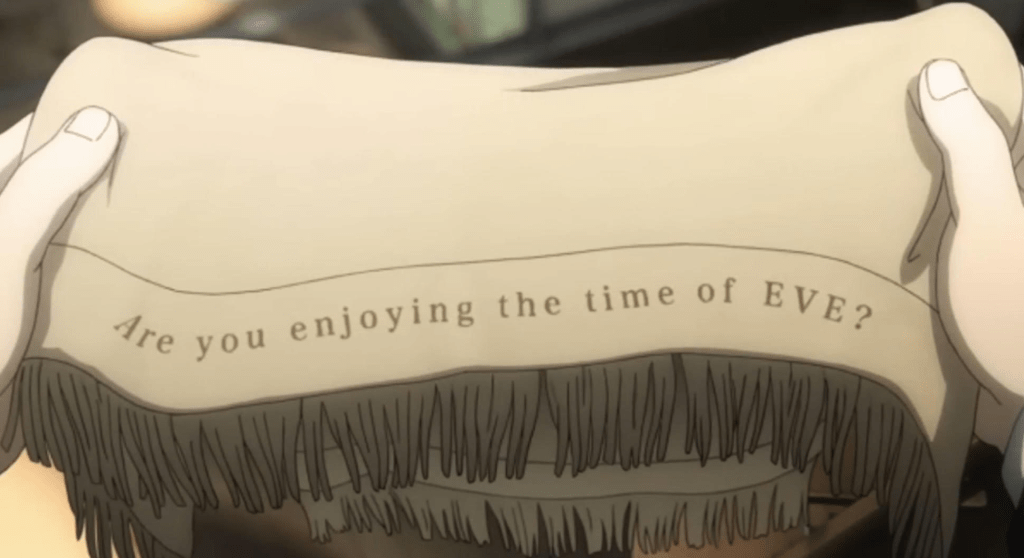
- Directed by Yasuhiro Yoshiura
- March 6, 2010 (Japan)
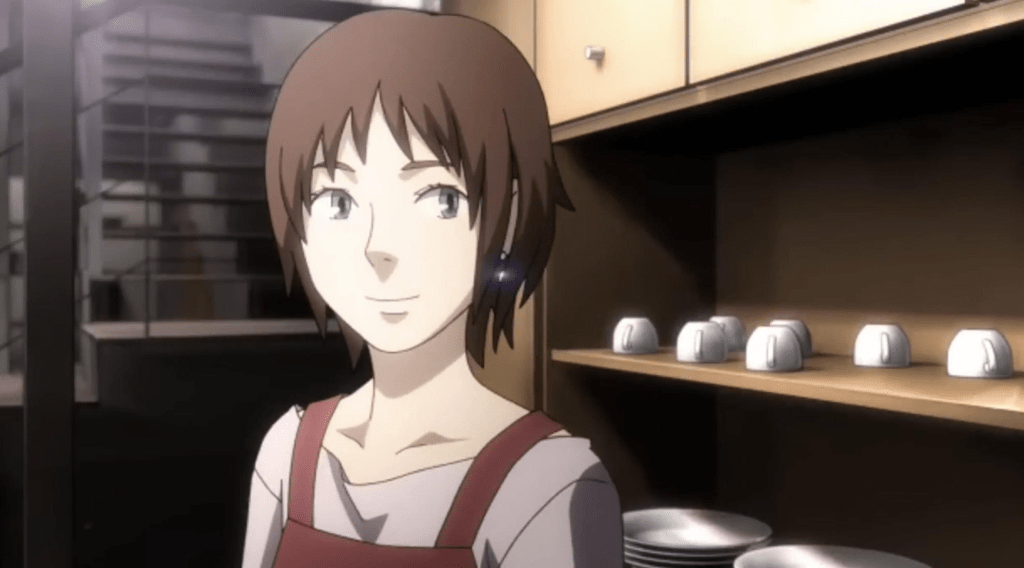
Voice Cast
- Rikuo Sakisaka (向坂 リクオ, Sakisaka Rikuo)-Yuri Lowenthal
- Masakazu Masaki (真崎 マサカズ, Masaki Masakazu)-Michael Sinterniklaas
- Sammy (サミィ, Samii)-Elizabeth Boyle
- Nagi (ナギ)-Stephanie Sheh
- Akiko (アキコ)-Cassandra Lee Morris
- Koji (コージ, Kōji)-Derek Stephen Prince
- Rina (リナ)-Lisa Ortiz
- Shimei (シメイ)-George C. Cole
- Chie (チエ)-Alice A. Johnson
- Setoro (セトロ)-Patrick Seitz
- THX (テックス)-Casey Mongillo (English)
- Katoran (カトラン)-Sean Schemmel
- Naoko Sakisaka (向坂 ナオコ, Sakisaka Naoko)-Molly Kay
- Atsuro Masaki (真崎 アツロウ, Masaki Atsurō)-JB Blanc
- Dr. Ashimori (芦森博士, Ashimori-hakase)-Cindy Robinson
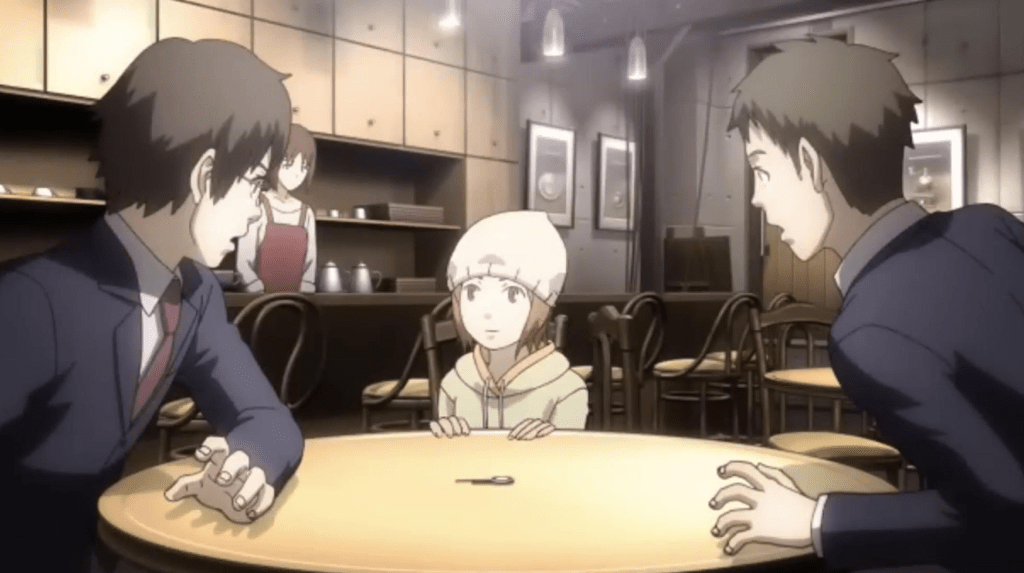
In the near future when androids have come into common use, a young man that has taken them granted his entire life discovers his home android has been acting independently.
Another day and another random choice. This time it was the 2010 animated film Time of Eve: The Movie which is an editing down/together of the ONA series of the same day though I did not know that at the time. It certainly explains a few things like moments that feel like narrative gaps or seemingly abrupt developments that are no big deal to the characters
This is not set in a heavily futuristic world. Just one that is futuristic enough. Technology is not so different that it can be made to look cool. The biggest difference between this world and ours are androids (often referred to as ‘robots’ because nobody had a dictionary) with floating halos that glow green or red.
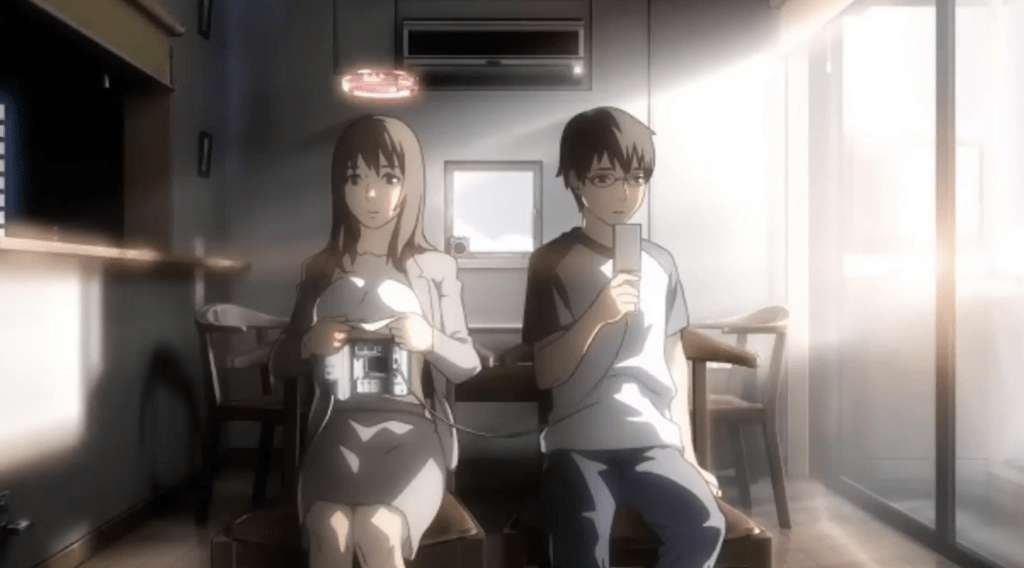
These machines in the story are used to explore themes of love, bigotry, and prejudice with perhaps even some hint of something like personal pronouns in the context of the café that gives this film its title. A rule there is to never ask or confront a customer if they are a machine or person. If anything, it gets very meta into what it means to be human with a heavy dollop of how we generally treat others who are different than us in a film the waffles between heavy and light discussion.
Sprinkled throughout are mentions of people with machine fetishes (robo freaks) and even groups like the Ethics Committee that work against the presence of robots. Being a robo freak carries a negative social stigma. Then again I can see why. You’re turning a household servant into sex doll. But I digress here. Sexual fetishes and (a stand in for) the religious? Maybe. That is weaved amongst Asimov’s Three Laws of Robotics. I cannot recall the last time anything referenced them.
This gets philosophical but not in a way that brings everything to screeching halt with an extended discussion. Not that they don’t stop everything and just talk, but discussion and action work together in a more natural way than other animated films of this type.
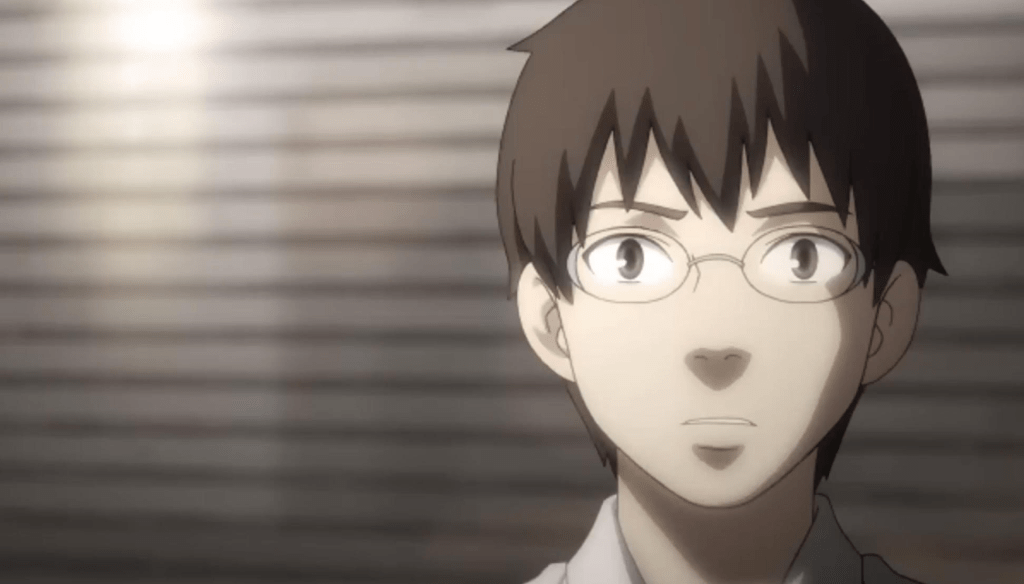
Rikuo, one of two central human characters, has some seriously extreme reactions that border on psychotic. His reaction to certain events involving his android, er, robot Sammy are excessive. Shouting like an abuser who cannot handle a mild inconvenience or someone with serious control issues is not a sign of emotional health. Perhaps they are less intense appearing playing out over several episodes but in this are disconcerting in a short film.
The environments are a bit thin and border on sterile. Perhaps a commentary on the modern world? There is not as much in the background as there is in other stuff I’ve seen. Not as much minutia would be the best way to put it. Then again so much happens in the titular coffee shop and few of those are ever well decorated.
Perhaps the weakest part is the scene with ****. That is not a typo. His real name is inaccessible because of a shoddy disposal. He is an actual robot unlike the androids and gynoids that we largely see. In the café Rikuo and his friend Masaki are desperate to prevent him from drinking his order, assuming it will damage him but the café rules which they are desperate to uphold stop them. It becomes exaggerated reactions and voices.
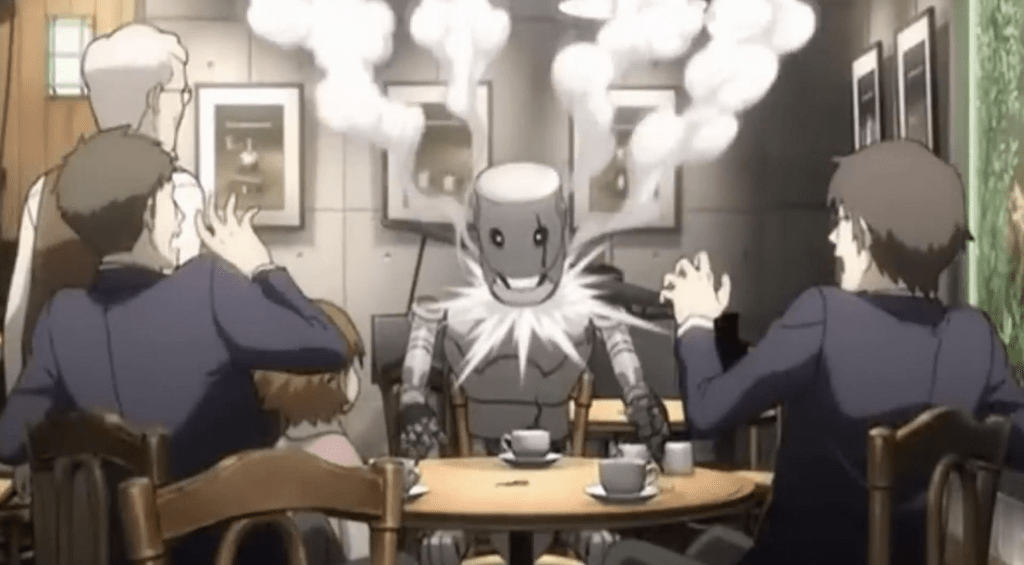
I think it’s just a moment that goes on too long. I think the film would’ve been better served with the character coming in, and a brief discussion rather than the whole scene. An observation of how it navigated its issue over spazzy comedy.
Rather than be a slice-of-life, this has a need to have a problem to be overcome. The aforementioned Ethics Committee has a plan to crack down on human/robot relationships and independent machinery. With the feeling of a last-minute idea, it does (mostly) use Time of Eve: The Movie’s limited lore to come up with a solution.
Even with my issues, I enjoyed reviewing Time of Eve. Between the good animation and the attempts at philosophy it held me and entertained me. I could watch this again. Maybe.