
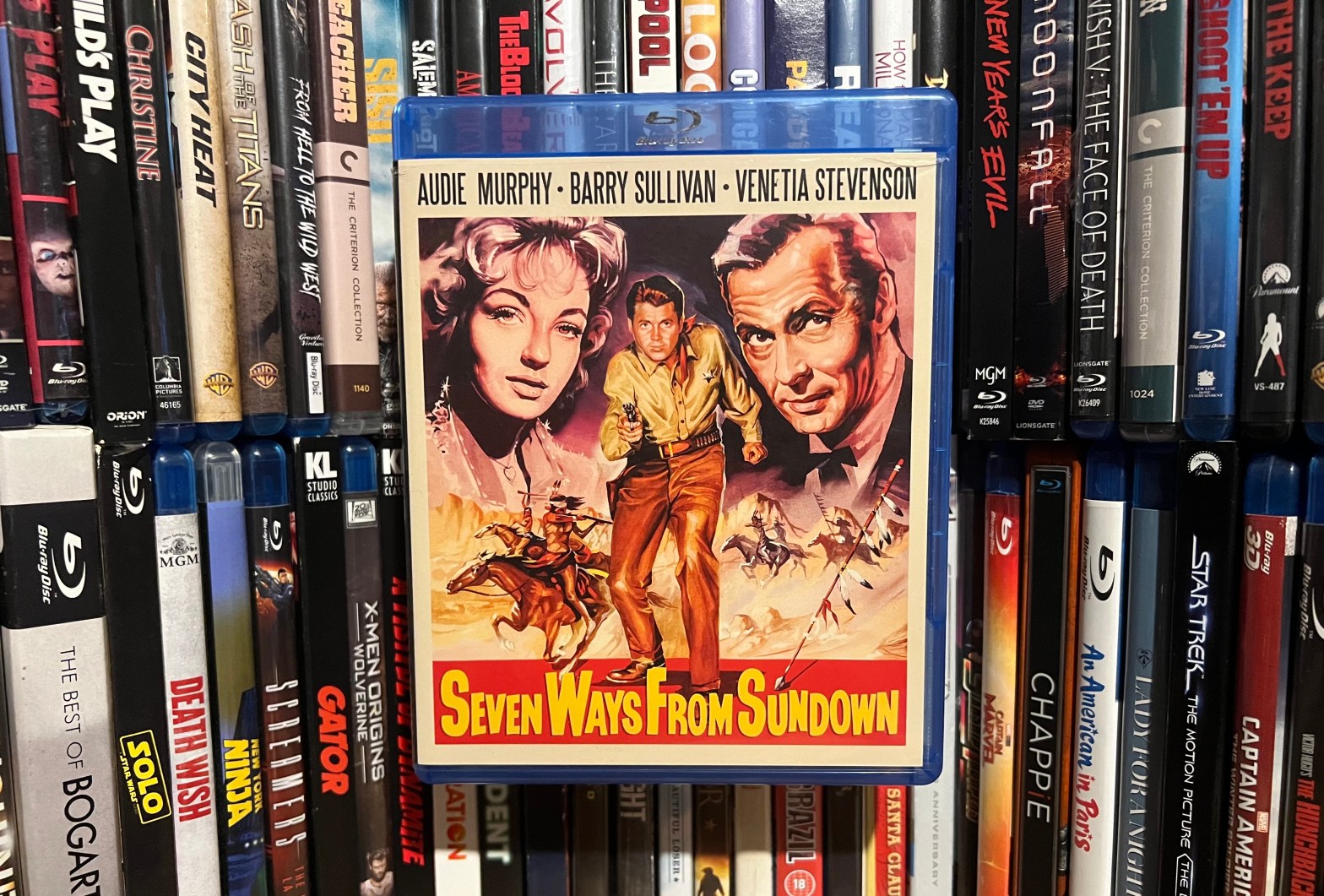
- Directed by Harry Keller
- September 25, 1960
- Based on the 1959 novel Seven Ways from Sundown by Clair Huffaker
A newly minted Texas Ranger bring an outlaw to justice while dealing with native tribes and opportunistic bounty hunters.
Audie Murphy is an underrated Western actor. He was no award winner but he never did a disservice to the material and produced many good films. Many of his movies make a good case for him being mentioned amongst the greats of the genre. He never really faded into the background when performing. Appearing with Murphy in Seven Ways from Sundown are John McIntire (whom Murphy spends a lot of time on screen with) as Sergeant Hennessey and Kenneth Tobey as Lieutenant Herly are perhaps the best known actors in the film.
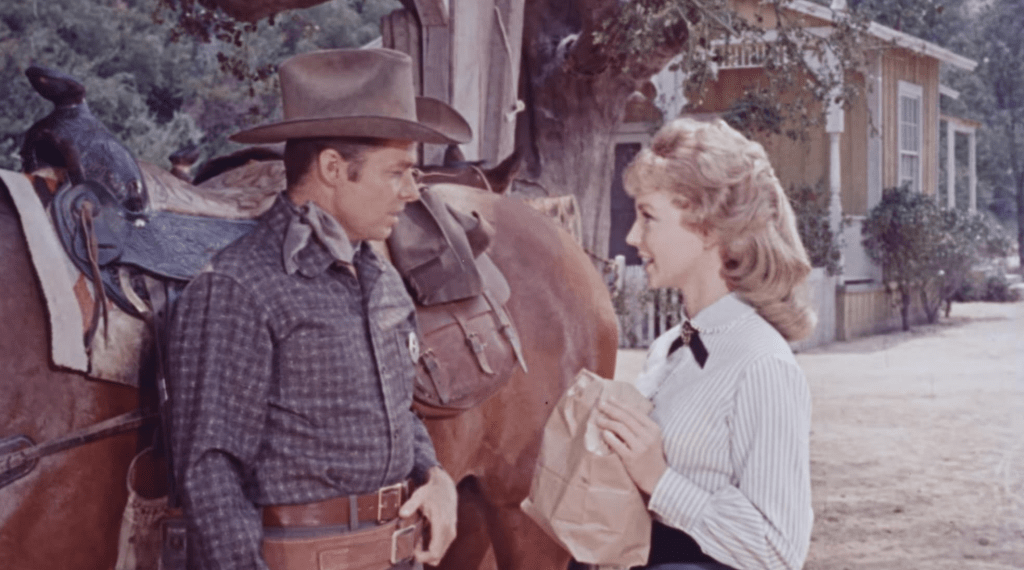
Murphy stars as newly minted Texas Ranger Seven Jones. So new in fact that he cannot handle a six shooter but is very capable with a shotgun. As the movie goes along, we do see him slowly becoming better with a more expected armament. Due to youthful looks it seems Murphy was often cast as a young and inexperienced newbie like here. Jones starts out a bit “Awe shucks!” and ends a bit more worldly or hardened. The lack of experience in life is driven home by Jones not quite picking up right away that Joy (Venetia Stevenson) is putting the moves on him.
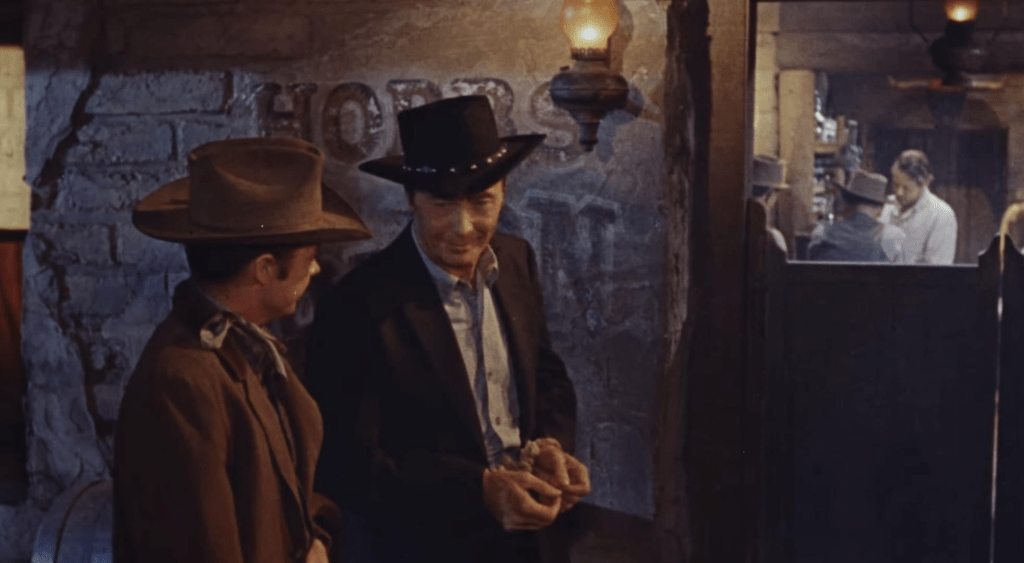
The aged and wise Sergeant Hennessey accompanies Jones in his pursuit of Jim Flood (Barry Sullivan) wanted for killing two men in a shoot-out over a card game and setting fire to a saloon. Flood is a charming man with a charisma that makes him dangerous because it allows him to develop loyal allies and disarm his enemies. This plays into a warning that the dying Hennessey gives to Jones to not pursue the man alone. If Flood cannot get you to his side, he will disarm you with his personality and then strike. That’s what makes the character dangerous. Everything is part of his long game.
You see there is something likeable about Flood. Sullivan makes a rather charming rogue out of Flood despite him being a killer and con artist. Once Shaughnessey is gone, Flood and Jones are paired with heavy conversation and the occasional instance of enemies needing to help one another.
It is a character driven story of two people who could almost be friends. They have enough in common and find enough to like in one another that if one thing was just a little different about the other they would not be at odds. Both performers are able to convey their regret very well. You feel just how much it hurts them knowing how this must end for the other.
This is more than a good versus evil story. Seven Ways from Sundown deals with themes of honor and integrity and how some people are incapable of change no matter how in their interest that change may be. Individuals sometimes are who they are no matter what. A rogue is still a rogue. It creates a notably downbeat tone towards the end.
This can be at times a brooding Western though one containing a consistently sympathetic relationship between Flood and Seven Jones whose parents chose to number their children. Clair Huffaker’s script pursues the narrative intelligently with a very capable cast always aiming for a thoughtful path. There is a measure of excitement and the occasional turning of tables to keep the audience guessing along with a bit of a mystery hanging about on who really killed Seven’s brother Two though the guilty party is relatively obvious.
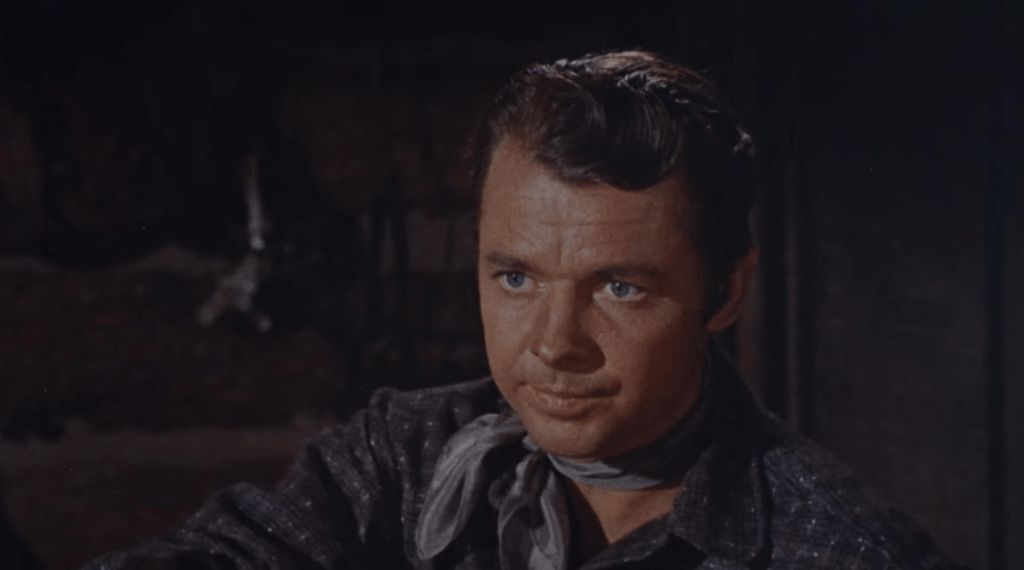
Like so many good stories the hero is changed by the end. A little more worldly. A little more jaded with his views different and perhaps less clear. Murphy shows Jones as genuinely bothered by what he was forced to do though Flood proceeds forward regretfully and confidently having come out unscathed so many times before.
With a good turn by Audie Murphy and Barry Sullivan, Seven Ways from Sundown is yet another positive addition to the filmography of Audi Murphy and the catalog of movie Westerns. Dramatic with some interesting themes and overall engaging execution.
 Warren Watched A Movie