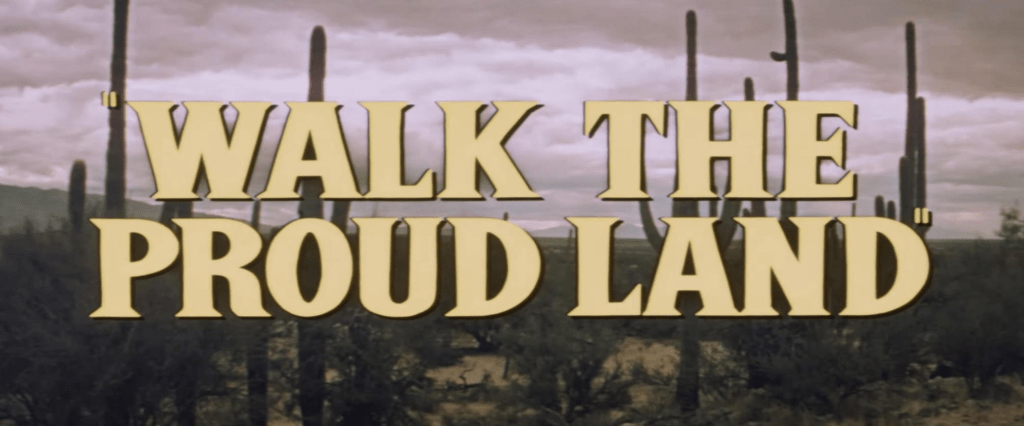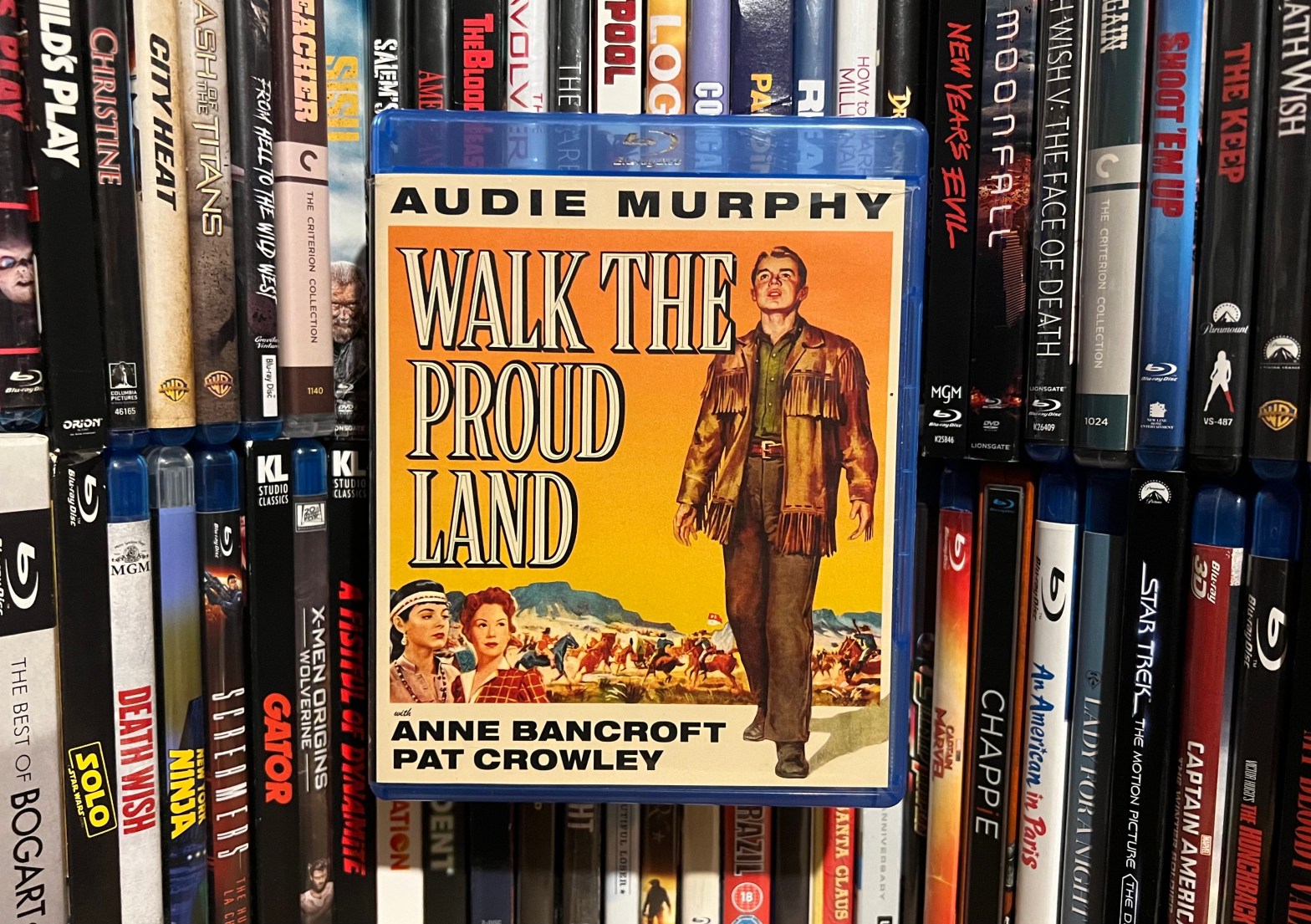
- Directed by Jesse Hibbs
- August 1, 1956
- Based on the 1936 book Apache Agent: The Story of John P. Clum by Woodworth Clum
The story of the first successful introduction of limited self-government by John Clum-an Indian agent for the San Carlos Apache Indian Reservation in the Arizona Territory.
I was intrigued by Walk the Proud Land after learning it was at least inspired by a true story. I had never heard the name ‘John Clum’ or of his legacy so getting an idea of the man before I did further reading interested me. How close it adheres to the man’s true story I don’t know.
It is a fine dramatic piece of dramatic work for the time and its star. You can call this a socially conscious film for the time. John Clum (Audie Murphy) is a religious man who applies faith and understanding over guns and bullets to bring a measure of peace to a small section of the West.
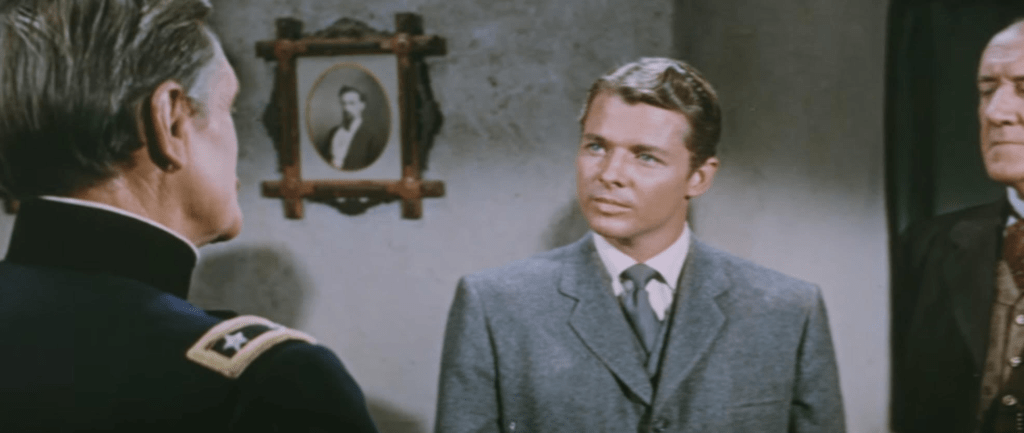
This is more of a drama than an action film. Many issues that come about are due to culture clashes. We have the Native American ways conflicting with the ways of the white man. Clum confronts bigotry and biases as he tries to not only tame the anger of the Apache who are continually tempted by the existence of Geronimo (Jay Silverheels) to take up arms but deal with the hostility of Gen. Wade (Morris Ankrum) or the indifference of Gov. Safford (Addison Richards) who are narrative stand-ins for the federal government.
Murphy handles the drama well and is ably assisted by a talented cast who not only includes Silverheels but Charles Drake as former cavalry man Tom Sweeny. Drake does his best to be the fun guy but that was just not his thing. Or maybe it was because the part was largely filler over being something that helped tell the story. The movie is under 90 minutes with the comedy provided by Drake’s character partially extending it to that.
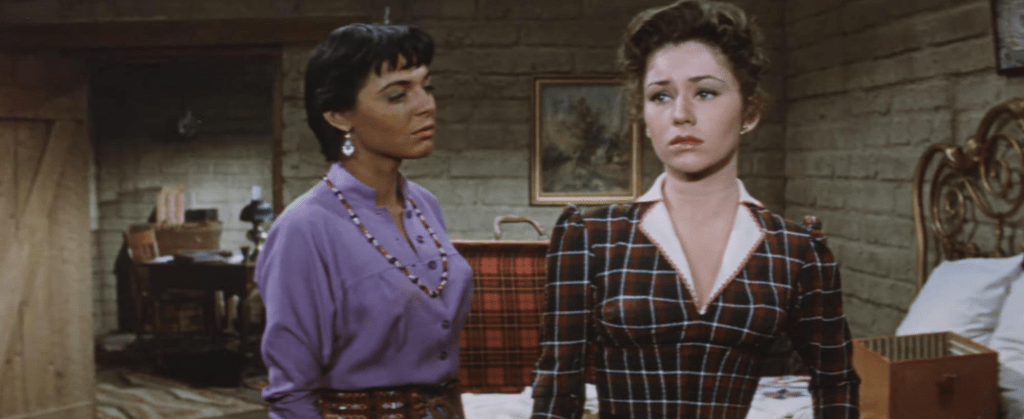
Clum is given a housekeeper named Tianay (Anne Bancroft). She immediately falls for Clum who is engaged to Mary Dennison (Pat Crowley). A good case was made for both being who he ends up with in the film. I thought this might delve into something more tawdry but it never gets there. Tianay is one of many elements used to show the differences in culture and lifestyle. Nobody other than those seeking violence get portrayed as backwards or wrong. Even Mary who can be a bit of a b!tch gets a pass.
There is a lot made of Clum trying to win the trust of the tribe he is living among. This treats the Native Americans as human beings rather than like mindless savages to be killed. Clum is an understanding individual.
I think Walk the Proud Land could’ve certainly benefited from some additional time to show a little more characterization and a little more personal conflict. It moves quickly from Clum’s arrival (where he is dressed like an Easterner) to the incident with Disalin (Anthony Caruso) to the finale with Geronimo. This begged for more and I think Murphy was up to the challenge. His generally soft-spoken performance was ideal to tell more story.
The ending is perhaps one of the more unique for the time. I certainly couldn’t blame executives for going a more traditional route, since this is a dramatization and not a documentary yet they did not. Rather than have some big shoot ‘em up, intellect prevails over brute force. Circling back to the religious reasons that Clum was chosen, Clum draws inspiration from a Bible passage to trick Geronimo and his men into submission.
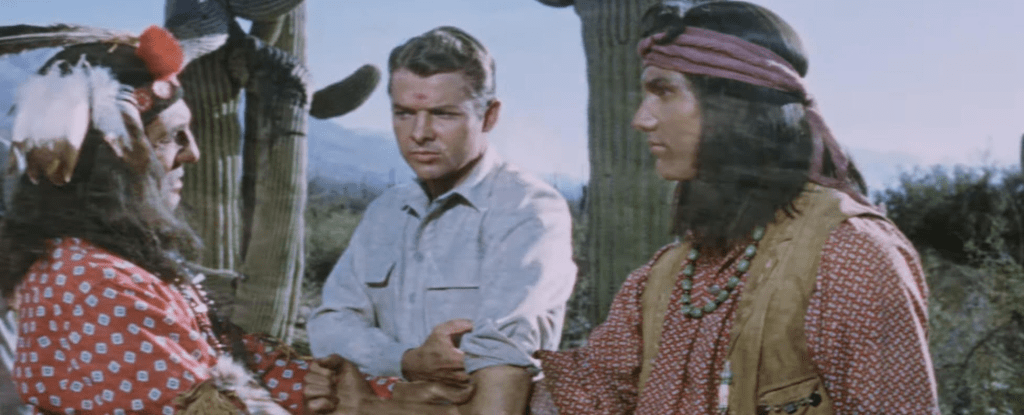
Even though I wanted more, this was a well-done biographical film. It was dramatic with fine performances by the cast even if some of the actors or characters were underserved. Murphy’s screen persona was perfect for the part. He carried himself like a tough preacher.
Walk the Proud Land is a fine dramatic biographical film featuring Audie Murphy. Not sure how historically accurate it is but it’s entertaining and thoughtful. Worth the time of any fan of Westerns or biographies.