
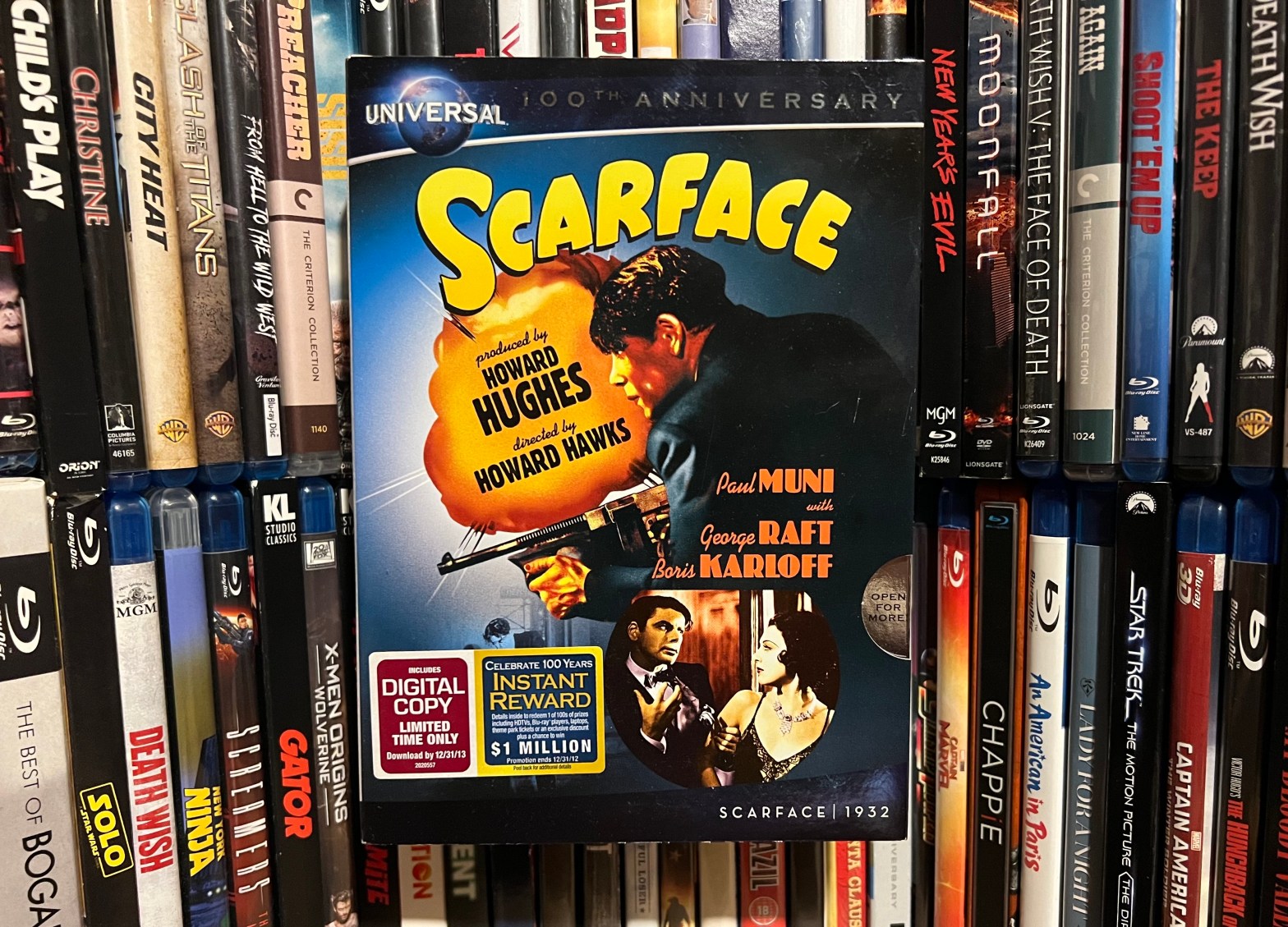
- Directed by Howard Hawks
- April 9, 1932
- Based on the 1930 novel Scarface by Armitage Trail
The story of an Italian immigrant gangster who violently rises through the ranks of Chicago’s gangland.
This Scarface has been called one of the most influential gangster films of all time. It was certainly one of the most influential gangster films of its era and held that title I’d say up until The Godfather. You can see shades of this movie in so many that followed or referenced in animated shorts that once preceded movies.
One thing you must keep in mind with older films that tried to be serious is that they were limited in what they could do and show that would be acceptable to not only studio executives but the general public. Here the studio mandated a few changes for its initial release like a different ending and the opening text which remains today.
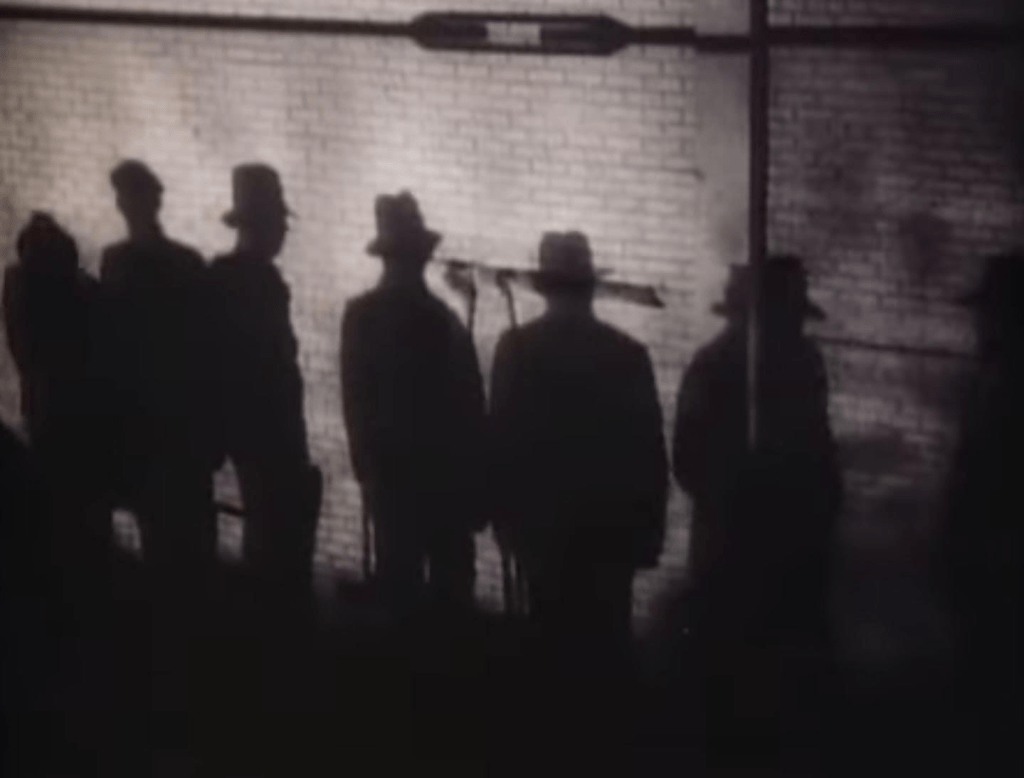
The film and its presentation are very marinated in the film aesthetics of the ‘30s. It has much more in common with a stage production than a film released by modern standards. Indeed much of this was filmed on sound a sound stage with painted backgrounds that can often get stylized if not entirely impressionistic.
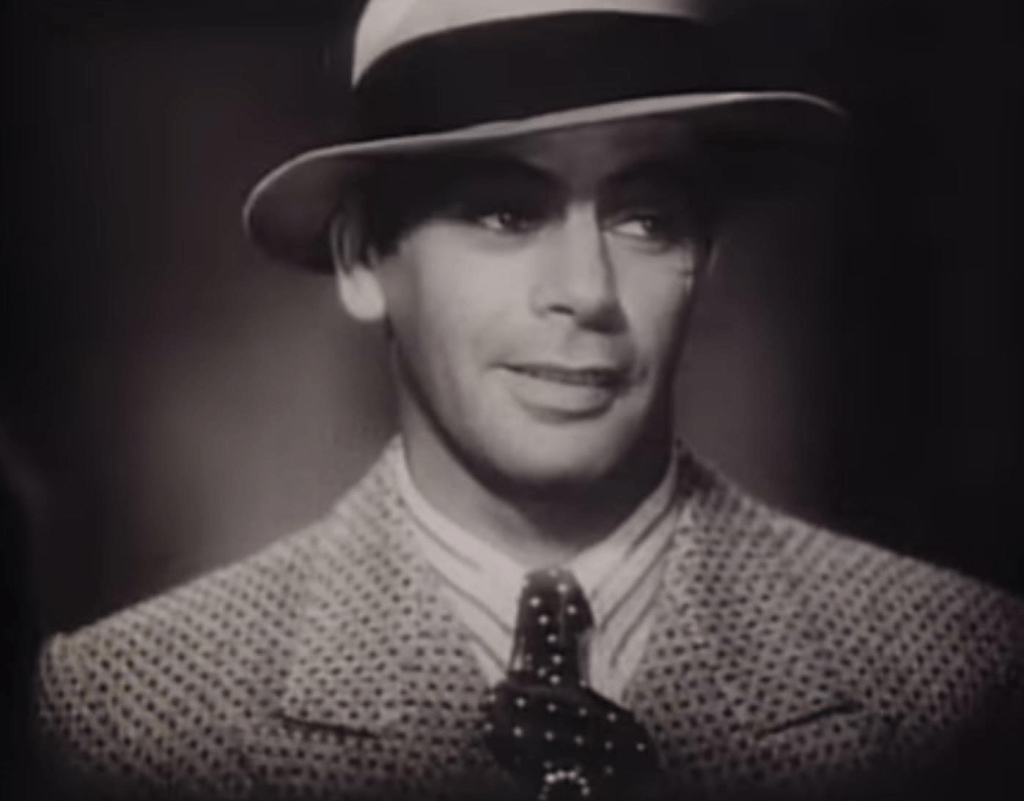
The dialogue spoken by the cast is that rapid patter that old films had. Our main character Antonio ‘Tony’ Camonte (Paul Muni), who is a distinct antihero for the era, speaks in an exaggerated accent and slang that now sounds comical having been done so much since. He is a thug but not without intelligence in the context of the film. The film earns its title from a noticeable scar on the man’s cheek that nobody mentions ever. Not once.
Muni’s rough and tumble nature character portrayal balances out the necessary comedy of the one henchmen. If you’d in the mindset of the time, this is what you expected a thug to sound like. But he never makes him an intentionally comedic thug.
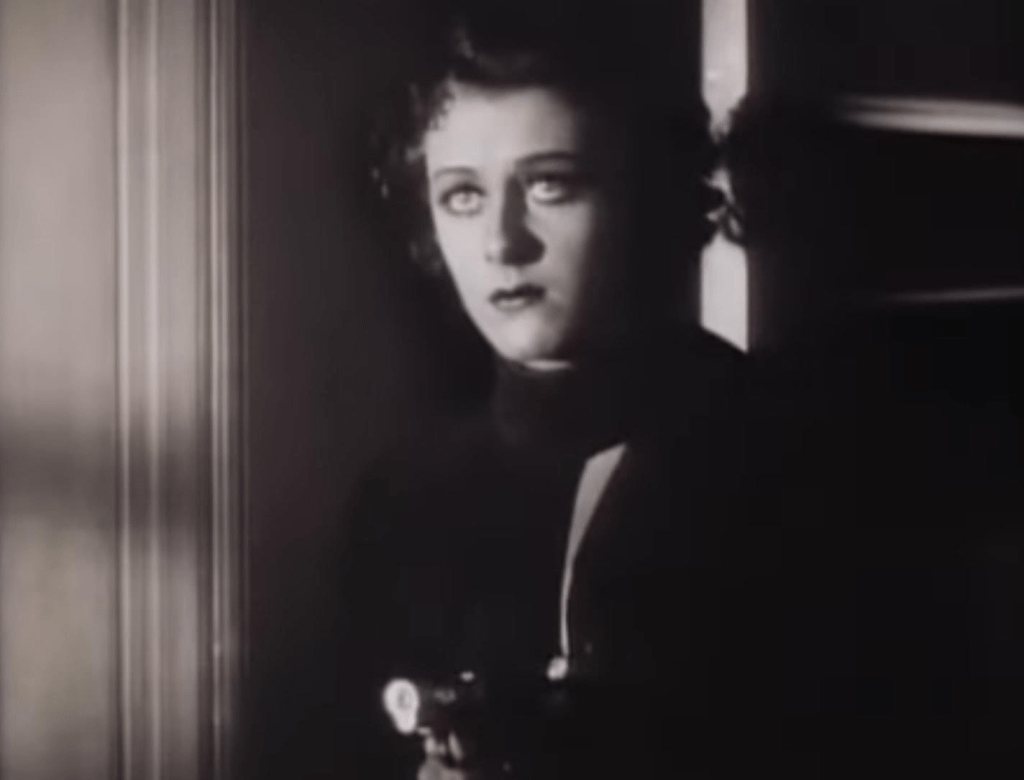
Maybe it was clearer at the time, but I thought Cesca (Ann Dvorak) who we met in the first scene was Tony’s girlfriend/wife and NOT his sister. That would have been edgy for the ‘30s when he started putting moves on Poppy (Karen Morley). Poppy is a sultry young woman drawn to wealthy and excitement with come hither eyes.
In my perception a lot was made of the presence of Boris Karloff in this. He shows as gangster Tom Gafney but it only amounts to seconds and has no bearing on the plot. Color me disappointed. I had hoped to at least see him get gunned down! Unlike the later Scarface, this moves rapidly from start to finish leaving little time to expand upon the characters. It was the style of the day, but things feel a little too quick and easy.
Despite things that are a bit silly to the present-day audience this connects with you when you watch it. It’s the artful nature of the shots. The noire composition of the shadows and light that heighten drama or tension or to show the horrors of the criminal world as best as they can.
I think any shortcomings that this has can be laid at the feet of the studio executives. Given the sensibilities of the time it looks like those making this were trying to push it as far as they could go. I just wish I had more time to get to know the characters in the story and see more of Tony’s rise to the top. Sometimes a movie doesn’t overstay his welcome. Others do not stay long enough and this is the latter.
Scarface is something special from the early days of film. It’s worth watching for the template it set and to see a classic.


Jeez, the film itself is close on 100 years old. Can you imagine? The 2030s will be seeing so many cinema greats reach their centennials. Scary. Just imagine all those remasters hitting our wallets if physical media is still a thing….
LikeLiked by 1 person
It really is a mind blowing thought.
LikeLike