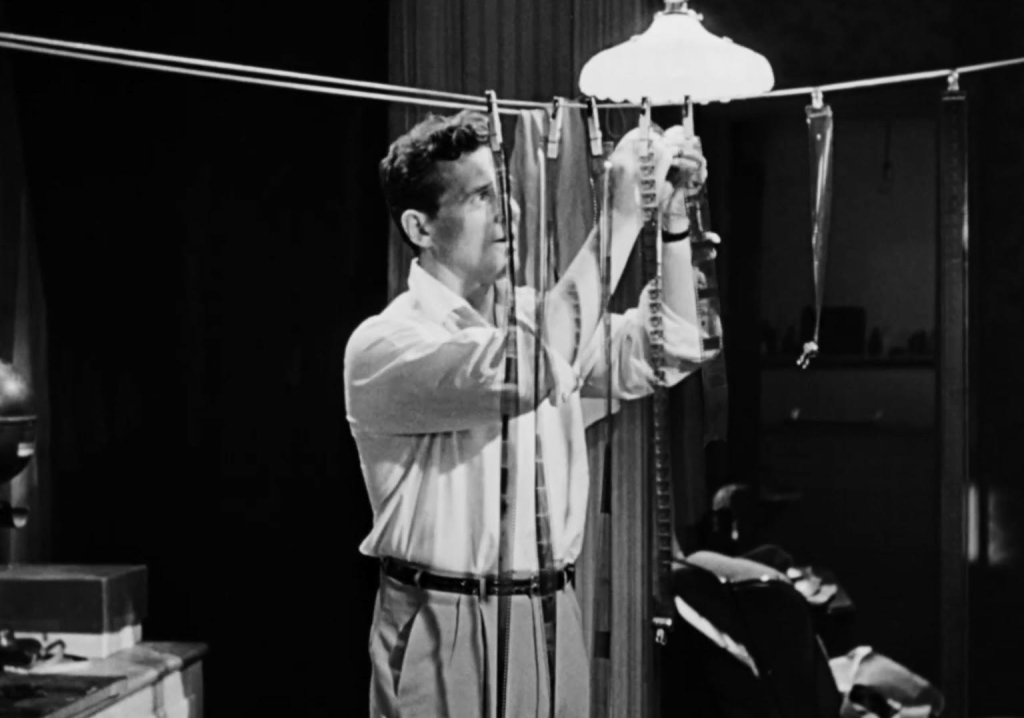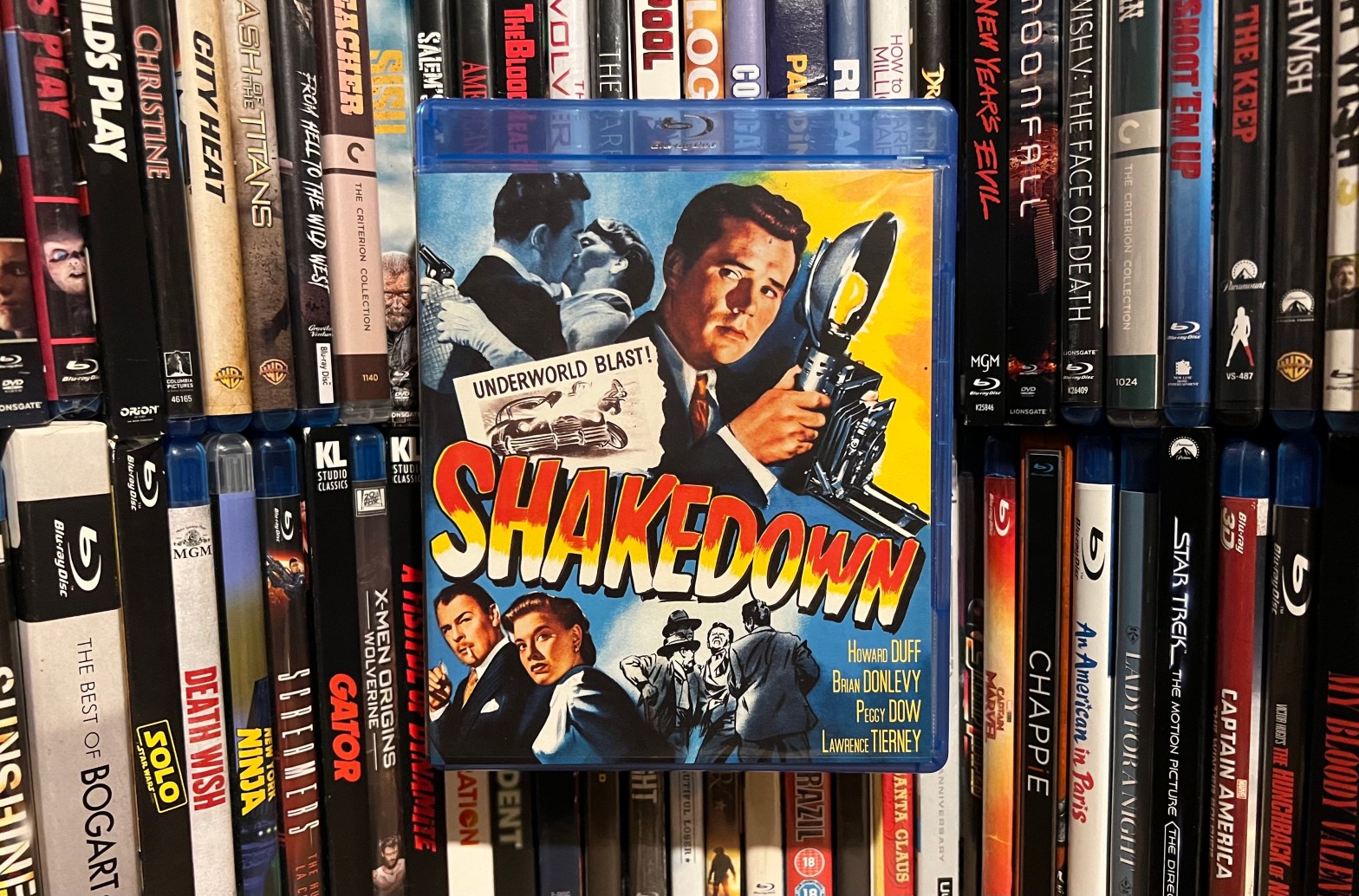
- Directed by Joseph Pevney as Joe Pevney
- September 1, 1950 (US) / September 3, 1950 (NYC)
An unscrupulous photographer gets blinded by ambition as he crosses moral lines.
Shakedown was a surprise. Not that I thought it was going to be bad, but it was better than I thought it was going to be. It was a film with something to say containing characters more complex than I thought possible in its relatively short runtime.
Given when this came out, I reflexively thought this was going to be a movie with a bunch of inconsequential women. While the female cast is small, the ones we do encounter are realized individuals who are more than window dressing or subjects of mild sexism by the men. Ellen Bennett (Peggy Dow) is the first with any real import in her position as photography editor of the paper. She gives as good as she gets from the young and eager Jack Early (Howard Duff) and is treated as equal by the paper’s editor David Glover (Bruce Bennett).
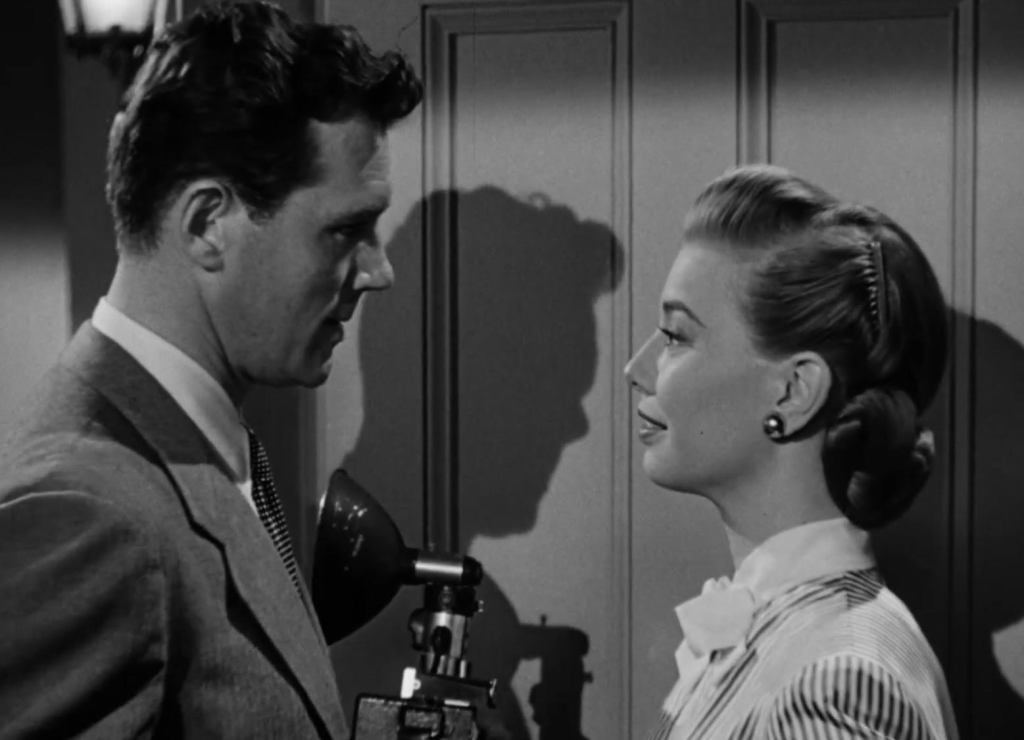
Early is the center of the story. He is not some heroic individual. He cares more about scoring a good picture than he does about people. While his name is a bit on the nose, his initial great photo that gets his foot in the door is dumb luck. The rest that follow are increasingly staged in one way or another as he grows increasingly corrupt.
He’s not an unlikable person, but he’s ambitious and willing to do anything. He has easily put aside scruples and quickly steps into a world of darkness and crosses moral line after moral line to get what he wants. He even recklessly pursues every woman he comes across. During the film he not only goes after Ellen but also a mobsters wife. Not necessarily a bad guy, Early just doesn’t see how terrible the decisions he makes are or how dangerous the road he is going down can be.
This is a story of ego and hubris and even though at 80 minutes it moves quickly it never feels like it’s rushing through things. Like many movies from the time it has a bit of a moral message at the end, but it doesn’t feel like it was tacked on because of some obligation or social necessity. It’s the natural result of everything that has happened from the opening to the closing with the ending being perhaps a bit harsh though it makes its point.
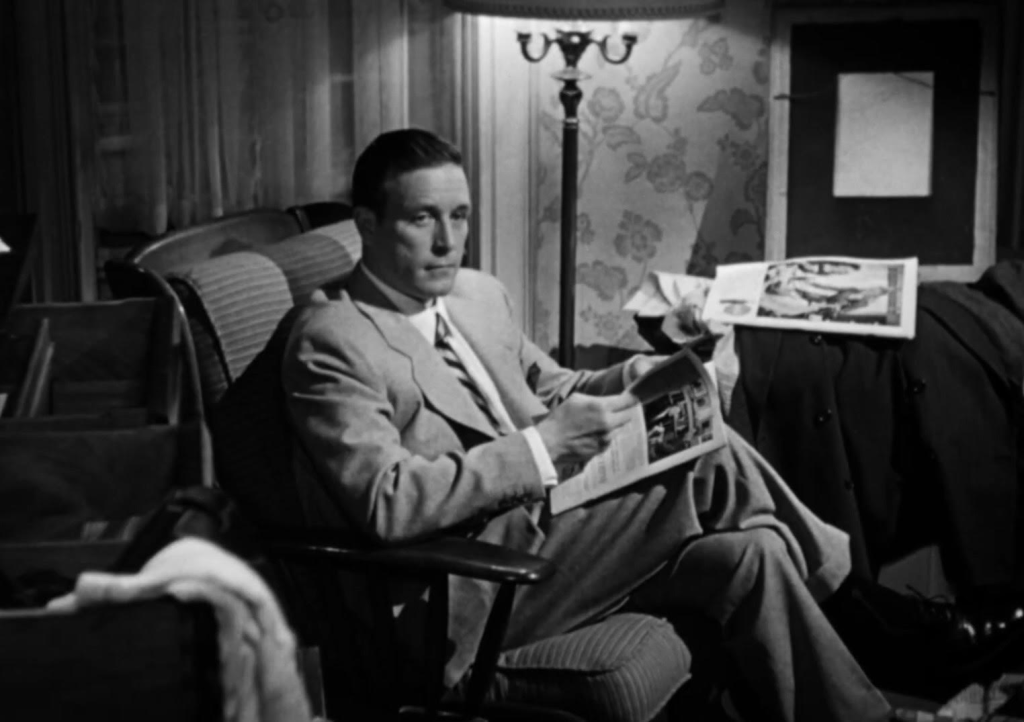
The biggest name in this (today) is a young Rock Hudson as a doorman (missed him) but plenty of solid actors were cast giving strong performances. Nobody is over the top or goofy even in a modern way. Understated or controlled. Authentic might be a better term. These feel like real individuals making logical decisions.
I have an appreciation for black-and-white films. I think many of the stories that you can find before the rule of color photography are just as good as anything you can find today. The bonus of black-and-white is the ability to use shadow in the lighting in a way that highlights a scene or the story. This makes the salacious or dangerous more with clever lighting and shadow.
Weirdly a story where the main character uses photography for fun and profit does not get too imaginative with the pictures themselves or with the use of the camera angles in the story. Early gets some interesting shots, but nothing is as stylized as they could’ve been or were made out to be.

I found Jack’s relationship with Ellen as well as his relationship with Nita Palmer (Anne Vernon as Ann Vernon), wife of Nick Palmer (Brian Donlevy) to who Nick initially ingratiates himself very informative. Jack is intrigued by Ellen because she’s a good girl basically. She’s probably a more decent individual than he is accustomed to and she doesn’t instinctively push him away. For her part she is drawn to Jack because he is ambitious and probably a little dangerous. She’s been a good girl and decides to take on a walk on the wild side. Based on my own anecdotal experience, this is not an uncommon scenario.
It’s well directed with a solid script that may not break any new ground for today but was something that certainly stood out when it first hit theaters. Tierney as always is a great heavy with his voice alone, and all the actors do justice to their parts. From the smallest to the biggest.
Shakedown is a good noir. It tells an engaging story of a man who willingly crosses numerous lines for financial success, only to be completely undone by his own mechanizations.