
- Directed by Julius Avery
- April 5, 2023 (Internationally) / April 14, 2023 (US)
- Based on the 1990 book An Exorcist Tells His Story and the 1992 book An Exorcist: More Stories by Father Gabriele Amorth
The Vatican’s leading exorcist investigates the demonic possession of an American boy in Spain and learns of a secret kept buried for centuries by the Vatican.
Russell Crowe is a great actor that is generally good even if the film might not be. With that in mind (and interested in a based-on-true-events story) I took in The Pope’s Exorcist starring Crowe as Father Gabriele Amorth who was an Italian Catholic priest and an exorcist for the Diocese of Rome.
It starts out very promising by showing Crowe-as-Amorth engaging in exorcism though it really is a little be of theatrics on Amorth’s part to help a man he deduced to be disturbed. It is a moment that communicates a great deal about the character. He is thinking man of faith who does not jump to the automatic conclusion of demonic possession. That’s one of those things people don’t quite understand. The good exorcists do not go in assuming those involved understand the situation.
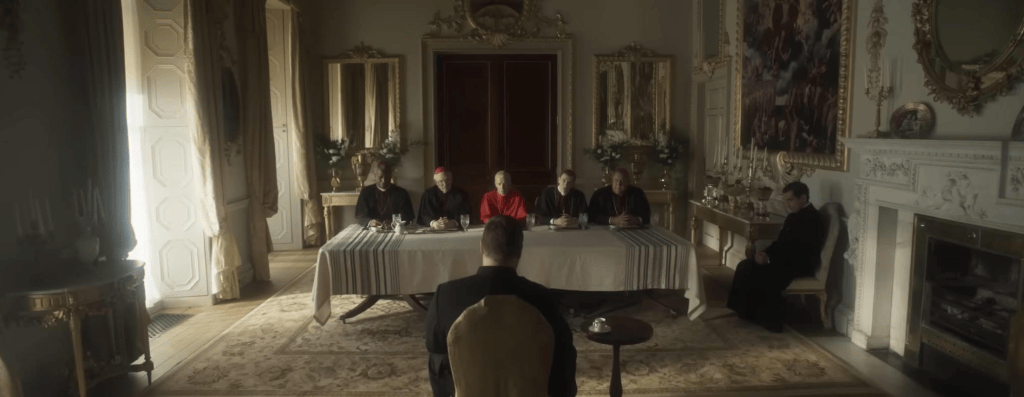
Intentionally or not the movie hints at some things that are going on in the Church even to this day such as the Church trying to maintain relevance by becoming intentionally or not more reflective of modern society rather than of foundational beliefs. That comes after the opener when Amorth is brought before a group of bishops because of the opening ‘exorcism.’ Our central character is under internal political pressure with possibly losing his position as an exorcist by being a scapegoat to demonstrate to the public that the Vatican is leaving certain things behind in an effort to come into modernity.
Amorth is portrayed as a man with baggage. At heart he’s still a soldier and carries with him what happened during World War II. He’s a difficult person and borders on strict in his religious beliefs. He doesn’t even take sugar with his double espresso because he feels it’s connected to the Devil. Never does Amorth come off as some ridiculously pious person though but a strongly religious person with complexity given to humor and sarcasm while not suffering fools for very long.
I like the relationship displayed between Bishop Lumumba (Cornell John) and Amorth though there were not nearly enough moments between the two. The acting and dialogue spoke of something with depth built over a long time which explained Lumumba’s task in the story of providing a level of protection for the priest.
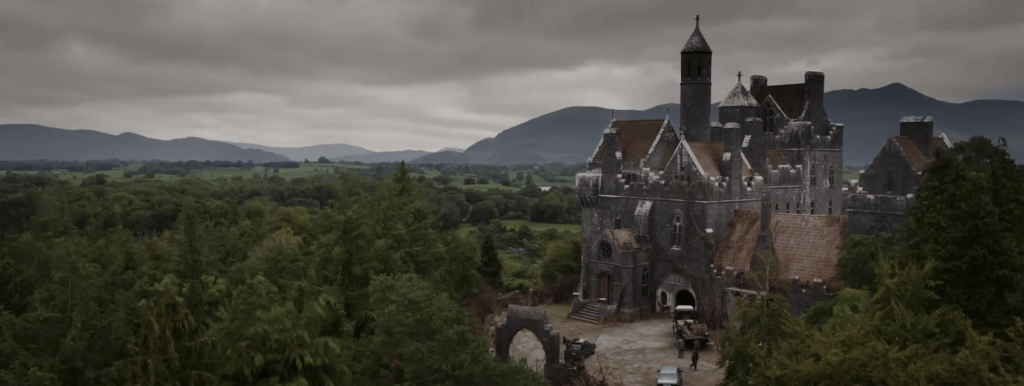
The presentation of The Pope’s Exorcist a downturn in quality during the moment when the Vasquez family is introduced. Julius Avery goes too hard in showing the audience that this is most certainly the ‘80s and don’t you forget it! Currently heading to an abbey in Spain, the family is also dealing with the death of their patriarch. The hope is that by fixing the place up they can sell it for a windfall to get back on solid financial ground. Sounds just a shade better than playing the lottery!
What I can’t figure out is how they got ahold of the property. The Church seems to still have some authority over the whole thing, but it belonged to the dead husband’s family. It even appears the Church is footing most if not all of the bill to fix it up. Given what we learn about the building it strikes me as poor thinking to let it slide into private or semi-private hands. I have no idea how that worked.
The story is less about the supernatural more about dealing with the baggage of the past. The Vasquez family is still carrying the scars of the father’s death. There is a level of dysfunction though not ridiculously so. Amorth as I said before is carrying his wounds from the war. Then there is Father Esquibel (Daniel Zovatto) who carries guilt over sleeping with a woman he did not marry which is a Catholic no-no. In terms of Catholic theology, I think this gets much deeper than many films do.
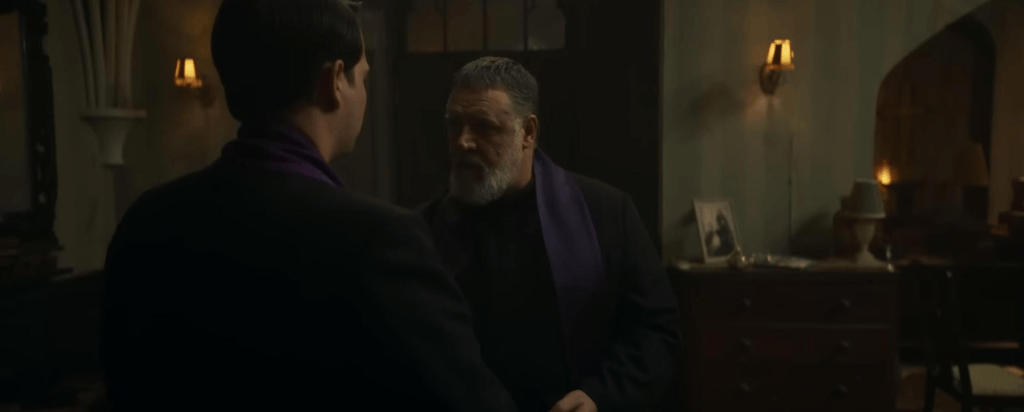
There are themes of how wrongs can come back to haunt you in the present no matter how much you try to avoid them. Unless you deal with your mistakes or your sins quickly, they will forever be waiting around if you’re an institution or a person. That along with the insidiousness of true evil. It is learned that a founder of the Inquisition was possessed as part of a plan to weaken the Church. After this was discovered, it was covered up.
Amorth is certainly the main character with the family being significant themselves, but I think they’re a little underserved in their characterization. They’re just kind of there for Amorth to experience his story even though they are the ones who are being affected by the supernatural. I didn’t think we got to know them as well as we should have during the movie.
Much of this takes place in shadows and low light which not only makes sense because they’re in an abandoned abbey but also helps heighten the horror feel. Atmosphere is very important in a horror movie and Julius Avery gets that right. I think it got a little too dark here and there but overall a nice stylistic choice.
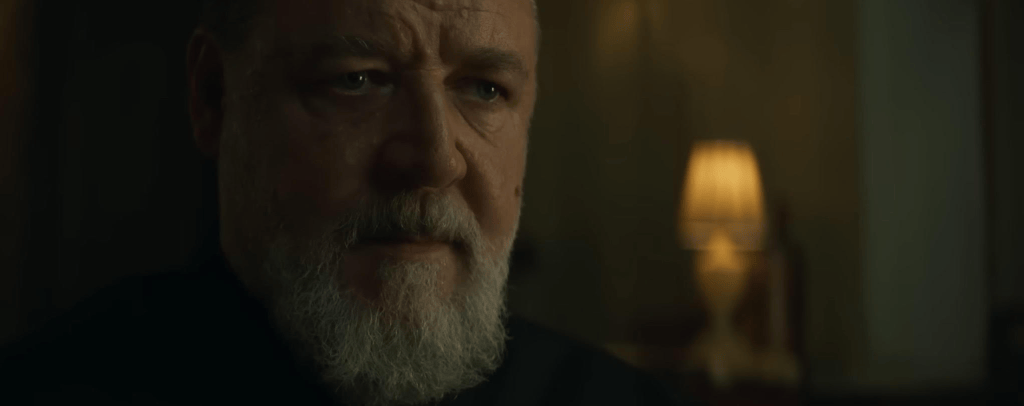
It manages a few twists and turns along with one or two genuine surprises. When there aren’t bright lights of the supernatural involved things get creepy. I wouldn’t necessarily call this a horror movie because I never jumped or screamed or felt like I could, but I was certainly made uneasy. With no moments that are dead spots and a small cast, it keeps everything tight and moving. Crow certainly owns the movie.
The Pope’s Exorcist is no classic but it’s a good movie. It’s more Catholic than most films that have the Catholic Church in it. Creepy but not scary.

