
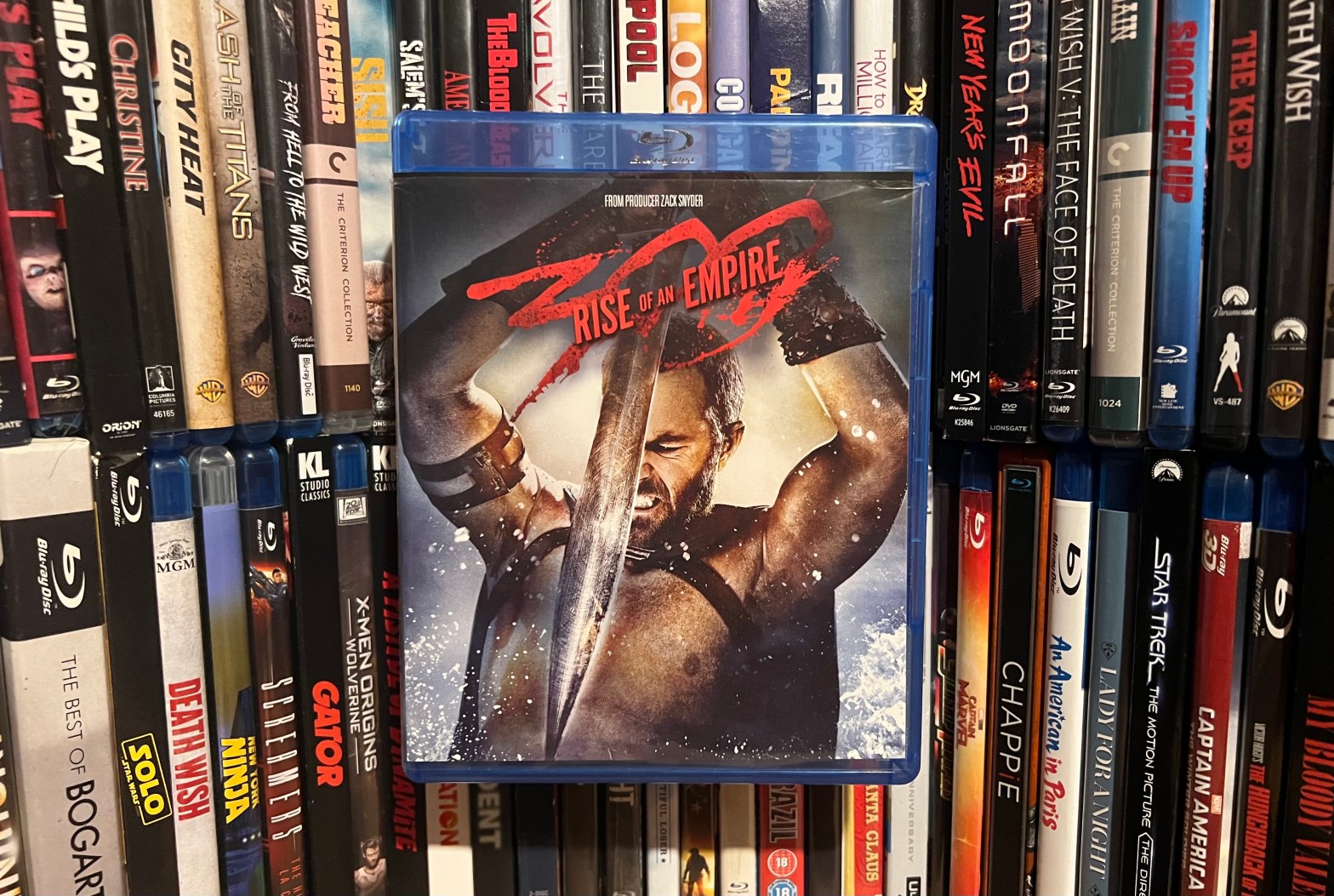
- Directed by Noam Murro
- March 4, 2014 (TCL Chinese Theatre) / March 7, 2014 (US)
- Based on the comic book limited series Xerxes by Frank Miller
Themistocles of Athens leads the naval battle against invading Persian forces of the god-king Xerxes and his vengeful naval commander Artemisia.
Sequels to movies that do not lend themselves to sequels can be dicey. 300 ended with no obvious room for any ‘rest of the story.’ Leonidas was dead and the Spartan effort had done its job. Yet 300: Rise of an Empire found a way to grow the narrative and stand mostly on its own. It weaves in elements of the first before diverging entirely on its own.
The story is a little less cold and sterile than the first film. There is much more emotion and feeling in the performances here than there was before. A viewer can sense that unlike Zack Snyder, Noam Murro had less of an adherence to make it look or feel like any comic. That makes for something less distant but also less distinct.
With a change in leads and directors, this sequel takes on a much less hypermasculine feel than 300. Despite the men still going around in next to nothing, the overt homoeroticism of its predecessor is not as strong. To the credit of the director and writer’s, they make them feel more like citizen soldiers who were rounded up from the local population which creates a distinct difference to the previously featured Spartans who had a dedicated army.
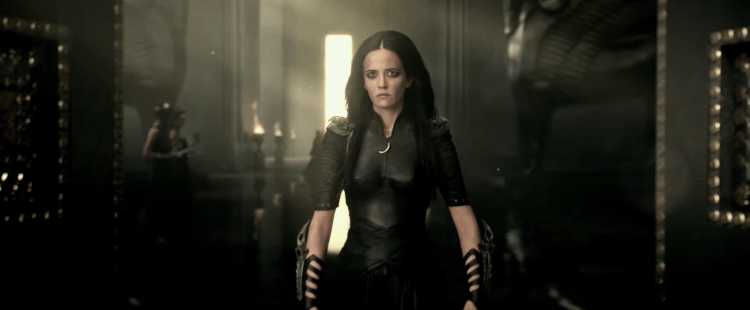
Xerxes (Rodrigo Santoro) does return but his general Artemisia (Eva Green) is the new main threat facing off against the new main hero Themistocles (Sullivan Stapleton), an Athenian general, who ten years prior is rumored to have killed Xerxes’ father King Darius I (Yigal Naor) making this all a bit of a soapy drama.
Green walks about the screen with an authority and arrogance befitting a villain. She does not need to do anything to feel like a threat or just be intimidating. No small feet for any actor to do but when they can, it’s excellent. You know everyone and everything is beneath Artemisia. She is the equal to those around her having earned her place.
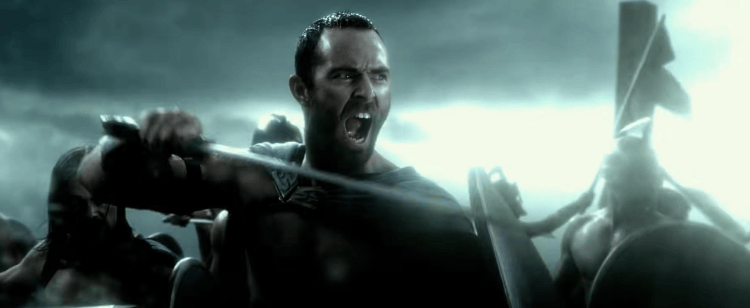
Her counterpart Themistocles has some similarities to Leonidas in personality though not entirely a copy. He’s a warrior with little else given beyond being a warrior. We do learn he has no family in a very…intimate scene with Artemisia. He has no desire for combat or a glorious death in general though is not exactly adverse to it. Every impression indicates he would like to die of old age and seeks the same for his people. Stapleton provides a counter to Green’s arrogance with a weary commander concerned about his people.
While it engages in slow motion tight shots and frenetic action, Rise of an Empire is somewhat different in appearance than the previous movie. Perhaps it’s a sign of the change in technology or a different company doing the process but it lacks that special visual aesthetic. Murro was not as focused on making it look like it was ripped from the pages. This is still obviously filmed on sets with green screen and so forth which highlights the fantasy aspect. Mood lighting is muted and emotional camera angles or shots are subdued and replaced with more common techniques for today.
Like the first film, this employs the technique of an unreliable narrator. Replacing David Wenham as Dilios in that role is Lena Headey as Queen Gorgo. Gorgo also gets more involved in the action by leading charges and rallying troops in moments today that might be erroneously called ‘woke’ but are just demonstrations of being their equal.

Some scenes with Gorgo may leave the viewer with a sense Murro and pals did not always know what to do with the character. She’s important to the story but her appearances can feel ill fitting. It’s like the film had room for her but she wasn’t always originally planned to be in some spots. Headey was not only one of the bigger names here but perhaps the only actor that could return in a greater part to remind us all that this is a sequel because sometimes executives or creators think viewers are dumb.
Characters get into speeches of a dream of Greece and diatribes on Greek culture. I’m not sure how they perceived themselves back in the time, but I don’t think they had any strong dreams of a united culture or a single nation. It feels wrong since the words come off as knowing the far future. Other films make that mistake to give events a grander feel or a sense of destiny instead of allowing portrayed events to do that.
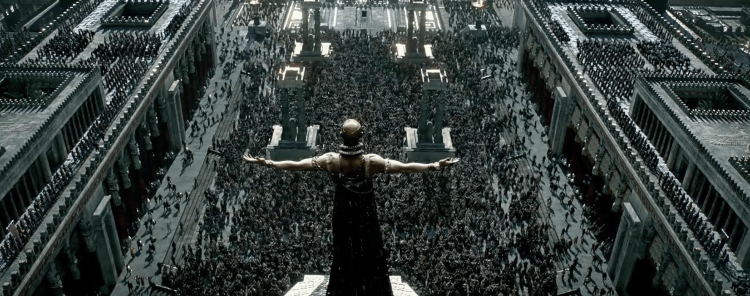
Where 300 engaged in truth in advertising to display the truly evil, I can’t think of one ugly or truly deformed character beyond the returning hunchback and even he doesn’t seem as corrupt as before. This was the greatest traitor in the world at the time most likely and he seems very softened up. I presume this change is connected to backlash but cannot recall.
Much like the dynamic of Captain Artemis (Vincent Regan) and his son Astinos (Tom Wisdom) in 300, there’s the father/son duo of Scyllias (Callan Mulvey) and Calisto (Jack O’Connell). This time it’s the father that dies. It felt a little repetitive. Though I enjoy Jack O’Connell now, he added nothing strong to the film. Just extended it by a few minutes. We could’ve gotten a little more depth by growing the bond between Scyllias and Themistocles. Their friendship was very underserved.
Stylized and bold, the action gets your adrenaline pumping. More importantly, you get a good idea of the ebb and flow of whatever is going on. These are not scenes for visual impact-mainly. These are scenes done to tell the story and you can follow along what’s happening. In an era of visual impact over storytelling, it is refreshing to be able to follow events rather than be visually stimulated without being able to follow events.
With some flaws, 300: Rise of an Empire nicely follows up the first film. It maintains the majority of the stylistic elements but manages to be a little more emotional and a little deeper than the first one. Entertaining and exciting in a way Hollywood doesn’t often do today.

